Labels: Asked and partly answered
¶ 5:55 AM

Labels: Asked and partly answered
¶ 5:22 AM
The answer is Birx and Pence. Pence endorsed Birx and Birx made the rounds in person to convince DeWine. In the end - and I'm serious - Pence needs to own up to his role in perpetrating the lockdowns.This starts to fill in the missing MECHANISM that led from three wacked-out demons to a million devoted holocausters. Not there yet, but heading in the right direction. Suggests that Fauci was the vector of contagion to the D governors and mayors and media, Birx was the vector to the R governors. (All mayors and media are D.)
Labels: Asked and partly answered
¶ 5:41 AM
The Ghia Crown Imperial offers a window into something intangible, the power of glamour. With just 132 produced over a nine-year span, only a very select clientele, the rich, famous, and powerful, could enjoy such a car. That, of course, was the program's purpose. A Who's Who of users included presidents Eisenhower, Kennedy and Johnson; RCA chief Sarnoff, novelist Pearl Buck, heads of several Middle Eastern royal houses, Dominican dictator Trujillo, and Yugoslav president Tito.What's puzzling? The Crown cost $18,500. That wasn't a "presidential" price in 1965. It was the price of a basic two-bedroom house. My parents could have bought one if they were savers instead of borrowers. Any upper-middle earner could afford 18k. Inflated to today, it would be $150k. I could buy one if I wanted to use up all my savings. So price wasn't the constraint. Chrysler must have been selecting the buyers carefully by status, with official standards for the permissible Crown Imperial buyer. Or else they were taking LARGE off-the-books payments. The writer didn't seem to catch this point.
Labels: Asked and partly answered, Happy Ending
¶ 5:03 PM
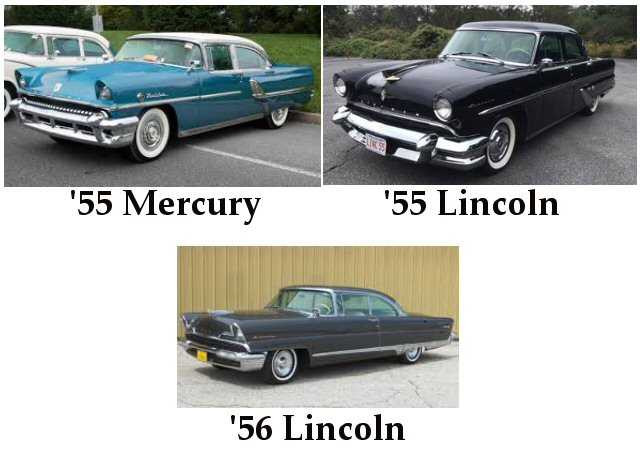 When they designed the '56 Lincoln from scratch on its own body, they copied the '55 Merc front end, NOT the '55 Lincoln front end.
Another Mercury connection.
When they designed the '56 Lincoln from scratch on its own body, they copied the '55 Merc front end, NOT the '55 Lincoln front end.
Another Mercury connection.
Labels: Asked and partly answered
¶ 11:41 PM
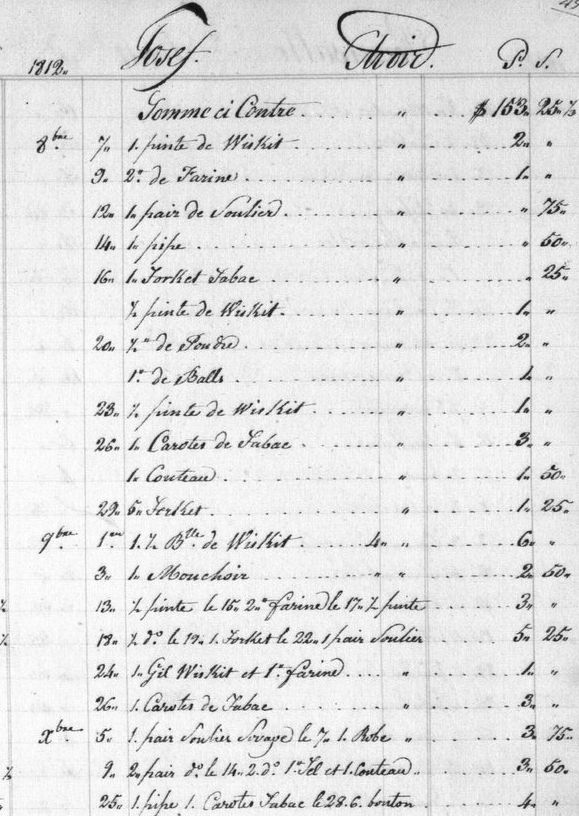 The use of specific symbols is relatively recent. According to wiki, the pound sign seems to have started in the 1600s.
The earliest preserved English ledger is the pipe rolls of Lancashire in the 1100s. One item with the translation and explanation, from a 1902 book:
The use of specific symbols is relatively recent. According to wiki, the pound sign seems to have started in the 1600s.
The earliest preserved English ledger is the pipe rolls of Lancashire in the 1100s. One item with the translation and explanation, from a 1902 book:
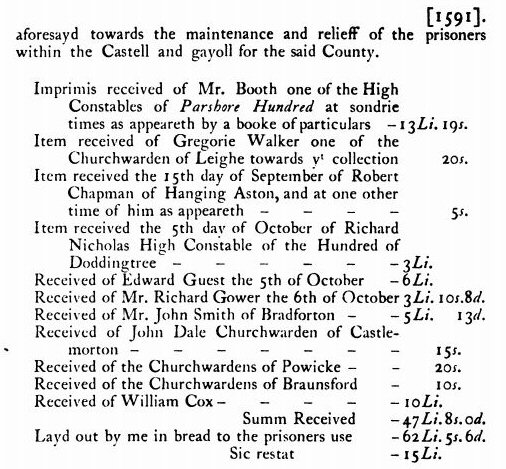
Idem vicecomes reddit Compotum de lxvj. li. et xiij. s. et iiij.d . de Communi Assisa Comitatus de Lancastra, pro defaltis et miseri cordiis. In thesauro lxj .li . et viij . d . Et debet c. et xij . s. et viij . d . The Sheriff renders an account of £66 13s . 4d ., arising from a general Assize of the County of Lancaster, for defaults and amercements, whereby it appears that this sum was not the result of an Eyre of the Justices, but was a composition or general fine, assessed by competent persons, to discharge the county from liability on account of various negligences, purprestures and trespasses within the widely extended forest lands of Lancaster. The Sheriff paid £61 Os . 8d . into the Exchequer and owed £5 12s. 8d . on balance.Translating only the numbers: lxvj. li. et xiij. s. et iiij.d. becomes 66 li. and 13 s. and 4 d. Li = libri or pounds, s = solidi or shillings, d = denarii or pence. Pure conjecture: The £ symbol might have arisen, or become popular, to avoid reading li as 51? S and D wouldn't have been confusing, so they didn't need substitutes. (D means 500, but it was very rarely used.) BUT: Any confusion seems unlikely, since humans are extremely good at 'code-shifting', and bookkeepers have especially well-trained bimetral symbol vision. At that time all of the units were simple abbreviations, not symbols, and all were after the numbers just as in speech, both English and Latin. (Some adjectives and articles were after the noun in Latin, but numbers were before the noun.) This book of Worcestershire county records comes close to pinning down the transition point, which agrees with the mention in Wikipedia. These two passages from English court documents were recorded and 'transliterated' by the same author. 1591:
 1616:
1616:
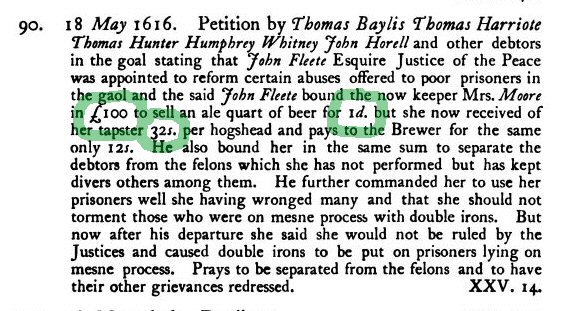 Records are continuous and dense between these two years, but items with money amounts are sparse. I couldn't find a closer pair with money. In 1591 the units are all abbreviations, and Latin phrases are vestigial. In 1616 the whole text is English and pounds are £.
The author doesn't discuss terminology, so we can't see WHY the change happened, only WHEN. Presumably we can trust that he was consistent.
Incidentally, many of the items in these records read just like modern police blotters. OCD Karens complaining about trivial violations of etiquette, drunks doing what drunks always do. The one I quoted from 1616 shows that privately run prisons haven't changed in 400 years.
Linguistic sidenote: England was under Roman rule from about 50 AD to 400 AD. By 1100 the Romans had been gone for 700 years, but the ruling class was still writing in Latin. That's impressive permanence and persistence. Advantage: You don't need explicit encryption or secrecy when the commoners can't read or understand what the rulers are saying among themselves. Question: Were there commoners who quietly learned how to read and understand Latin, and used the skill to help other commoners prepare for the next psychopathic STOMP from the insane rulers? Vicilici?
Records are continuous and dense between these two years, but items with money amounts are sparse. I couldn't find a closer pair with money. In 1591 the units are all abbreviations, and Latin phrases are vestigial. In 1616 the whole text is English and pounds are £.
The author doesn't discuss terminology, so we can't see WHY the change happened, only WHEN. Presumably we can trust that he was consistent.
Incidentally, many of the items in these records read just like modern police blotters. OCD Karens complaining about trivial violations of etiquette, drunks doing what drunks always do. The one I quoted from 1616 shows that privately run prisons haven't changed in 400 years.
Linguistic sidenote: England was under Roman rule from about 50 AD to 400 AD. By 1100 the Romans had been gone for 700 years, but the ruling class was still writing in Latin. That's impressive permanence and persistence. Advantage: You don't need explicit encryption or secrecy when the commoners can't read or understand what the rulers are saying among themselves. Question: Were there commoners who quietly learned how to read and understand Latin, and used the skill to help other commoners prepare for the next psychopathic STOMP from the insane rulers? Vicilici?Labels: Asked and partly answered, Jail mode
¶ 8:34 AM
Labels: Asked and partly answered
¶ 11:25 AM
 On further reading, it turns out that hail cannons were a big business for about 20 years. French and Italian farmers were convinced that the cannons made a difference. Like cloud seeding, they didn't halt the weather every time, but they dissipated hail often enough to save massive amounts of money and trouble. Unlike cloud seeding, there was no downside. Seeding is a zero-sum procedure, depriving one location of rain to favor another location. Deicing the hail doesn't move the precip, it just avoids the damage.
Major agricultural implement companies made hail cannons along with plows and seeders and cream separators. Genuine scientific conferences were held annually, showing off the latest experiments and inventions.
The French called them canons contre grèle or grelifuges, and the Italians called them Grandinifughi. A word you can chew on!
Here's part of a wonderfully lyrical account from a 1901 cultural magazine (p 662 of the PDF):
On further reading, it turns out that hail cannons were a big business for about 20 years. French and Italian farmers were convinced that the cannons made a difference. Like cloud seeding, they didn't halt the weather every time, but they dissipated hail often enough to save massive amounts of money and trouble. Unlike cloud seeding, there was no downside. Seeding is a zero-sum procedure, depriving one location of rain to favor another location. Deicing the hail doesn't move the precip, it just avoids the damage.
Major agricultural implement companies made hail cannons along with plows and seeders and cream separators. Genuine scientific conferences were held annually, showing off the latest experiments and inventions.
The French called them canons contre grèle or grelifuges, and the Italians called them Grandinifughi. A word you can chew on!
Here's part of a wonderfully lyrical account from a 1901 cultural magazine (p 662 of the PDF):
The terror of hail is as old as Adam's first planting season, and the hysterical efforts of man to do away with it date from that same springtime. It is just another phase of man's striving to climb back into Eden, where it does not hail. So he rang bells and made other noises, at first in religious appeal, and then with a vague notion of turning the storm by deafening detonations. Neither is the more scientific idea of shooting against clouds a new one. In 1760 the Chevalier de Jancourt, a physicist, noted that it never hailed on besieged towns, and urged wise men to get to work against what he called the most costly form of divine wrath. But the wise men were not wise enough, and the peasants rang their bells as before, and then declared that it would have hailed harder if they had not rung them.The author visited actual farms and watched the Grelifuges in action. He talked to the farmers and grape-growers and scientists. Conclusion:
Cannons have been fired against hailstorms, and hail did not fall. You might say that hail would not have fallen anyhow. But it did fall anyhow - that is, all around except on the spot covered by cannon. Again there remains the other possible coincidence: namely, that the hail had no designs against that particular exempted spot in the first place. But there is still an answering fact; for when the shooting ceased, the rain changed to hail, and when the shooting recommenced the hail as quickly changed back to rain. This is not an isolated instance, but the general case. ....... A veteran artilleur who had lost a leg in the service demonstrated how simply and safely this particular gun can be handled. He first produced one of the empty cartridges. This was of specially forged steel, about eight inches long. He adjusted a percussion cap, rammed in eighty grammes of mining powder, and ended with a wad of soft wood... The artilleryman advised us to watch for the whirlwind-ring, and then he pulled the string. The explosion sounded like the heavy boom of rock-blasting. You knew vaguely that the tripod was hidden in smoke, and that a white cloud had puffed from the mouth of the funnel. Then, as though growing out of the shock of the explosion, there came the sound of a long, shrill whistling. It was like the fierce metallic singing of some monster tuning-fork, mounting to a more angry pitch as it hurled higher in air. There, away up in the sky, was a gauzy ring as of smoke, still ascending and still buzzing on that shrill crescendo note. The ring was outlined against the deep blue like a soft, silky wreath, in the rays of the sun it was brilliant and changing, and then again shaded. One second later, and it had vanished in space. That, briefly, is the tore, or whirlwind-ring, which bursts from the cannon.And what happened after the vortex penetrated the cloud?
But even as the spectator on the hill was losing hope for the much-vaunted cannon, he looked up again. There was a disturbance going on in the darkest cloud, just over the vineyards. It looked like billows of rolling, tossing smoke up there. Then all at once the cloud opened, and through the rift was the glorious gold of the afternoon sun. At last, here was a breach in the enemy's flank. A gunner below shouted involuntarily, and all of them worked faster and faster yet. Each cannon was counting two, three, shots to the minute. Other breaks showed in the clouds. There was a moment of wavering, and then panic. The dark-browed invader broke and fled. He scattered towards the hills, and in his retreat he sent down a discouraged volley of raindrops.Or in more prosaic form, the cannons broke the updrafts that encouraged hail, and left a heavy rain. Here's my attempt to capture the scene.
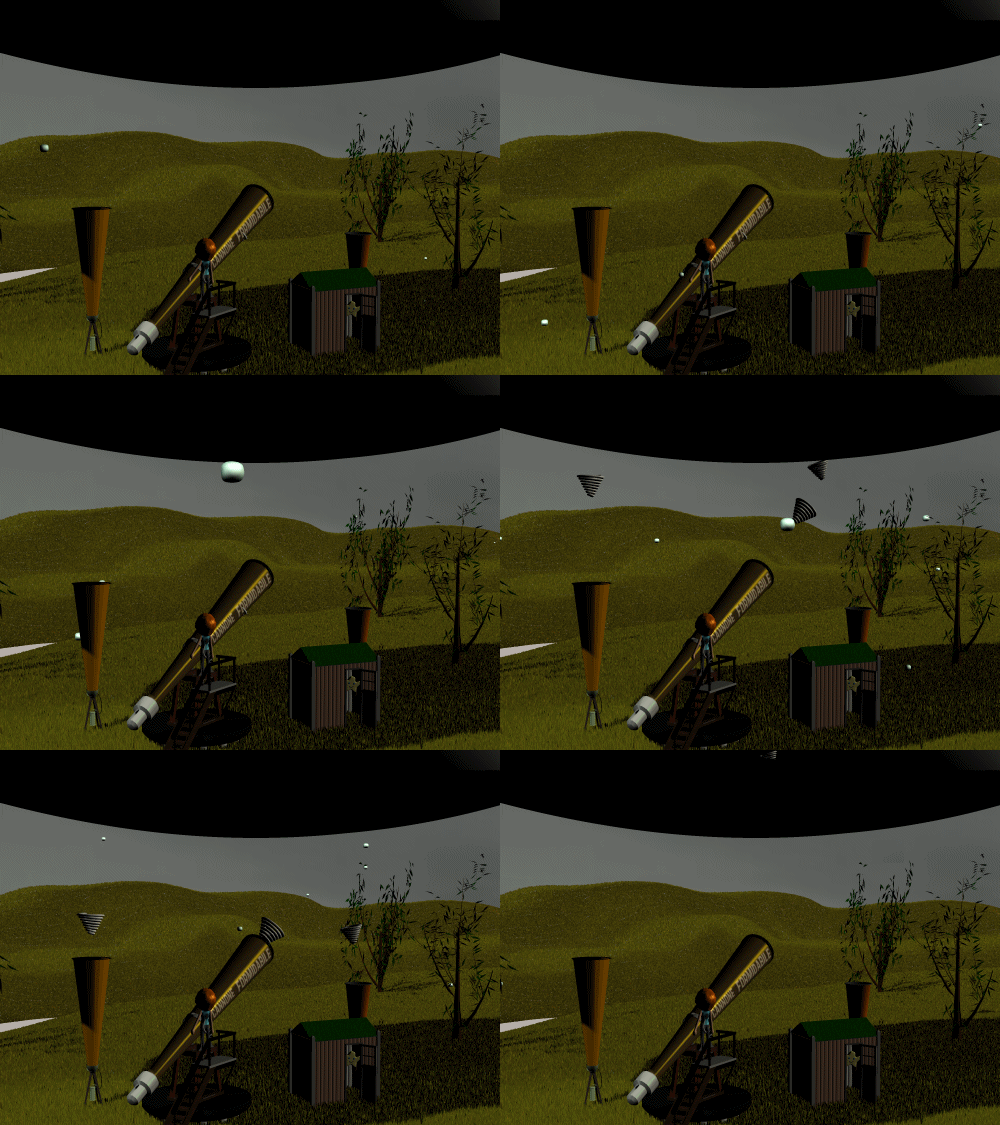 Polistra is at the controls of CANNONE FORMIDABILE, a full-fledged artillery piece with azimuth and altitude adjustments:
 Happystar is supervising a cannon built into its own cozy shed, with a separate inner room where the tireur could sit and wait for the storm while sipping the products of the vineyard he was protecting.
 An automatic acetylene cannon is in the background, developed by Maghiora and Blanchi.
 Did the cannons make sense? We know from wind-tunnel studies of streamlining that a vortex breaks up smooth airflow. The purpose of streamlining is twofold: First avoid flat surfaces directly pushing the air; second, avoid vortices. You want the air to split smoothly around the car or plane, and rejoin smoothly afterward.
The end of the Grandinifughi era isn't clear. Did the farmers decide that the Grandinifughi weren't worth the effort? Or did insurance companies make damage more profitable than prevention? Flood insurance works that way.
= = = = =
Happy ending! Grelifuges are STILL USED in France and Italy, and STILL MADE in Spain, and they look about the same as the 1902 versions! The new cannons use acetylene, continuing the tech invented by Maghiora and Blanchi. Video of a modern grelifuge. Live action with a visible and audible whirlwind-ring at 4:14. The old description wasn't lyrical, it was accurate!
= = = = =
Etymological footnote: The French and Italian words for hail are opposite. Grèle comes from Latin gracilis, and means slim or small when used as an adjective. Grandini comes from a root meaning 'coarse-grained', thus by extension grinding and grain and grand and things that grind, including hail. My initial impression of 'chewiness' was spot on.
Did the cannons make sense? We know from wind-tunnel studies of streamlining that a vortex breaks up smooth airflow. The purpose of streamlining is twofold: First avoid flat surfaces directly pushing the air; second, avoid vortices. You want the air to split smoothly around the car or plane, and rejoin smoothly afterward.
The end of the Grandinifughi era isn't clear. Did the farmers decide that the Grandinifughi weren't worth the effort? Or did insurance companies make damage more profitable than prevention? Flood insurance works that way.
= = = = =
Happy ending! Grelifuges are STILL USED in France and Italy, and STILL MADE in Spain, and they look about the same as the 1902 versions! The new cannons use acetylene, continuing the tech invented by Maghiora and Blanchi. Video of a modern grelifuge. Live action with a visible and audible whirlwind-ring at 4:14. The old description wasn't lyrical, it was accurate!
= = = = =
Etymological footnote: The French and Italian words for hail are opposite. Grèle comes from Latin gracilis, and means slim or small when used as an adjective. Grandini comes from a root meaning 'coarse-grained', thus by extension grinding and grain and grand and things that grind, including hail. My initial impression of 'chewiness' was spot on.
Labels: 1901, Asked and partly answered, Happy Ending, Morsenet of Things
¶ 5:11 PM
May I be allowed to sum up one or two considerations as to the probable influence of wireless telegraphy on the future of our race? In the first place a severance of communication with any part of the earth - even the Antipodes — will henceforth be impossible. Storms that overthrow telegraph posts, and malice that cuts our cables, are impotent in the all-pervading ether.Oops. Didn't foresee jamming and hackers. Malice always finds a way. Also, storms can overthrow antennas, and nearby lightning can bust a radio more easily than a telegraph. The latter was already known in 1902.
An explorer like Stanley in the tropical forest, or Geary amid ice-fields, will report daily progress in the Times. Every wandering tramp-steamer will have its wireless spar, and will be in constant touch with vessels that dot the ocean all about it. Sir William Preece's dream of signalling to Mars may yet be realised.Good predictions, all came true.
A governing fact is the cheapening of the new force. Everything essential to human happiness is cheap - air, water, the bountiful fruits of the earth — and electricity is no exception. Hitherto the cost of wires has kept this blessing from the bulk of mankind. Already the Marconi Company offers to telegraph to India at half the present rates, and Mr. Marconi promises messages to America at a penny a word.He didn't foresee, and really couldn't foresee, that the 'free' ether would be overcrowded by multiple signals, requiring government licensing and taxes to insure that useful signals had a chance of getting through. Rent always finds a way.
Our ultimate ideal must be instantaneous electrical communication with every man on earth, ashore or afloat, at a cost within the reach of everyone.Remarkable! He predicted the iPhone! After reading a number of predictions from that decade, I've come to realize that the iPhone part was NOT remarkable. Telegraphs and telephones were two-way personal communication, so extending them to radio was an easy analogy. What's remarkable is that the prophets DIDN'T predict one-way broadcasting. Experimenters were already broadcasting voice and music around 1905, and it was the dominant use of radio for 100 years. The predictors DIDN'T see that radio would partly replace newspapers, concert halls, and theaters. Why? Maybe because the existing one-way media were primarily visual?
Labels: Asked and partly answered
¶ 2:17 AM
Labels: Asked and partly answered, Experiential education, meta-experiential education
¶ 11:09 PM
 BLESS HIS NOBLE SOUL. BLESS HIM INFINITELY AND ETERNALLY.
= = = = =
A few days later: WSJ shows a graph of sales by type of business. Groceries had a huge pulse in March from hoarding, then have been selling 20% MORE than normal since then. This shows that my assumption of lost business was wrong. Grocery stores have a genuinely GOOD reason not to complain about the lockdowns. I apologize.
BLESS HIS NOBLE SOUL. BLESS HIM INFINITELY AND ETERNALLY.
= = = = =
A few days later: WSJ shows a graph of sales by type of business. Groceries had a huge pulse in March from hoarding, then have been selling 20% MORE than normal since then. This shows that my assumption of lost business was wrong. Grocery stores have a genuinely GOOD reason not to complain about the lockdowns. I apologize.Labels: Asked and partly answered, Fucking constants and fucking variables, Natural law = Soviet law, NOW I SEE
¶ 11:06 AM
Labels: Asked and partly answered, Experiential education, Metrology
¶ 4:04 AM
Labels: Asked and partly answered, malign misattribution
¶ 1:38 PM
In addition to stations licensed for police service in the conventional medium - high frequency band - there are outstanding at this time experimental authorizations which permit 50 municipalities to operate 125 stations in the ultra-high frequency range, in the neighborhood of Prueters.Prueters? It's capitalized, not a blur or obvious misprint. I'm familiar with radio terminology from that era and never heard the word. Google doesn't help; lots of people named Prueter and businesses named Prueter's, but no references that would make any sense in this context. Do they mean geographical neighborhood or frequency neighborhood? It can't be geographical, because there isn't a city or county named Prueter or Prueters. Frequency neighborhood seems more likely. Was a Prueter a machine that prueted? Would the readers recognize this frequency range by familiarity with Prueter machines or Prueter-type transmitters? Was Prueter a brand name for something like a diathermy machine? = = = = = The actual FCC publication (p 42 of this PDF) clarifies the frequency but doesn't mention Prueters. The "ultra-high" band being tried by some police depts was around 30 Mc, which is also a typical range for diathermy. The official assignments for diathermy are 27.12 and 40.68 Mc. Still doesn't solve the mystery. Could be diathermy, could be pretty much anything. = = = = = Later and better thought: 30 Mc is a wavelength of 10 meters. The assigned area was just over 30, which would be 9 meters. In the neighborhood of 9 meters is a common way of expressing frequency. Was Prueters a linotypist's misread of a handwritten manuscript? A written m can be misread as ru, and 9 could become P. 9meters = Prueters. See p 77 in this 1935 Gernsback mag.
Labels: Asked and partly answered, Asked and unanswerable, Bemusement
¶ 3:57 PM
Labels: Asked and partly answered, skill-estate
¶ 11:02 PM
Labels: Asked and partly answered, Patient things
¶ 6:42 AM
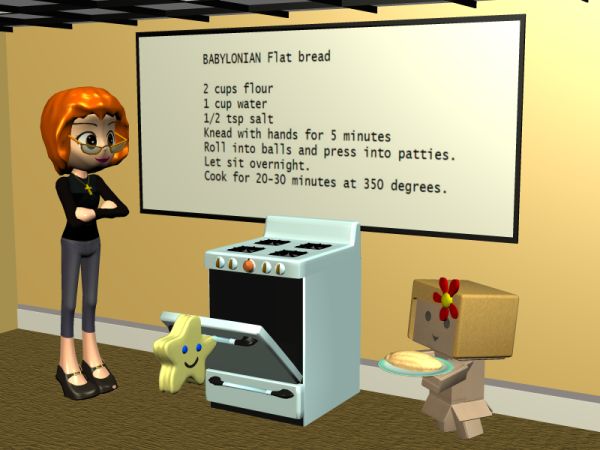 It's likely that "history" and "grammar" are taught for the same reason, but I don't know that for sure. In math the QC purpose is well known and discussed, but it never disappears because the profs at the end of the production line can't possibly handle Negative Externality students.
Labels: Asked and partly answered, Experiential education
¶ 7:44 AM
We provide evidence for a specialized glial cell type that builds a sensory organ in the skin, initiating the sensation of pain. The nociceptive Schwann cells display a mesh-like network of cytoplasmic sheaths around nerves in the subepidermal border with radial processes entering into the epidermis abutting to unmyelinated nociceptive nerves.The Schwann cells form a mesh, with connections to neurons.
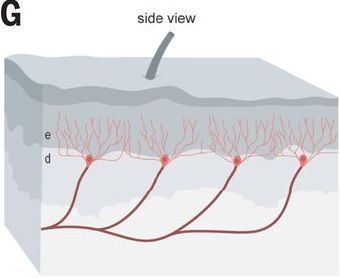
They transduce nociceptive stimuli into electrical signals that translate into [pain responses by the mouse]. The nociceptive nerve endings in skin also gate responses to various noxious stimuli. Hence, nociceptive nerves and nociceptive Schwann cells form a nociceptive glio-neural complex with two sensor-receptor cell types, the glia and the nerve, both likely influencing the sensation of pain. Both response and adaptation were very rapid, resulting in similar responses in the subsequent stimuli. The cells tracked the maximum frequency of stimuli that we could generate (60 Hz). Releasing the force also depolarized the cells. Thus, nociceptive Schwann cells responded to both positive and negative changes in force but much less to sustained force.So the glial cells are acting as two-way triggers for the neurons, telling the neurons when something has happened. When something pushes on the skin or something pulls away, it's time for the neuron to wake up and do its particular thing.
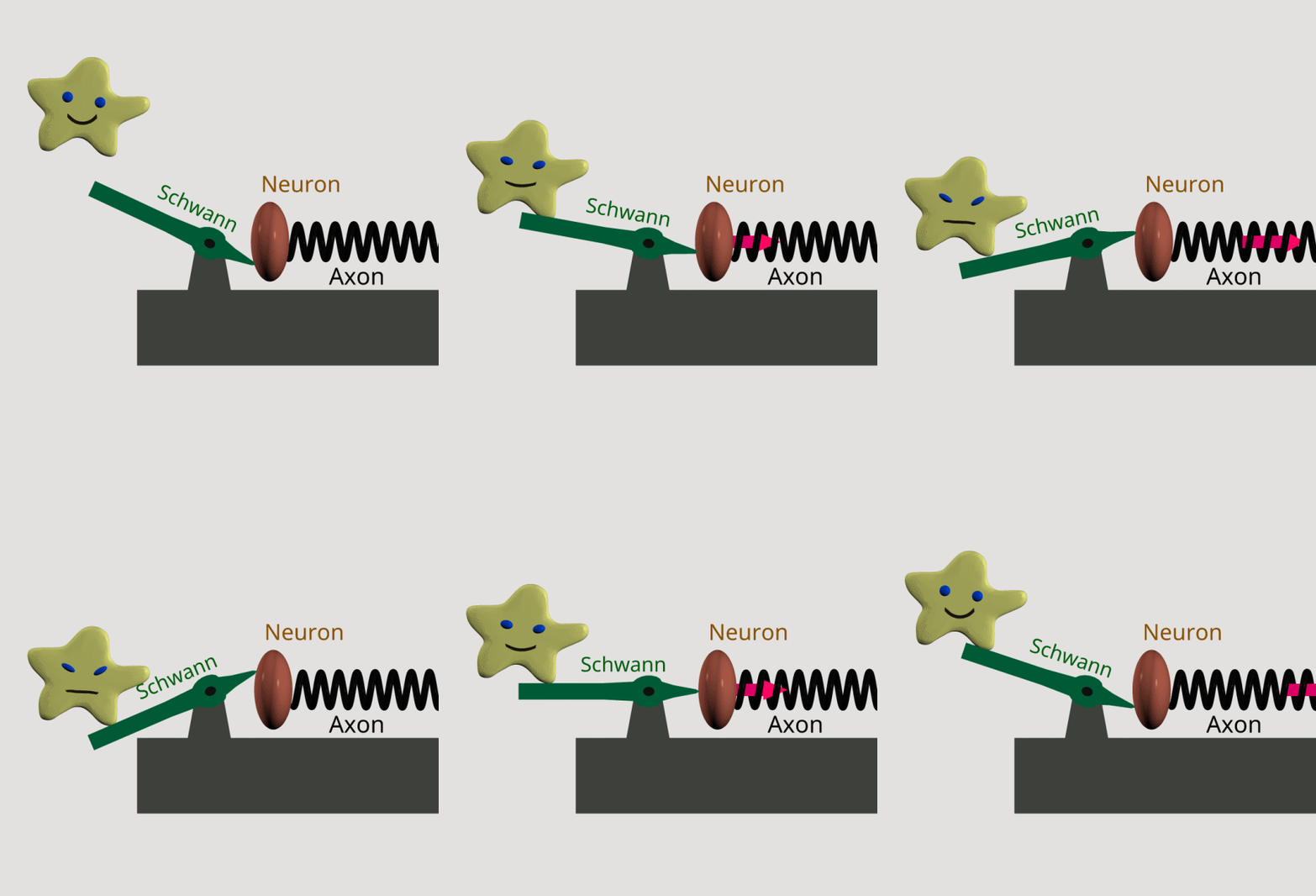 Question: Are all the senses made this way, with glia serving as the high-pass or low-pass filters and rectifiers and lenses, and neurons serving as the raw sensor? It's certainly true in the retina where glial cells filter and focus specific colors onto the retinal sensors. This setup hasn't been seen yet in the cochlea, but I wouldn't be surprised if it appears. Deiters Cells, though not classed as glia, surround the hair cells in a similar net-like way, with projections from one hair cell to the next.
Labels: Asked and partly answered, Carver, Grand Blueprint
¶ 2:46 PM
In the face of diabetes, a common condition in which glucose and levels of destructive inflammation soar, whole body vibration appears to improve how well our body uses glucose as an energy source and adjust our microbiome and immune cells to deter inflammation, investigators report. For the first time they have described how regular use of whole body vibration can create this healthier mix by yielding a greater percentage of macrophages -- cells that can both promote or prevent inflammation -- that suppress rather than promote.In earlier decades, whole-body vibration was supposedly used for weight loss. These vibrating rollers and vibrating belts: were often seen in movies and cartoons. I've never seen them used in real life, and doubted that they could do any good. Maybe these machines did some good after all. How?
Our microbiome, like a casserole, is in layers and one way whole body vibration may work is by rearranging those layers, Baban says, but they reiterate that no one is certain just how whole body vibration works in this or other scenarios....Makes sense. The machines were allegedly breaking up the fat around the gut, but they were ALSO vibrating the gut itself. Like flossing, breaking up a biofilm stops the damage.
Labels: Asked and partly answered
¶ 11:37 PM
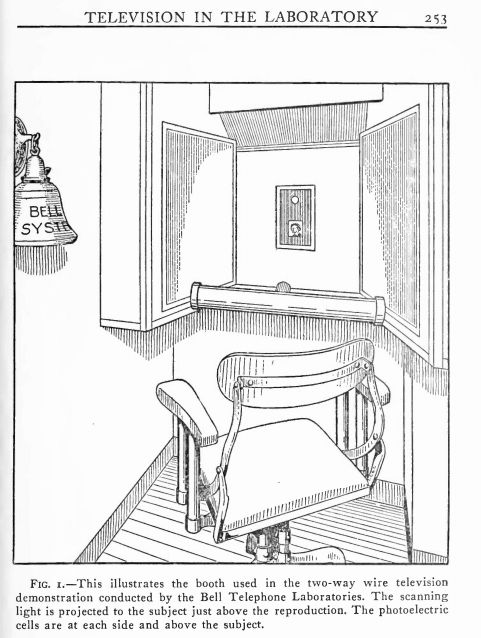 It was fully operational with two-way sound and two-way video, not needing a transmit/receive switch, as described in Arnold's incomprehensible grammarrhoid "English":
In one of these television-telephone booths a person seats himself before a frame in which he will see the face of the person with whom he is talking. His own face is rapidly scanned by a mild beam of blue light which reflects from his face to the photoelectric cells and gives rise to the current which transmits his image to the distant booth. There is no fierce glare to the scanning beam; and one is not annoyed by its presence and may even gaze directly at it without inconvenience. The first thing which strikes the observer when he steps into the booth, which is lighted with a dim orange light to which the photoelectric cells are insensitive, is the absence of the usual telephone. Special telephone transmitters and receivers are concealed in the booths. One talks face to face to the distant person, and a hidden receiver speaks the words which seem to issue from his mouth.And here's the more familiar 1960's videophone, proudly exhibited by Bell in several World's Fairs:
 Hmm. The 1960's version looks a lot like a desktop computer. Why didn't the desktop computer evolve from the videophone? Why didn't the videophone become popular until 2000?
Same answer. Most people STILL don't use their cellphones as videophones. They use cellphones in two distinct ways. Most of the time it's an interactive TV or videogame system, communicating via text like a telegraph or a desktop computer. When people use it as a phone, they hold it to their head like an old-fashioned phone.
(I've never owned or handled a cellphone, so I'm just observing what others do.)
People don't like to record their own voice, and people don't like to show their face when talking on the phone. Both technologies have been available and rarely used since 1930, because human preferences haven't changed.
Hmm. The 1960's version looks a lot like a desktop computer. Why didn't the desktop computer evolve from the videophone? Why didn't the videophone become popular until 2000?
Same answer. Most people STILL don't use their cellphones as videophones. They use cellphones in two distinct ways. Most of the time it's an interactive TV or videogame system, communicating via text like a telegraph or a desktop computer. When people use it as a phone, they hold it to their head like an old-fashioned phone.
(I've never owned or handled a cellphone, so I'm just observing what others do.)
People don't like to record their own voice, and people don't like to show their face when talking on the phone. Both technologies have been available and rarely used since 1930, because human preferences haven't changed.
Labels: Asked and partly answered
¶ 4:57 AM

