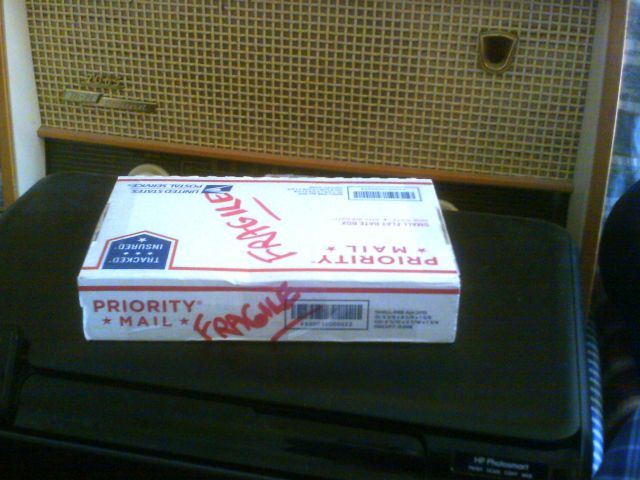
 Vintchip does a good job of packing. Bubble wrap and tissue.
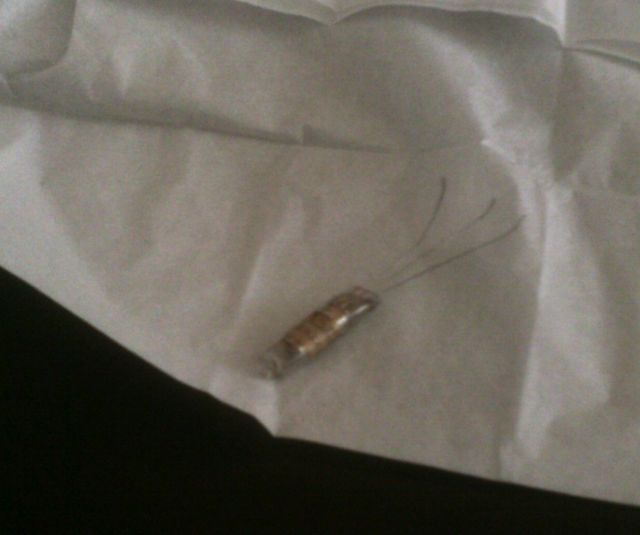 First impression: Printed label says Raytheon Experimental. Written in ink on one side is QF336, on the other side just the number 8. Presumption: This is serial number 8 of a set of experimental tubes denominated QF336.
Scanned both sides:
First impression: Printed label says Raytheon Experimental. Written in ink on one side is QF336, on the other side just the number 8. Presumption: This is serial number 8 of a set of experimental tubes denominated QF336.
Scanned both sides:
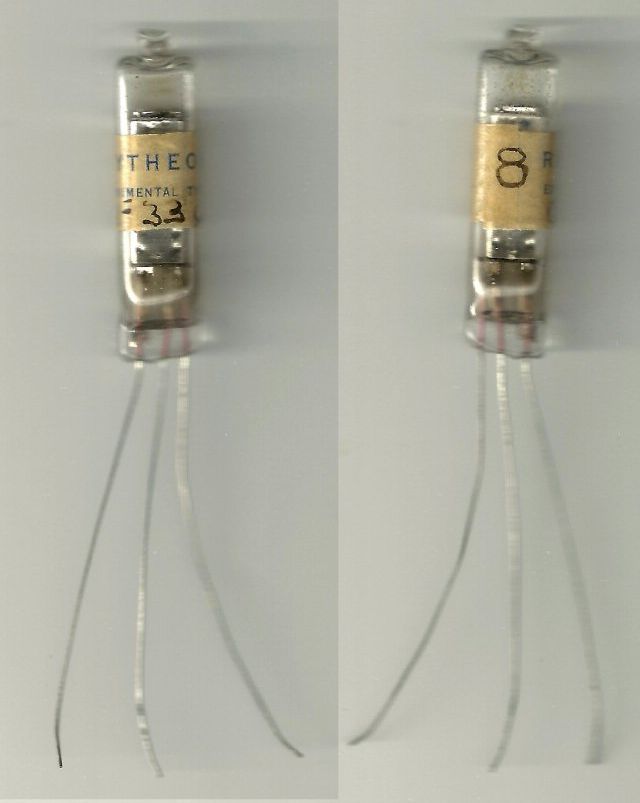 Looks very much like a miniature hearing-aid tube. Same glass outer envelope, same leads coming through the bottom sealed in glass, same 'can' surrounding the active part. Mini tubes were used in hearing aids briefly in the '50s. Hearing aids soon switched to transistors, but not because of size. Early transistors were about half the size of mini tubes and you needed two or three transistors to substitute for the typical tube. No real advantage. Batteries were the advantage. Tubes needed a large 1.5V filament batt and a large 45V plate batt, and used up the filament batt fast. Transistors used one 9V battery and drained it slowly.
= = = = =
Looks very much like a miniature hearing-aid tube. Same glass outer envelope, same leads coming through the bottom sealed in glass, same 'can' surrounding the active part. Mini tubes were used in hearing aids briefly in the '50s. Hearing aids soon switched to transistors, but not because of size. Early transistors were about half the size of mini tubes and you needed two or three transistors to substitute for the typical tube. No real advantage. Batteries were the advantage. Tubes needed a large 1.5V filament batt and a large 45V plate batt, and used up the filament batt fast. Transistors used one 9V battery and drained it slowly.
= = = = =
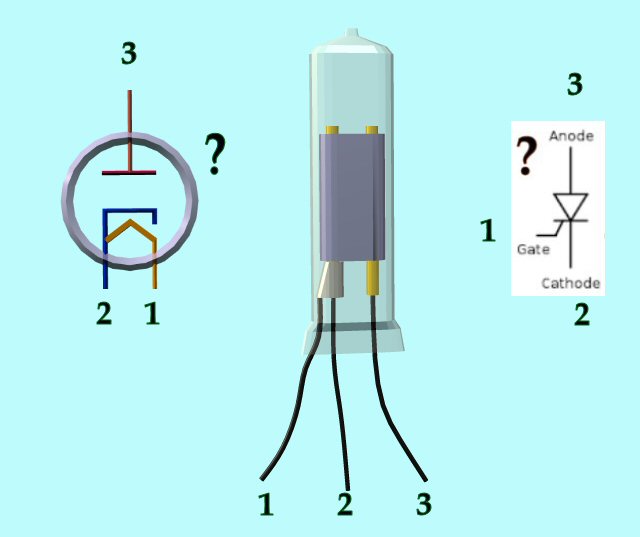 I can see the innards with a magnifier, but couldn't get a photo or scan. So I made a Poser version to illustrate. Two cylinders running through the can in parallel; one cylinder has one wire from it, and the other cylinder has a sort of sheath, with one wire centered and another wire Y-ing out of the sheath.
Innards STRONGLY suggest tube. The sheathed electrode is typical of a cathode with inner heater, with one side of heater tied to cathode. The opposite cylinder looks like the plate. Thinking tubey, this webpage shows a Sylvania experimental miniature thyratron, looking something like qf336, but the Sylvania has four terminals, which seems right. This critter has only three wires, which means it can't be a triode or a thyratron. Could it be a rectifier or a voltage-dependent switch?
One problem with tube assumption: the upper and lower ends of the can are closed by resin or epoxy. Tubes generally get too hot for epoxy.
Thinking solid-statey, the wire pattern reminds me of a thyristor or SCR schematic. Does this mean the schematic was meant to imitate this device? Probably not.
Well, let's try both assumptions. Using DVM, no connectedness shows between the terminals. On R scale and diode scale, just open ckt in both directions on all combinations of the three wires. About 7nF capacitance between terminals, which makes sense from the structure but doesn't mean anything. So this probably isn't solid-state, because even a blown or non-functional solid thing will show some kind of resistance.
I don't have any proper mini tubes for comparison. A large tube (35L6) shows about 40Ω across the filament, varying as the applied voltage slightly warms the heater. I don't know what to expect for a mini tube, but it would certainly be low enough to read easily. Two-digit ohms, not gonna look like open ckt.
= = = = =
Just for fun, trying the tube assumption in the simplest possible ckt for a rectifier. Battery across the filament, cathode to negative, 9V to the plate through a resistor, with voltmeter across the resistor to see if anything flows.
I can see the innards with a magnifier, but couldn't get a photo or scan. So I made a Poser version to illustrate. Two cylinders running through the can in parallel; one cylinder has one wire from it, and the other cylinder has a sort of sheath, with one wire centered and another wire Y-ing out of the sheath.
Innards STRONGLY suggest tube. The sheathed electrode is typical of a cathode with inner heater, with one side of heater tied to cathode. The opposite cylinder looks like the plate. Thinking tubey, this webpage shows a Sylvania experimental miniature thyratron, looking something like qf336, but the Sylvania has four terminals, which seems right. This critter has only three wires, which means it can't be a triode or a thyratron. Could it be a rectifier or a voltage-dependent switch?
One problem with tube assumption: the upper and lower ends of the can are closed by resin or epoxy. Tubes generally get too hot for epoxy.
Thinking solid-statey, the wire pattern reminds me of a thyristor or SCR schematic. Does this mean the schematic was meant to imitate this device? Probably not.
Well, let's try both assumptions. Using DVM, no connectedness shows between the terminals. On R scale and diode scale, just open ckt in both directions on all combinations of the three wires. About 7nF capacitance between terminals, which makes sense from the structure but doesn't mean anything. So this probably isn't solid-state, because even a blown or non-functional solid thing will show some kind of resistance.
I don't have any proper mini tubes for comparison. A large tube (35L6) shows about 40Ω across the filament, varying as the applied voltage slightly warms the heater. I don't know what to expect for a mini tube, but it would certainly be low enough to read easily. Two-digit ohms, not gonna look like open ckt.
= = = = =
Just for fun, trying the tube assumption in the simplest possible ckt for a rectifier. Battery across the filament, cathode to negative, 9V to the plate through a resistor, with voltmeter across the resistor to see if anything flows.
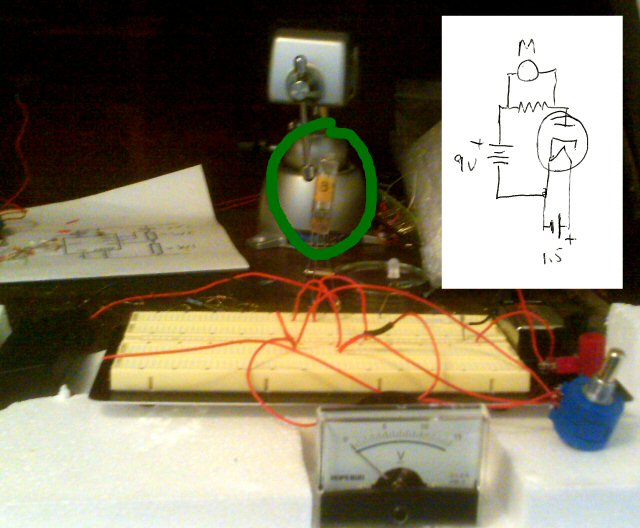 Nope. No heat from the filament, no flow at all.
Conclusion: This is probably a diode tube, and the filament is probably burned out.
= = = = = END REPRINT.
Honest paleontologists run through the same process. Excitement! This looks like a missing link! Darwin was right after all! Then do the chemical tests and look at it from various angles with microscopes and scanners.... Oops. It's a familiar item in a familiar layer after all. It was just divided in an unfamiliar way or petrified with an unfamiliar mineral.
Nope. No heat from the filament, no flow at all.
Conclusion: This is probably a diode tube, and the filament is probably burned out.
= = = = = END REPRINT.
Honest paleontologists run through the same process. Excitement! This looks like a missing link! Darwin was right after all! Then do the chemical tests and look at it from various angles with microscopes and scanners.... Oops. It's a familiar item in a familiar layer after all. It was just divided in an unfamiliar way or petrified with an unfamiliar mineral.Labels: Grand Blueprint
¶ 9:58 PM

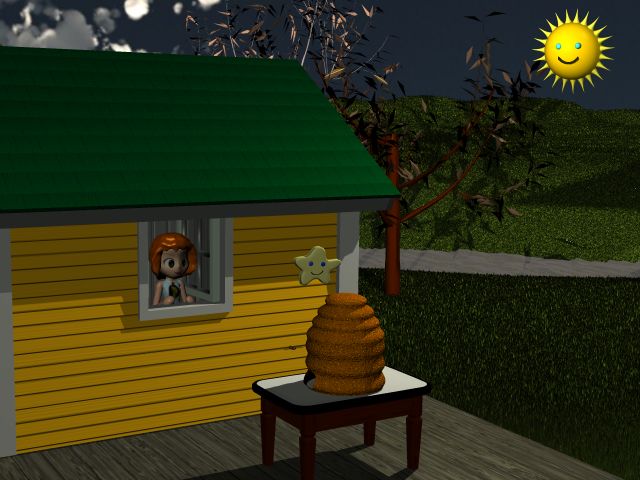 Looking downward inside the hive we see one scout telling one forager about her find:
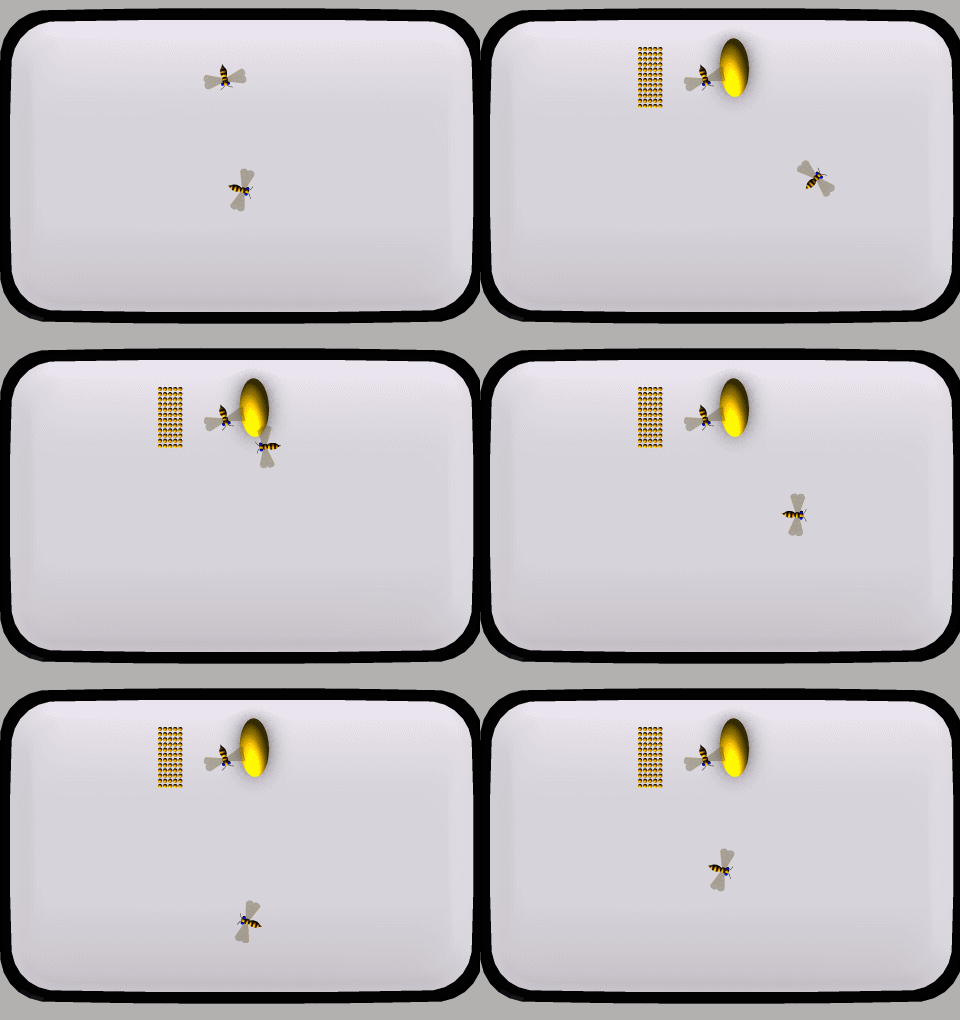 The forager observes the direction of the dance with respect to the hive, and forms a template for where the sun should be when she's flying.
Taking the important part in slow motion:
The forager observes the direction of the dance with respect to the hive, and forms a template for where the sun should be when she's flying.
Taking the important part in slow motion:
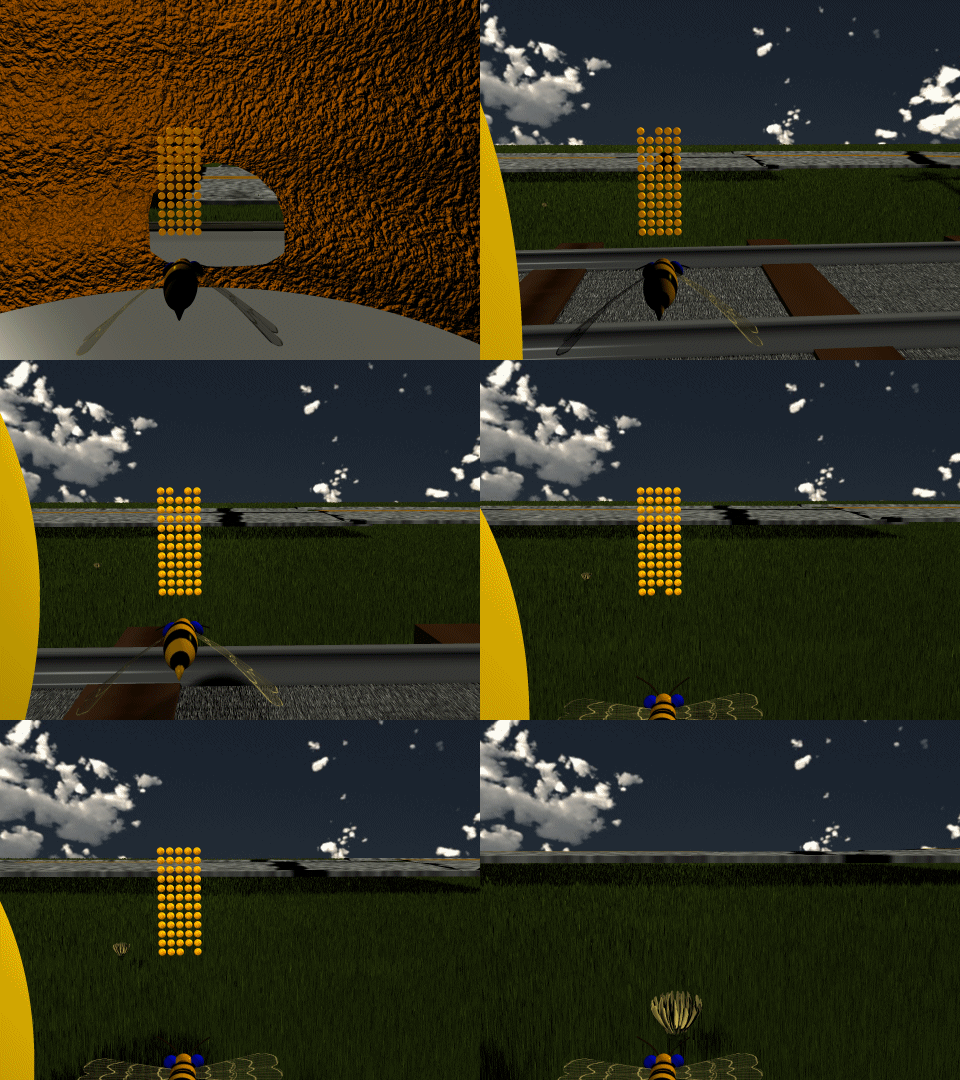
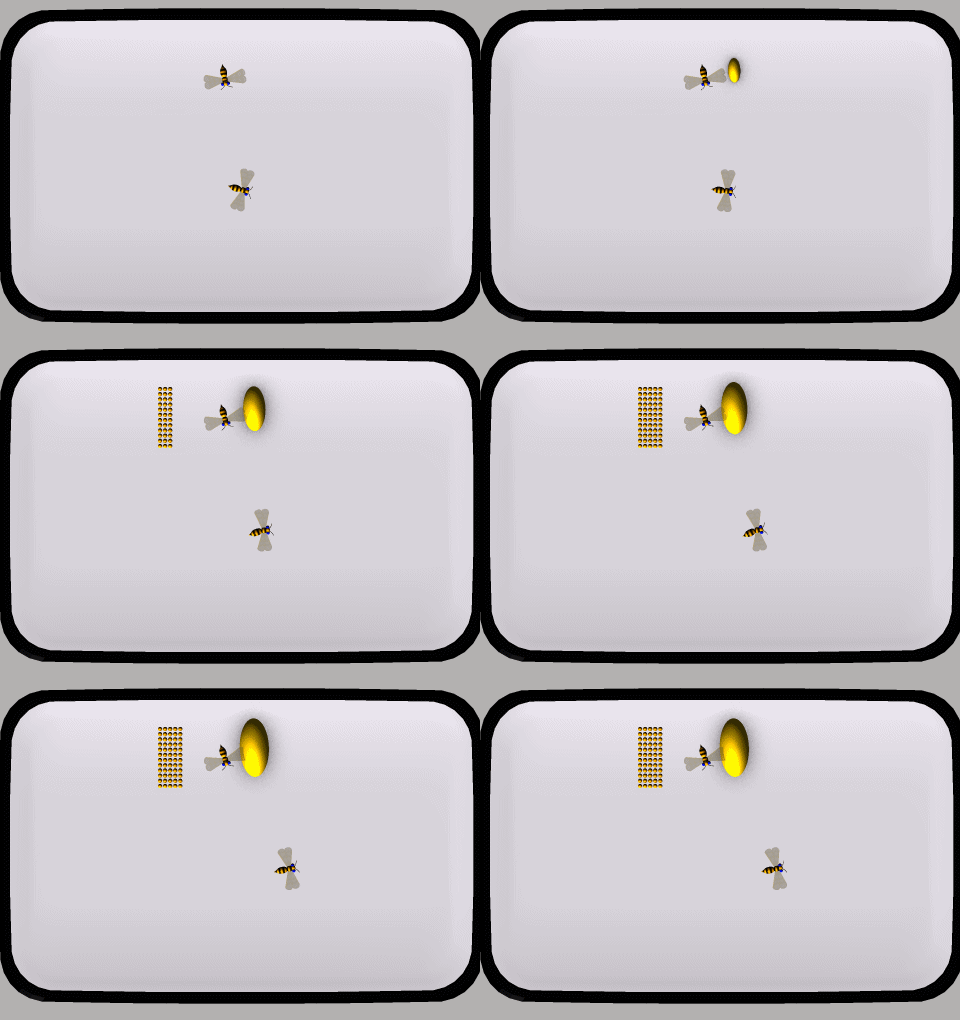 Each waggle ticks up the beads of her astrocyte abacus. For a simple animation we'll assume she's a Babylon Bee who counts in base 60. For each of these five waggles she brings in one 12-bead astrocyte. The total of all the counters tells her how many wingflaps she needs. (Obviously the real multiple of wingflaps per waggle would be far more than 12.)
She then launches out of the hive and turns until the actual sun matches the template position supplied by the dance. As she flies, each wingflap clicks down a bead. When the astrocytes have all reached threshold, she's there.
Each waggle ticks up the beads of her astrocyte abacus. For a simple animation we'll assume she's a Babylon Bee who counts in base 60. For each of these five waggles she brings in one 12-bead astrocyte. The total of all the counters tells her how many wingflaps she needs. (Obviously the real multiple of wingflaps per waggle would be far more than 12.)
She then launches out of the hive and turns until the actual sun matches the template position supplied by the dance. As she flies, each wingflap clicks down a bead. When the astrocytes have all reached threshold, she's there.
 = = = = =
Even better: The clover is also an abacus!
= = = = =
Even better: The clover is also an abacus!
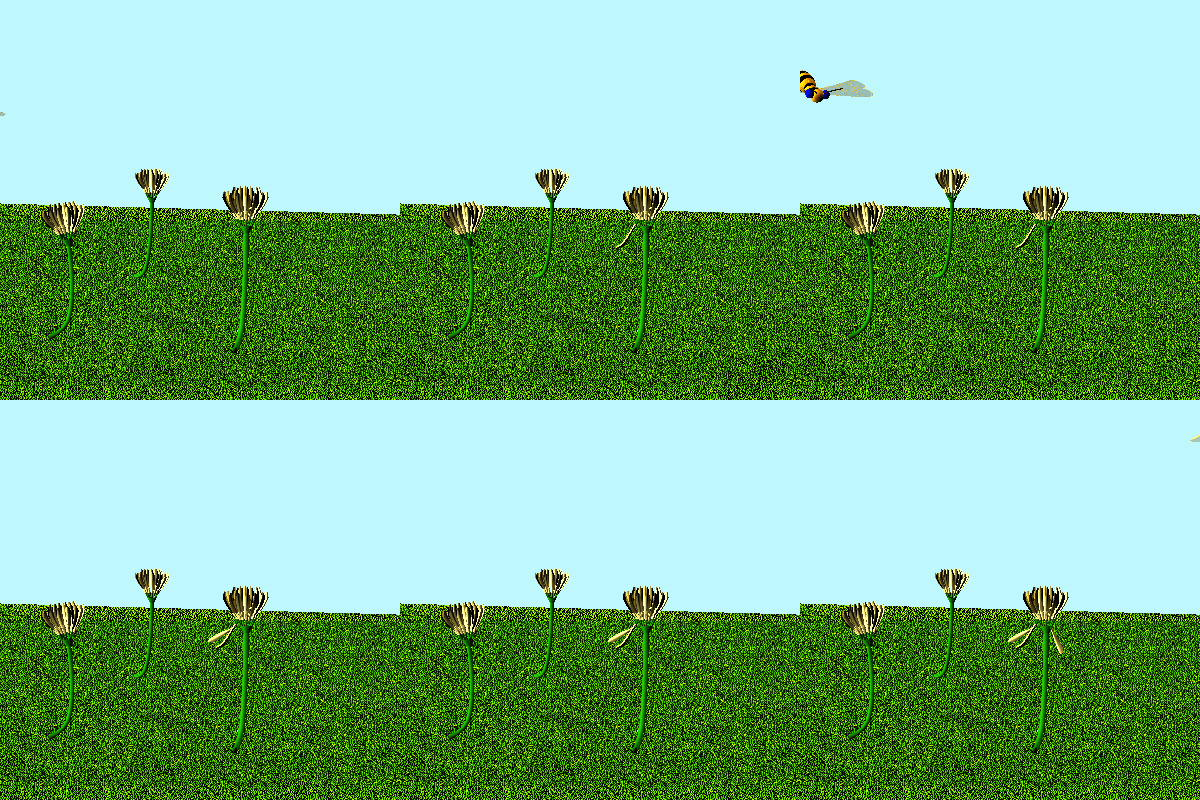
 What looks like a blossom is actually a cluster (inflorescence) of a few dozen tiny florets. Each 'spike' is a complete little flower, with a green cup (calyx) containing a white crown (corolla).
Why are some pointing down? Those are the florets that have already been touched by a pollinating insect. The clover detects the touch and removes nutrition from that floret, allowing it to drop down and turn brown.
What looks like a blossom is actually a cluster (inflorescence) of a few dozen tiny florets. Each 'spike' is a complete little flower, with a green cup (calyx) containing a white crown (corolla).
Why are some pointing down? Those are the florets that have already been touched by a pollinating insect. The clover detects the touch and removes nutrition from that floret, allowing it to drop down and turn brown.
Labels: bee, Grand Blueprint, Smarty-plants
¶ 3:41 PM
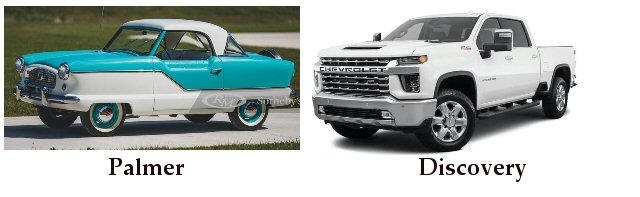 Meta: Unfortunately it's easy to see why Discovery chose the obnoxious route. Their videos have 80000 views, while the Palmer videos have 10 views. Harley Earl knew what he was doing.
Labels: Grand Blueprint, infinite GOOD
¶ 7:38 AM
 The experimental setup is 'virtual reality' or in old-fashioned terms a flight simulator. The fish is held firmly in place in a small aquarium. A visual landscape is moved forward and backward in response to the swimming motion. In real life each wiggle moves the fish forward, and then the counterwiggle moves backward a bit. (Like a rowboat with incompletely lifted oars on the backstroke.) So the simulated landscape does the same thing.
 As long as the landscape moves, the fish moves forward in bursts. Swim for a second, rest for a second. When the experimenters turn off the motion, the fish tries harder for about 30 seconds, then gives up entirely.
This is rational behavior for all animals in all** situations. Modern human dysculture aka "meritocracy" turns us irrational by persuading us that forward motion is ALWAYS necessary regardless of our observed gains relative to the status landscape. If you're not gaining, you need to try harder. We keep trying harder, wasting exponentially increasing quantities of energy and soul, until we violently burn out and die.
The experimenters were trying to determine how the fish decides when to quit. Is it just a buildup of charge or neurotransmitter on a comparator neuron?
What they found is ASTONISHING. The action is controlled by a specialized type of glial cell, not by neurons.
As long as the landscape moves, the fish moves forward in bursts. Swim for a second, rest for a second. When the experimenters turn off the motion, the fish tries harder for about 30 seconds, then gives up entirely.
This is rational behavior for all animals in all** situations. Modern human dysculture aka "meritocracy" turns us irrational by persuading us that forward motion is ALWAYS necessary regardless of our observed gains relative to the status landscape. If you're not gaining, you need to try harder. We keep trying harder, wasting exponentially increasing quantities of energy and soul, until we violently burn out and die.
The experimenters were trying to determine how the fish decides when to quit. Is it just a buildup of charge or neurotransmitter on a comparator neuron?
What they found is ASTONISHING. The action is controlled by a specialized type of glial cell, not by neurons.
Here, we found that the fish analog of the mammalian astrocyte is a central computational element of a circuit implementing a behavioral-state change after integrating sensory information. Specifically, radial astrocytes in a subregion of the brainstem in larval zebrafish temporally integrate noradrenergically encoded failures to accumulate evidence of futility before inducing a state of passivity (giving up). This behavioral pattern has a familiar combination of features: trying to achieve a goal, repeatedly failing despite trying harder, giving up temporarily, and then trying again. Fish swim more vigorously in open loop (i.e., ineffective swim attempts), become passive, then swim again.First try harder, then give up for a while.
Using whole-brain imaging, we found that astrocytic calcium was elevated just before and during passive states. Activation and silencing experiments established that these glial cells are required to trigger the passive state. Neuronal imaging and manipulation showed that the NE system encodes an expectation-outcome mismatch signal, which activates Ca2+ signaling in radial astrocytes. Thus, behavioral failures are detected by NE-MO and integrated by glia, which, after accumulating sufficient evidence of motor futility, trigger a passive behavioral state via GABAergic neurons. Once passivity is triggered, its persistence may be due to sustained effects of the glial cells on neurons, or a lag in the reactivation of swim circuits.In other words, the astrocytes serve as a kind of scorecard or abacus outside of the neurons. The neurons click up the astrocytes, and when the number of raised beads reaches a threshold the neurons tell the muscles to stop swimming. = = = = = ** Later thought: It's obvious that frustration is universal, but why is it universal? Why do so many situations need this calculated give-up response? Specifically, why would zebrafish need to know when their attempt to swim didn't result in forward motion? Virtual reality experimental setups aren't exactly common in the real ocean. A headwind in the current would be the main reason for lack of progress. When you're moving against a headwind you do have to try harder, but I'd think the frustration response would include something like gliding down to the floor for stability until the current slows down, or turning around to swim with the current. = = = = = END REPRINT. We're seeing millions of people reaching the last bead on their abacus. Some jump off bridges, most just stop actively living. It's even happening in China, where it's called Lying Flat. A sane and SURVIVABLE civilization recognizes that PEOPLE ARE DIFFERENT, and guides each type of person into an appropriate niche where his particular talents lead to ACHIEVABLE goals.
Labels: Grand Blueprint, Natural law = Sharia law
¶ 2:36 PM
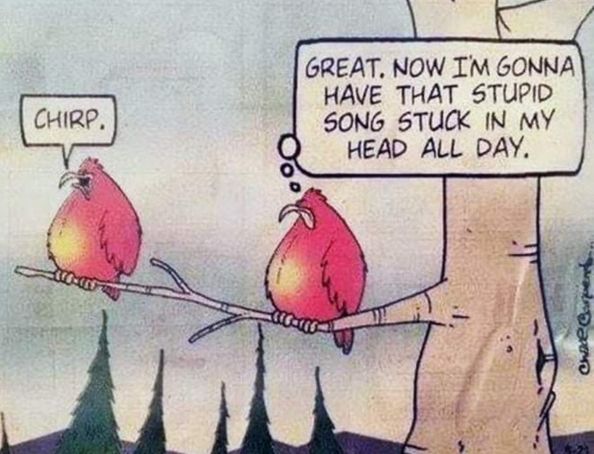 It's a damn good observation. Birdsongs are relatively rigid recordings that play the same way every time. Each bird makes small variations, but the theme is recognizable.
Earworms (what I call the mental jukebox) are also rigid recordings with variations. Does our earworm mechanism occupy the same brain structure, or derive from the same gene set, as the bird's standard song? Is this another bird-human parallel?
It's a damn good observation. Birdsongs are relatively rigid recordings that play the same way every time. Each bird makes small variations, but the theme is recognizable.
Earworms (what I call the mental jukebox) are also rigid recordings with variations. Does our earworm mechanism occupy the same brain structure, or derive from the same gene set, as the bird's standard song? Is this another bird-human parallel?Labels: Answered better than asked, Grand Blueprint
¶ 10:46 AM
Labels: Carver, defensible cases, defensible times, Grand Blueprint, storage
¶ 2:10 PM
 For some reason this particular typo evades all proofreaders. Leaving aside words with plausible alternative spellings, Sante Fe is the champion typo. Anticipatory coarticulation.
The authors see the problems clearly. Taxonomy stopped working a long time ago. Concepts like species and individual simply don't fit the real world. A forest or a field of grass is an individual and a huge group of individuals. Functional modules are sometimes separated by cell boundaries and sometimes not. Many "species" have turned out to be different settings of the variable epigenes, not different settings of the constant genes.
For some reason this particular typo evades all proofreaders. Leaving aside words with plausible alternative spellings, Sante Fe is the champion typo. Anticipatory coarticulation.
The authors see the problems clearly. Taxonomy stopped working a long time ago. Concepts like species and individual simply don't fit the real world. A forest or a field of grass is an individual and a huge group of individuals. Functional modules are sometimes separated by cell boundaries and sometimes not. Many "species" have turned out to be different settings of the variable epigenes, not different settings of the constant genes.
Using this definition vastly increases what can be seen as life, to include concepts such as culture, forests, and the economy. A more traditional definition might consider these as products of life, rather than life itself. "Human culture lives on the material of minds, much like multicellular organisms live on the material of single-celled organisms," Kempes explains. Based on their new definition, the researchers argue that life has emerged many times on Earth, and that we in fact are co-existing with many forms of current life.They are trying to steer away from crude physics and materialism, but their proposal is still too static, too materialistic. It appears to pivot on the tired notion of energy efficiency:
For example, life uses many gradients of energy production using the level one constraints, but all of these must adhere to the level two constraint of the law of thermodynamics. "No cell will be found to contain more internal structure than can be accounted for by the total free energy available from the environment," the team writes in their paper.Is complexity limited by available energy? No. MAINTAINING a more complex structure doesn't require more energy. The right structure for a PURPOSE may be simple or complex. A modern car uses much less gas than a Model T. A cellphone uses much less battery energy than a 1950 tube-based computer. There's no correlation. So these authors aren't anywhere near a usable redefinition, but they are starting the process with a healthy humble attitude.
Labels: Grand Blueprint
¶ 11:57 PM
Labels: asked and worth asking again, Grand Blueprint
¶ 10:32 PM
Nagel put a “sell by” date on the Darwinist idea of mind: I would be willing to bet that the present right-thinking consensus will come to seem laughable in a generation or two — though of course it may be replaced by a new consensus that is just as invalid. The human will to believe is inexhaustible. As a colleague points out, Nagel’s departure from the “right-thinking consensus” is on a par with Yale computer scientist David Gelernter’s 2019 farewell to Darwinism: both are major thinkers who showed that rejecting that orthodoxy can be done. Their courage also persuades me it will be done, by others of equal stature, giving intellectual permission to others in turn, until the tipping point that Nagel forecasts comes to pass. Of course, his sober warning about the next “consensus” must also be heeded.I'm not so confident about the influence of influencers. In the "virus" holocaust we've seen the same dozen serious biologists pointing out the fraud during the entire 17 fucking months. Ioannidis was first. He's still employed. The others, as I've noted, are mainly from India. They haven't been imprisoned or fired. BUT nobody else has joined them. The number of CREDENTIALED truth tellers has not changed in either direction. Nagel's pessimism about the next consensus is more realistic. Tenure and grants guarantee that Big Science will never get close to truth. Will to believe isn't the limitation. The competitive drive for STATUS is the limitation. Big Science is a ferociously competitive team sport. Grants are the scores, STATUS is the goal. Deepstate allows a few dissenters to survive, in order to create an impression of "freedom" and "democracy". Deepstate encysts those exceptions in a toxic cage that warns other potential dissenters to avoid their fate. It's a zoo of heretics.
Labels: endless hell, Grand Blueprint
¶ 11:24 PM
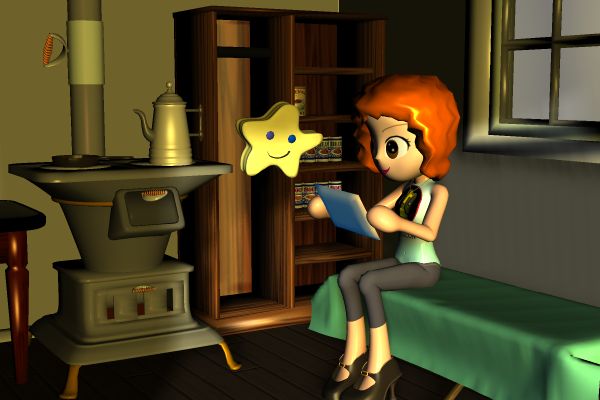 I needed some pleasant feedback this week, and Discovery provided it. Thanks!
Labels: Entertainment, Grand Blueprint
¶ 11:41 AM
Labels: endless hell, Grand Blueprint, NOW I SEE
¶ 4:41 AM
Labels: Carver, Grand Blueprint
¶ 6:22 AM
Labels: asked and worth asking again, Grand Blueprint
¶ 10:13 PM
 Data from 1909, when the Model T was just starting production. Horses and streetcars were still dominant, and would remain so until 1920. Already automobiles (85K employees) had outpaced carriages (82K employees). But this wasn't a displacement. Carriage makers were actually subsumed into the auto industry. Studebaker switched directly from buggies to cars. Billy Durant was a buggy maker when he bought Buick to start GM. Many other carriage-makers turned into auto body makers like Fisher, which later became part of major auto companies. In other words, the buggy industry became the auto industry.
The real loss was railroads, not carriages.
A quick comparison from 1909 to 2011. The categories have changed. I assume whips are part of "manufactured leather goods", and I assume that the handful of carriages still produced for horse racing and parades are part of "other transportation", which cites golf carts as an example.
1909 whips 2k / 2011 leather 12k
1909 railroad rolling stock 400k / 2011 railroad rolling stock 27k
1909 automobiles 85k / 2011 "transportation equipment" 1.2M
1909 carriages 82k / 2011 "golf carts, etc" 12k
Where's technology in all of this? Present but complicated. Yes, autos were a new technology, but they expanded the carriage industry into a new form. They didn't kill carriages. They did kill passenger railroads, but freight railroads are still a huge industry, still successful with 1940's tech.
So tech is NOT the primary force in the buggy-whip story, and these sectors are NOT the real losses to American manufacturing anyway.
The real losses are clothing, appliances, electronics and household supplies. And in those sectors technology was a REVERSE force. American workers were replaced by Chinese and Pakistani workers using LOWER technology, solely because America-based corporations are treasonous mass murderers who enjoy slaughtering an entire nation to improve their share value.
I wonder what the 'beta' is? The coefficient of slaughter? How many millions of lives need to be destroyed for a one dollar increment in share value? I'm sure Goldman has a well-calibrated equation.
= = = = = END REPRINT.
Footnote: There's one notable exception to the rule. Armbruster Stageway was founded in 1880 as a stagecoach builder, and is still in business in the same unlikely place, still making only bodies and modifications for cars. Never merged, never switched to making complete cars.
Data from 1909, when the Model T was just starting production. Horses and streetcars were still dominant, and would remain so until 1920. Already automobiles (85K employees) had outpaced carriages (82K employees). But this wasn't a displacement. Carriage makers were actually subsumed into the auto industry. Studebaker switched directly from buggies to cars. Billy Durant was a buggy maker when he bought Buick to start GM. Many other carriage-makers turned into auto body makers like Fisher, which later became part of major auto companies. In other words, the buggy industry became the auto industry.
The real loss was railroads, not carriages.
A quick comparison from 1909 to 2011. The categories have changed. I assume whips are part of "manufactured leather goods", and I assume that the handful of carriages still produced for horse racing and parades are part of "other transportation", which cites golf carts as an example.
1909 whips 2k / 2011 leather 12k
1909 railroad rolling stock 400k / 2011 railroad rolling stock 27k
1909 automobiles 85k / 2011 "transportation equipment" 1.2M
1909 carriages 82k / 2011 "golf carts, etc" 12k
Where's technology in all of this? Present but complicated. Yes, autos were a new technology, but they expanded the carriage industry into a new form. They didn't kill carriages. They did kill passenger railroads, but freight railroads are still a huge industry, still successful with 1940's tech.
So tech is NOT the primary force in the buggy-whip story, and these sectors are NOT the real losses to American manufacturing anyway.
The real losses are clothing, appliances, electronics and household supplies. And in those sectors technology was a REVERSE force. American workers were replaced by Chinese and Pakistani workers using LOWER technology, solely because America-based corporations are treasonous mass murderers who enjoy slaughtering an entire nation to improve their share value.
I wonder what the 'beta' is? The coefficient of slaughter? How many millions of lives need to be destroyed for a one dollar increment in share value? I'm sure Goldman has a well-calibrated equation.
= = = = = END REPRINT.
Footnote: There's one notable exception to the rule. Armbruster Stageway was founded in 1880 as a stagecoach builder, and is still in business in the same unlikely place, still making only bodies and modifications for cars. Never merged, never switched to making complete cars.Labels: Grand Blueprint
¶ 11:01 PM
The percentage of people who suddenly become lucid on the point of death may be small but their stories are remarkable. Psychology Today notes a survey by researchers Alexander Batthyány and Michael Nahm: So far, the response rate to the questionnaire has been limited. While the results are in no way definitive, out of the 227 dementia patients tracked, approximately 10 percent exhibited terminal lucidity. From his literature review, Nahm has reported that approximately 84 percent of people who experience terminal lucidity will die within a week, with 42 percent dying the same day.This raises the possibility that some dementia is an overinhibition of function, not a loss of function. Near death, as systems are shutting down, the inhibition shuts off first. = = = = = Inhibiting an existing function is used in technology on many levels. In the analog era, shifters and switches and ignition locks were sometimes blocked with physical doors, to adapt for US laws and customs, or to create an option that could be "enabled" by the dealer. Euro carmakers recognized the American preference for insecure locks and dumbed down their cars for American use. My '63 R8 had a steering-lock ignition ...
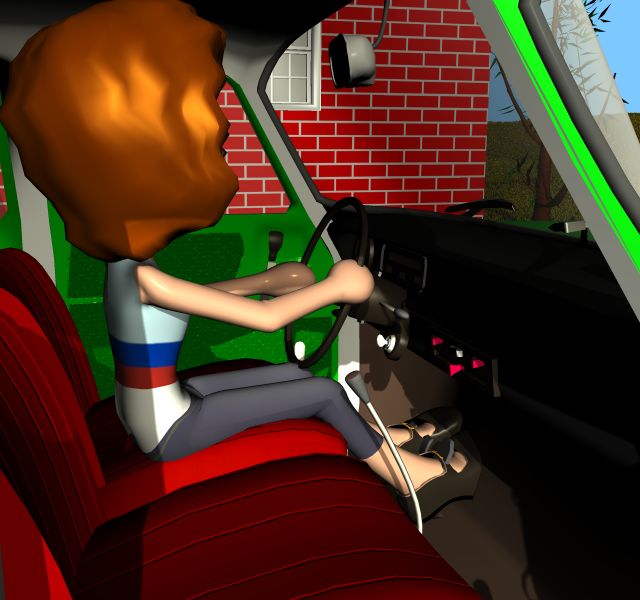 ... but the deadbolt into the column was removed in the US edition. The same R8 also had a physical block on one end of the light lever, blocking off the high-beam position so the high beam could be diverted to the foot dimmer switch for Americans.
There was no legal requirement for either of these blocks, and the car would have been BETTER if they were unblocked. I unblocked the light lever and removed the dimmer pedal, but I couldn't undo the ignition.
When Nash used an Austin engine and transmission for the Metropolitan, they blocked off first gear to 'de-option' a four-speed down to a three-speed.
When Chrysler turned a regular three-speed transmission into a semi-auto, they blocked off first so the physical shifter had only Drive-hi and Drive-lo.
Similar blocks are common in the digital world. Most big programs have a trial version which is the same code as the paid version. When you pay the subscription, the gate is removed from the extra features. Same with paywalled websites. The content is all there but you have to pay to remove the extra gate in front of it.
Sometimes the pay is reversed. When the electric company switched to "smart" meters, I paid to stick with "unsmart" meters that require a physical reading every month. The meter includes the "smart", and I'm allegedly paying to BLOCK or turn off the "smart". I don't believe it's really turned off. I only want to let Avista know that some customers are willing to pay for "unsmart". It's like "voting" to record a preference while knowing good and goddamn well that "voting" doesn't work.
Back to living things... I often wish I could unblock the huge section of my imagination that is open during dreamtime. It generates original locations and characters and dialog that I can't possibly access in waketime. LSD doesn't open the paywall. I tried it in hippie days, and it didn't "open the doors" as Huxley said, it just produced a bunch of weird shit that wasn't imaginative.
The newer understanding of the genome is more like the Avista arrangement. Full functionality is available on the original platform. Each phylum and order and genus pays to have the unwanted genes turned off for convenience.
... but the deadbolt into the column was removed in the US edition. The same R8 also had a physical block on one end of the light lever, blocking off the high-beam position so the high beam could be diverted to the foot dimmer switch for Americans.
There was no legal requirement for either of these blocks, and the car would have been BETTER if they were unblocked. I unblocked the light lever and removed the dimmer pedal, but I couldn't undo the ignition.
When Nash used an Austin engine and transmission for the Metropolitan, they blocked off first gear to 'de-option' a four-speed down to a three-speed.
When Chrysler turned a regular three-speed transmission into a semi-auto, they blocked off first so the physical shifter had only Drive-hi and Drive-lo.
Similar blocks are common in the digital world. Most big programs have a trial version which is the same code as the paid version. When you pay the subscription, the gate is removed from the extra features. Same with paywalled websites. The content is all there but you have to pay to remove the extra gate in front of it.
Sometimes the pay is reversed. When the electric company switched to "smart" meters, I paid to stick with "unsmart" meters that require a physical reading every month. The meter includes the "smart", and I'm allegedly paying to BLOCK or turn off the "smart". I don't believe it's really turned off. I only want to let Avista know that some customers are willing to pay for "unsmart". It's like "voting" to record a preference while knowing good and goddamn well that "voting" doesn't work.
Back to living things... I often wish I could unblock the huge section of my imagination that is open during dreamtime. It generates original locations and characters and dialog that I can't possibly access in waketime. LSD doesn't open the paywall. I tried it in hippie days, and it didn't "open the doors" as Huxley said, it just produced a bunch of weird shit that wasn't imaginative.
The newer understanding of the genome is more like the Avista arrangement. Full functionality is available on the original platform. Each phylum and order and genus pays to have the unwanted genes turned off for convenience.Labels: Grand Blueprint
¶ 1:29 PM
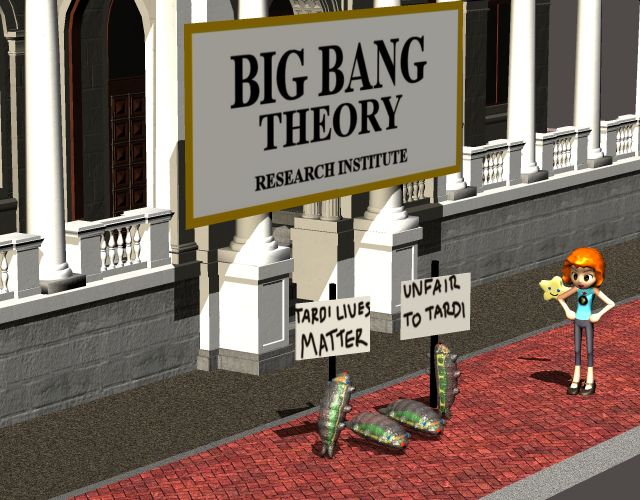 Maybe it's not so amusing.
There are many similar critters living in the same places. Arthropods, annelids, nematodes, rotifers. Some are more complex than tardis, some are simpler. Tardis are ordinary in size and complexity.
Only tardis have superpowers.
None of those other critters have special mechanisms to survive all sorts of conditions that don't happen in nature. A shady moss grove doesn't experience gamma rays, vacuum, absolute zero, or being shot from guns.
It's clear that Tardi Lives Mattered in the mind of the designer. Why? Were tardis the original colonists sent to establish life on earth? Or sent from earth to colonize other planets? They have exactly the powers needed for a long spaceflight. After the flight, they live everywhere and they're inconspicuous and innocuous, maybe even cute. Nobody hates them.
Maybe it's not so amusing.
There are many similar critters living in the same places. Arthropods, annelids, nematodes, rotifers. Some are more complex than tardis, some are simpler. Tardis are ordinary in size and complexity.
Only tardis have superpowers.
None of those other critters have special mechanisms to survive all sorts of conditions that don't happen in nature. A shady moss grove doesn't experience gamma rays, vacuum, absolute zero, or being shot from guns.
It's clear that Tardi Lives Mattered in the mind of the designer. Why? Were tardis the original colonists sent to establish life on earth? Or sent from earth to colonize other planets? They have exactly the powers needed for a long spaceflight. After the flight, they live everywhere and they're inconspicuous and innocuous, maybe even cute. Nobody hates them.
Labels: Asked and unanswered, Entertainment, Grand Blueprint
¶ 12:53 AM
The form of the vestibular system is a window into understanding bodies in motion. One vestibular cluster corresponded with "sophisticated" fliers, species with a high level of aerial maneuverability. This included birds of prey and many songbirds. Another cluster centered around "simple" fliers like modern fowl, which fly in quick, straight bursts, and soaring seabirds and vultures. Most significantly, the inner ears of birdlike dinosaurs called troodontids, pterosaurs, Hesperornis, and the "dino-bird" Archaeopteryx fall within this cluster.In other words, dinobirds were chickens. We also know how the configuration of the cochlea correlates with frequency range of living animals.
Bhullar said the data suggest that the cochlear shape's transformation in ancestral reptiles coincided with the development of high-pitched location, danger, and hatching calls in juveniles. It implies that adults used their new inner ear feature to parent their young, the researchers said. "All archosaurs sing to each other and have very complex vocal repertoires," Bhullar said. "We can reasonably infer that the common ancestors of crocodiles and birds also sang. But what we didn't know was when that occurred in the evolutionary line leading to them. We've discovered a transitional cochlea in the stem archosaur Euparkeria, suggesting that archosaur ancestors began to sing when they were swift little predators a bit like reptilian foxes."An important distinction on the production side might complicate these inferences about the reception side. The configuration of the vocal tract determines the style of singing.
 Default mammals, with spine and head horizontal, have very little resonance. The larynx is immediately followed by the mouth, which is typically open on both sides. There's no cavity or tube or column after the larynx.
Humans, with spine and head vertical, are built like a pipe organ or train whistle. The pharynx is a closed Helmholtz resonator above the larynx, with the mouth branching off and providing another closed resonator.
Birds are bugles. The mouthpiece or reed is at the bottom of a long resonator with muscular control. The beak is open on both sides like a cat, but the beak isn't needed as a resonator.
Resonators phase-lock the song into discrete notes.
The cochlear inferences are mixing fox-type and bird-type dinos together, which misses an important part of the signaling and coding ability. Bird-like discrete notes make language possible. Fox-like howling is a signal, but doesn't allow for detailed coding by discrete symbols.
Default mammals, with spine and head horizontal, have very little resonance. The larynx is immediately followed by the mouth, which is typically open on both sides. There's no cavity or tube or column after the larynx.
Humans, with spine and head vertical, are built like a pipe organ or train whistle. The pharynx is a closed Helmholtz resonator above the larynx, with the mouth branching off and providing another closed resonator.
Birds are bugles. The mouthpiece or reed is at the bottom of a long resonator with muscular control. The beak is open on both sides like a cat, but the beak isn't needed as a resonator.
Resonators phase-lock the song into discrete notes.
The cochlear inferences are mixing fox-type and bird-type dinos together, which misses an important part of the signaling and coding ability. Bird-like discrete notes make language possible. Fox-like howling is a signal, but doesn't allow for detailed coding by discrete symbols.Labels: Grand Blueprint, Language update
¶ 4:51 AM
Attraction to feces in wild mammalian species is extremely rare. Here we introduce the horse manure rolling (HMR) behavior of wild giant pandas (Ailuropoda melanoleuca). Pandas not only frequently sniffed and wallowed in fresh horse manure, but also actively rubbed the fecal matter all over their bodies. The frequency of HMR events was highly correlated with an ambient temperature lower than 15 °C. BCP/BCPO (beta-caryophyllene/caryophyllene oxide) in fresh horse manure was found to drive HMR behavior and attenuated the cold sensitivity of mice by directly targeting and inhibiting transient receptor potential melastatin 8 (TRPM8), an archetypical cold-activated ion channel of mammals. Therefore, horse manure containing BCP/BCPO likely bestows the wild giant pandas with cold tolerance at low ambient temperatures. Together, our study described an unusual behavior, identified BCP/BCPO as chemical inhibitors of TRPM8 ion channel, and provided a plausible chemistry-auxiliary mechanism, in which animals might actively seek and utilize potential chemical resources from their habitat for temperature acclimatization.Rolling in shit is ENTERTAINING, no matter how precise and Krautistic the description. It's especially funny when funny critters like pandas do it. Dense jargon and sober acronyms only make it funnier. There's also an ID corollary. Pandas eat nothing but bamboo, which implies that the two must have developed simultaneously. Now we know that pandas roll in horseshit, and dab it all over their fur, which also implies simultaneous development and reliable simultaneous presence in the same place.
Labels: Entertainment, Grand Blueprint
¶ 8:24 AM
We will soon be ending support for the Cortana app on Android and iOS, as Cortana continues its evolution as a productivity assistant. As of March 31, 2021, the Cortana content you created—such as reminders and lists—will no longer function in the Cortana mobile app, but can still be accessed through Cortana in Windows. Also, Cortana reminders, lists, and tasks are automatically synced to the Microsoft To Do app, which you can download to your phone for free. After March 31, 2021, the Cortana mobile app on your phone will no longer be supported.Of course the understanding is accidental, just a corporate buzzword, but still correct. A genome or an invention or a language starts out with all important features, then loses them.
Labels: Grand Blueprint
¶ 12:06 AM
Labels: Grand Blueprint, Smarty-plants
¶ 9:00 AM

