Labels: endless hell, Jail mode, metametrology
¶ 5:57 AM

Labels: Constants and Variables, metametrology
¶ 11:44 PM
 = = = = =
The question:
Personal Equation Machines calibrate and exercise an astronomer's accuracy and reliability in detecting the truth of a sidereal transit. This is an extremely specialized calibration. Can we find a way to calibrate and train broader powers of truth detection?
If it's possible at all, I think a balance or bridge is a promising path. I'm continuing from last week's discussion of balances and bridges.
= = = = =
I'll use two different types of balance or bridge to show how a balance can detect dynamic or functional qualities, not just static measurements like weight and resistance. These balances send a signal toward the object being measured, and detect the difference between the sent and received signal. If the object is a faithful reflector or amplifier, the difference can be nulled. If the object introduces its own distortions, the difference can't be nulled.
First: The standing-wave balance, commonly used in acoustics labs, sends a steady sound wave down a tube toward a sample of an unknown substance. By changing the frequency of the wave you can set up a resonance in the tube. If you can achieve a resonance or standing wave, you can measure the difference between incident and reflected waves by measuring the strength at the nodes or low points. A perfect reflection leads to zero pressure at the node points.
= = = = =
The question:
Personal Equation Machines calibrate and exercise an astronomer's accuracy and reliability in detecting the truth of a sidereal transit. This is an extremely specialized calibration. Can we find a way to calibrate and train broader powers of truth detection?
If it's possible at all, I think a balance or bridge is a promising path. I'm continuing from last week's discussion of balances and bridges.
= = = = =
I'll use two different types of balance or bridge to show how a balance can detect dynamic or functional qualities, not just static measurements like weight and resistance. These balances send a signal toward the object being measured, and detect the difference between the sent and received signal. If the object is a faithful reflector or amplifier, the difference can be nulled. If the object introduces its own distortions, the difference can't be nulled.
First: The standing-wave balance, commonly used in acoustics labs, sends a steady sound wave down a tube toward a sample of an unknown substance. By changing the frequency of the wave you can set up a resonance in the tube. If you can achieve a resonance or standing wave, you can measure the difference between incident and reflected waves by measuring the strength at the nodes or low points. A perfect reflection leads to zero pressure at the node points.
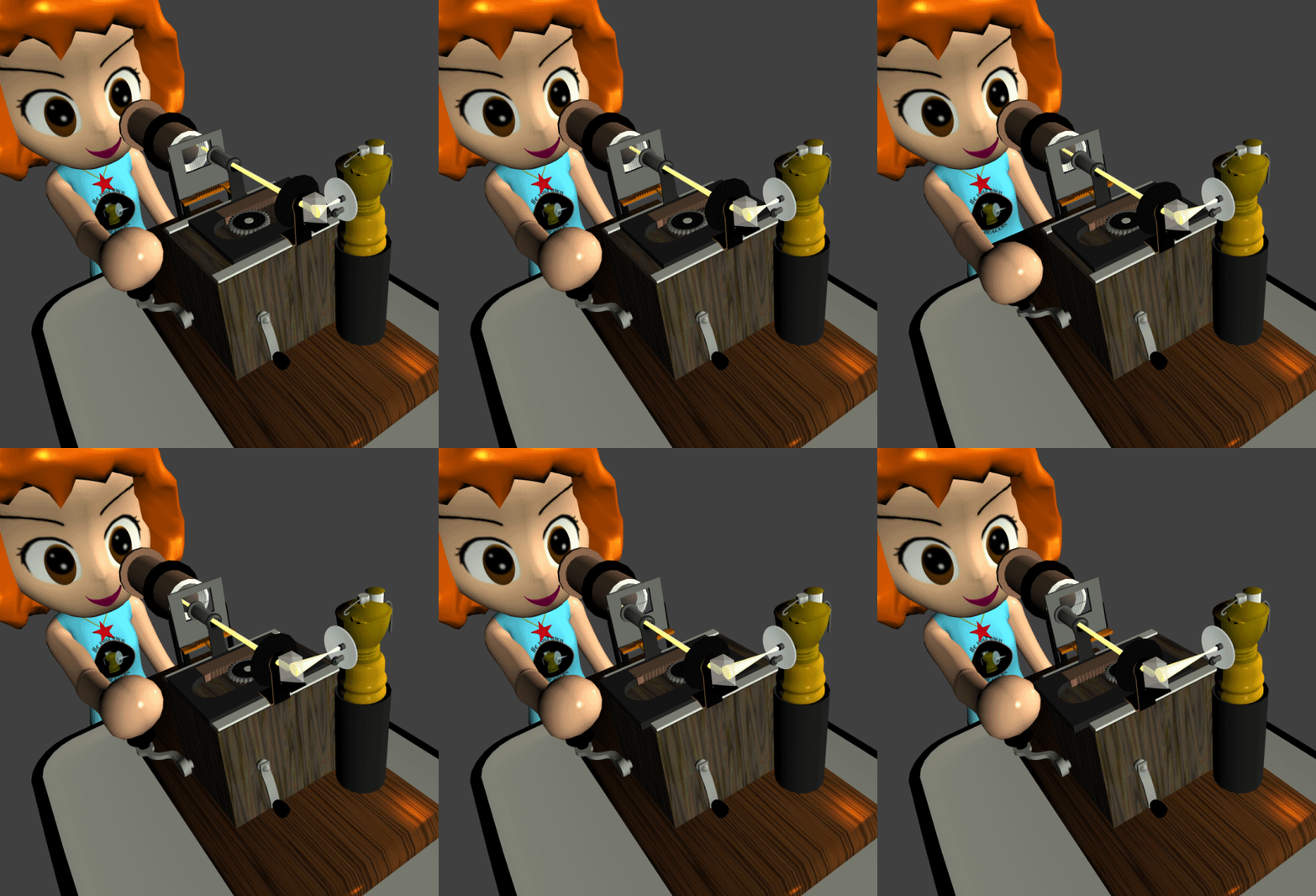
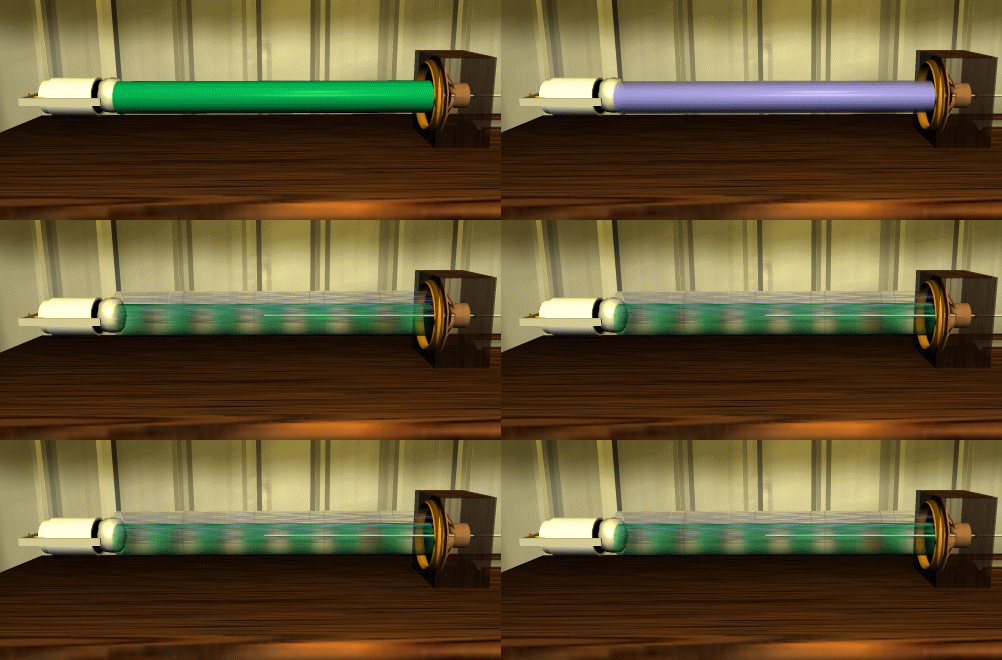
 Here we're using a GenRad tuning fork oscillator to drive the speaker, and using a GenRad sound level meter to pick up the resultant sound. The sample goes in the cap at the left end. The microphone has a long probe extending through the speaker into the resonance tube, and the probe can be moved back and forth by pushing the microphone car. (Incidentally, the car is sort of fun to 'drive', and can be controlled vernierly with the big wheels.)
 Polistra has opened up the sample cap, and Happystar has a precut sample of an unknown material ready for insertion.
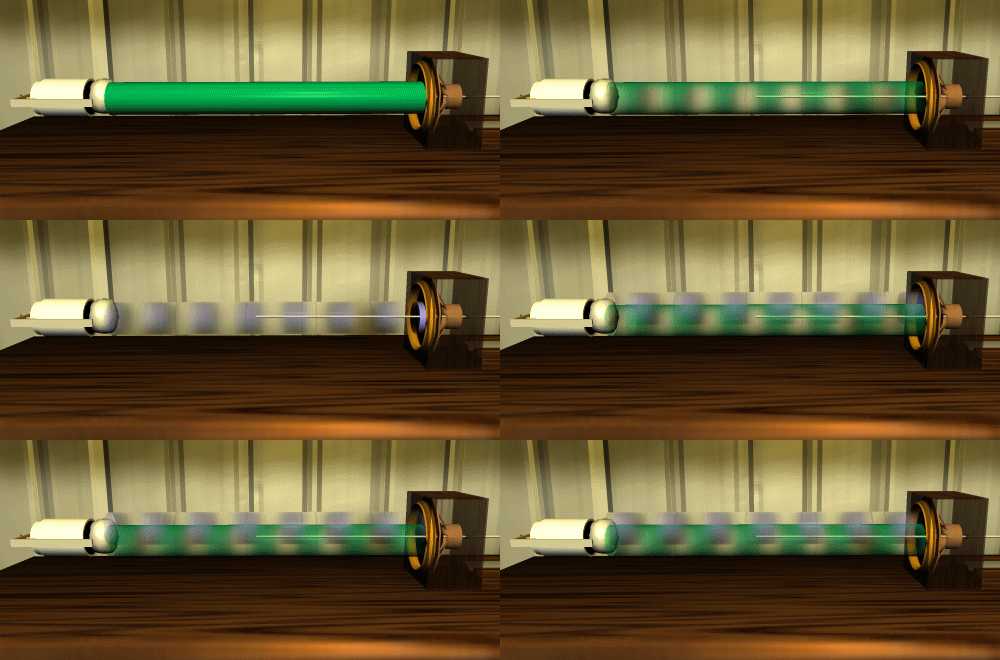
 With the oscillator driving the speaker, we can see the green outgoing wave first, then the violet reflected wave by itself, then the interference pattern of the incident and reflected waves. The open end of the microphone probe is roughly centered in the tube. (I've shifted the reflected wave upward for easier visibility.)
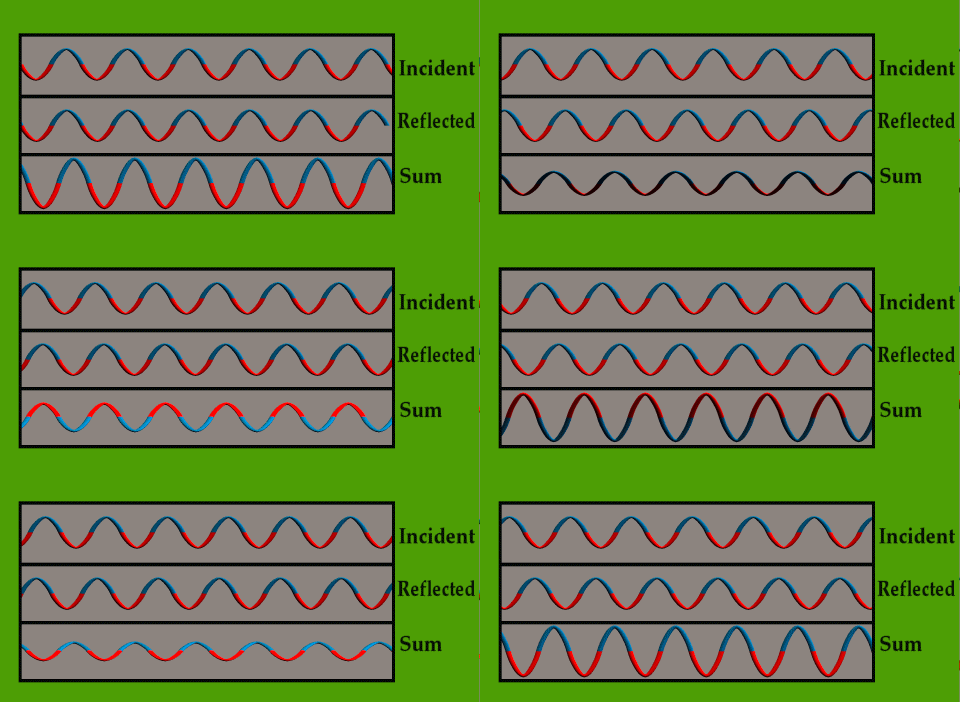
 Here's a more schematic image of what really happens. Bear in mind that there's no such thing as zero air pressure. Sound waves are repetitions of increased pressure (red) and decreased pressure (blue) with the "zero" crossings at normal atmospheric pressure. As the incident and reflected waves move through the tube, the actual audible and measurable pressure at each location is always the result of mixing or summing the increased and decreased pressures. The nodes are the places that stay centered as the mix goes up and down.
 = = = = =
Now we bring in the original question of sensing or measuring faithfulness of reflection. What happens when the material sample distorts the sound instead of just reflecting part of it? Some materials contain a variety of internal resonators that catch certain frequencies and create their own signals in response. Living things do this all the time.
= = = = =
Now we bring in the original question of sensing or measuring faithfulness of reflection. What happens when the material sample distorts the sound instead of just reflecting part of it? Some materials contain a variety of internal resonators that catch certain frequencies and create their own signals in response. Living things do this all the time.
 There's no way to detect a node or null now, because the reflection isn't simply a copy or a negative copy of the original. There might be some points of lower sound, but they will be hard to spot amid the extra frequencies emitted by the active responder.
Several measuring tools for hearing are designed to pick up active live responses. The best is the OAE (oto-acoustic emission) instrument, which I detailed here. The OAE measurement is a truth detector, and is used in real life to detect fake claims of hearing damage.
= = = = =
Second example of a dynamic balance or bridge: an old GenRad tube tester.
There's no way to detect a node or null now, because the reflection isn't simply a copy or a negative copy of the original. There might be some points of lower sound, but they will be hard to spot amid the extra frequencies emitted by the active responder.
Several measuring tools for hearing are designed to pick up active live responses. The best is the OAE (oto-acoustic emission) instrument, which I detailed here. The OAE measurement is a truth detector, and is used in real life to detect fake claims of hearing damage.
= = = = =
Second example of a dynamic balance or bridge: an old GenRad tube tester.
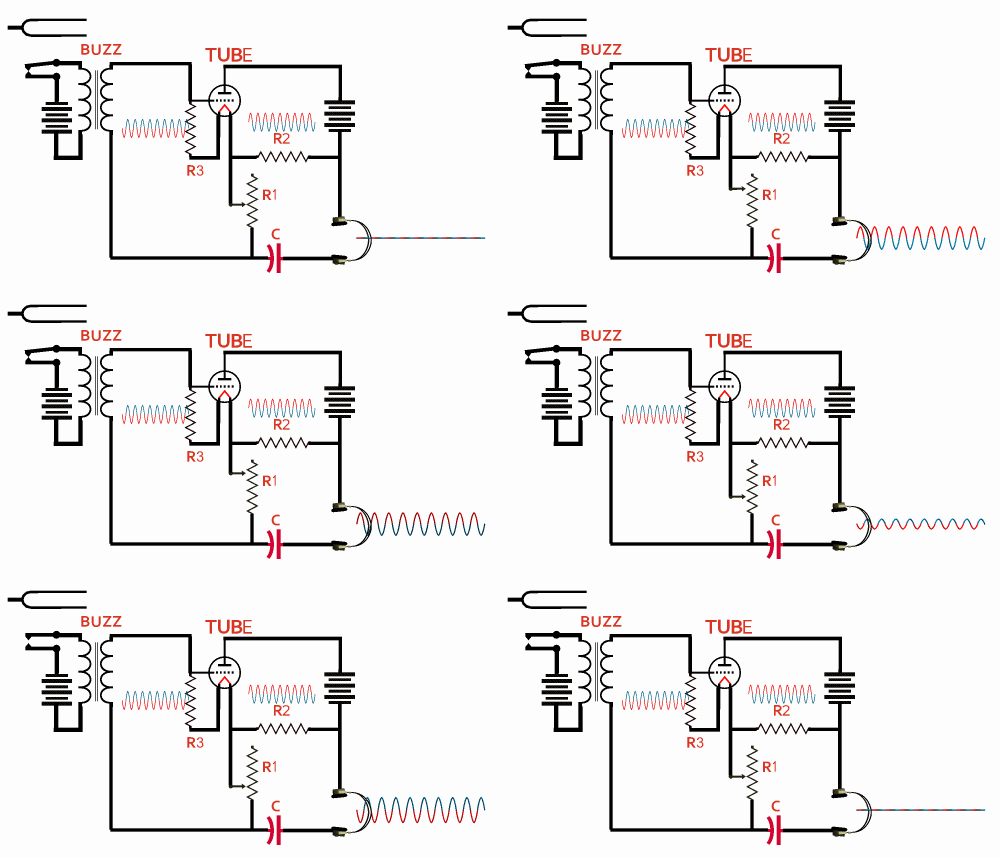
 We have the same basic pieces. A tone generator drives the grid of the tube. When the voltage between the grid and filament of the tube increases, the flow from filament to plate decreases, and thus the voltage in the output loop. Ideally the output loop should provide an amplified reflection of the input loop. The earphones pick up the difference or balance point between the two loops. Adjusting the variable resistor R1 is like adjusting the small weight on a balance, compensating for the amplification.
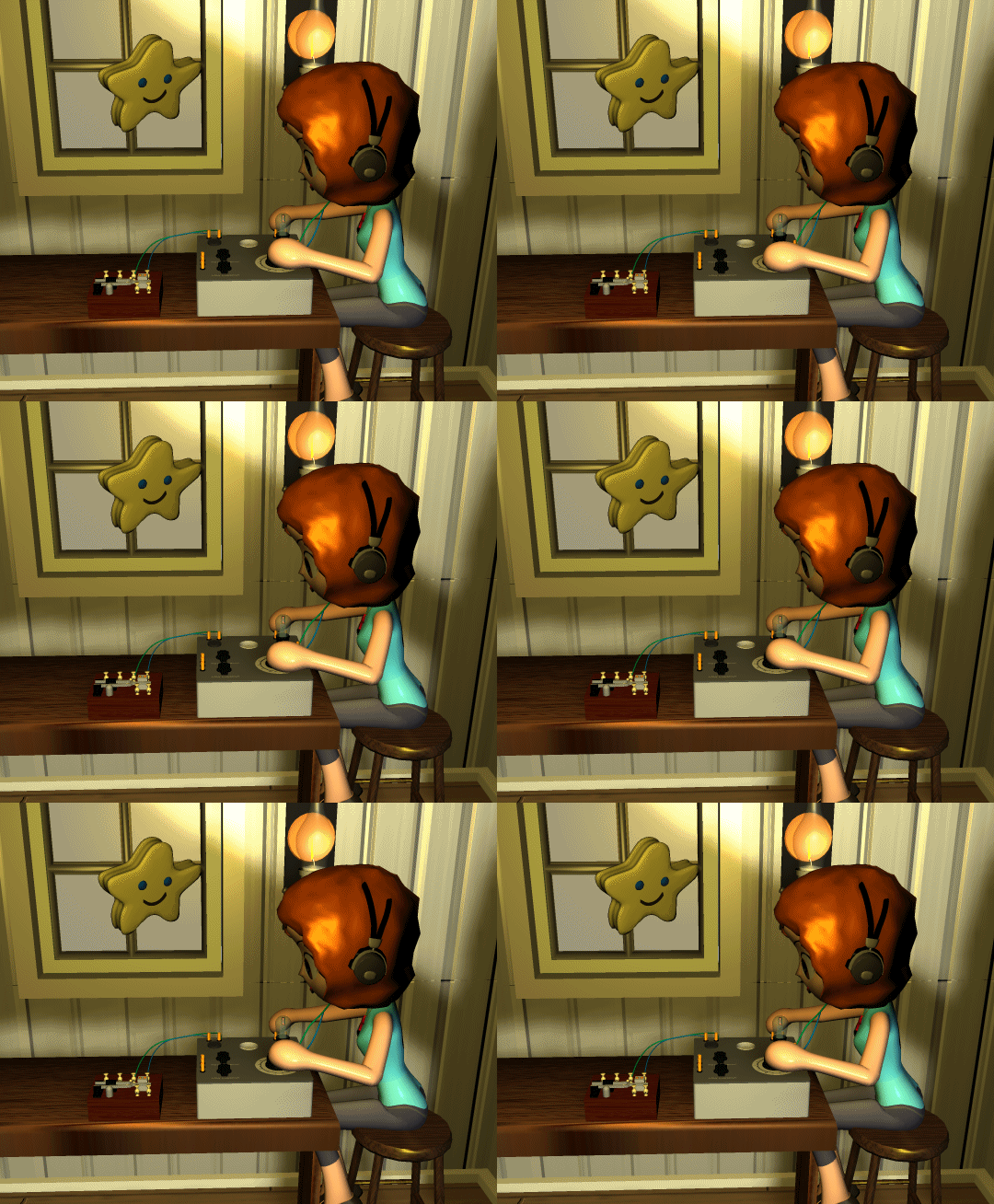
 Here Polistra is listening for the null while adjusting the resistor to reduce the amplification to equality.
 As the pot moves both ways, the reflection in the output loop increases and decreases. At some setting of R1, the reflection will exactly null out the incident signal. If you had to divide the output signal by 4 to hear an exact balance or null, this tells you that the tube was multiplying the input by 4. The setting of R1 thus gives the amplification figure of the tube.
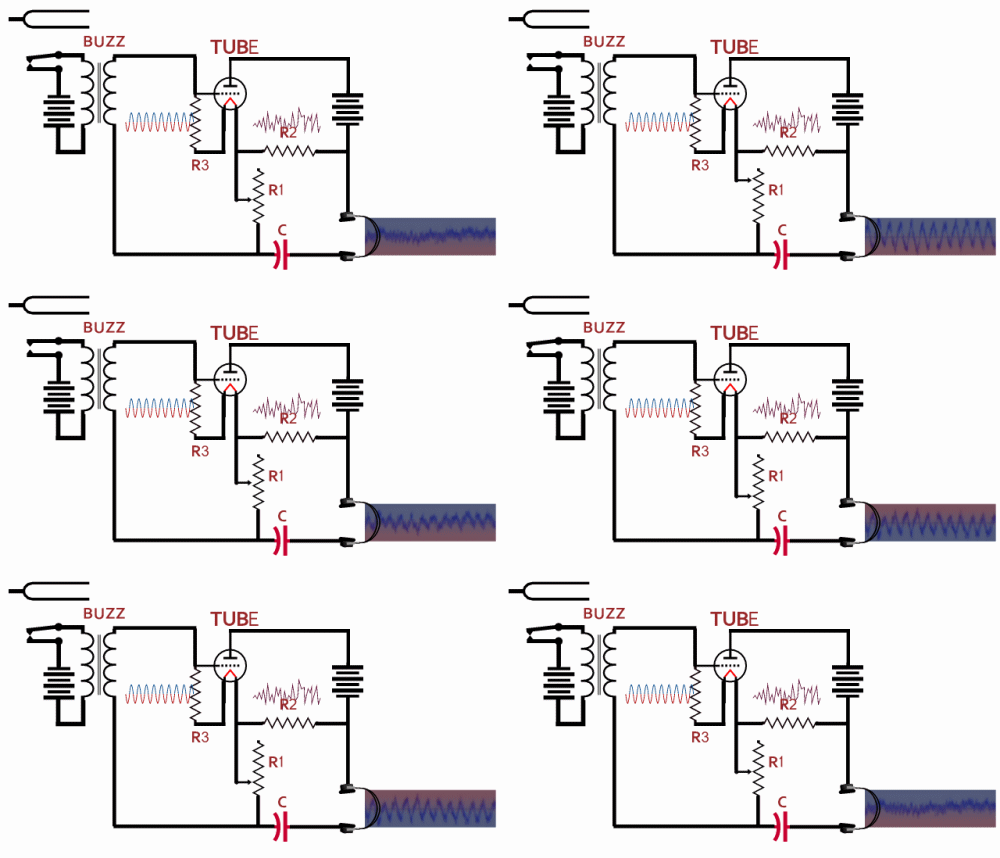
 Now we introduce distortion, as we did with the standing-wave acoustic reflection. When the sample being examined (the tube) creates its own noise or active responses, there's no chance of nulling the output. The output loop can never be either a copy or an inverted copy of the input, no matter how much it's reduced by R1. There will always be something extra audible.
 = = = = =
Both of these dynamic or functional balances can perform a service that would be hard to define and measure in a simple balance, though it's actually a common situation with a simple balance. Think of trying to weigh a puppy on a produce scale. You could tell that the animal was restless and wiggling around, but the scale wouldn't be able to measure the restless behavior itself. The wiggling would be an unwanted factor, and you'd have to approximate the mean weight in the middle of the jumping and tail-wagging.
As mentioned at the start, this doesn't reach the ultimate goal of a balance-style truth calibrator or exerciser. The active setting of the microphone car or R1 would be the equivalent of tapping the telegraph key on the Personal Equation Machine. There are several huge missing steps. How would this active setting serve as an exercise to help you USE your detection ability? How would a balance try to null out a more abstract "sample" of a moral question? Is there a more concrete "sample" that will accomplish the same exercise?
= = = = =
Language footnote: When I wrote 'trying a question' in the title, I only meant that I was intending to ask a vague question. After I wrote it I realized it's a perfectly apt description. 'Trying' in legal terminology refers obviously to what happens in a courtroom, and arcanely to checking coinage against a standard weight on a balance. See Trial of the Pyx. So trying a question is checking the question against a standard of truth on a balance.
= = = = =
Both of these dynamic or functional balances can perform a service that would be hard to define and measure in a simple balance, though it's actually a common situation with a simple balance. Think of trying to weigh a puppy on a produce scale. You could tell that the animal was restless and wiggling around, but the scale wouldn't be able to measure the restless behavior itself. The wiggling would be an unwanted factor, and you'd have to approximate the mean weight in the middle of the jumping and tail-wagging.
As mentioned at the start, this doesn't reach the ultimate goal of a balance-style truth calibrator or exerciser. The active setting of the microphone car or R1 would be the equivalent of tapping the telegraph key on the Personal Equation Machine. There are several huge missing steps. How would this active setting serve as an exercise to help you USE your detection ability? How would a balance try to null out a more abstract "sample" of a moral question? Is there a more concrete "sample" that will accomplish the same exercise?
= = = = =
Language footnote: When I wrote 'trying a question' in the title, I only meant that I was intending to ask a vague question. After I wrote it I realized it's a perfectly apt description. 'Trying' in legal terminology refers obviously to what happens in a courtroom, and arcanely to checking coinage against a standard weight on a balance. See Trial of the Pyx. So trying a question is checking the question against a standard of truth on a balance.
Labels: Asked and unanswered, Equipoise, metametrology, Metrology
¶ 1:44 PM
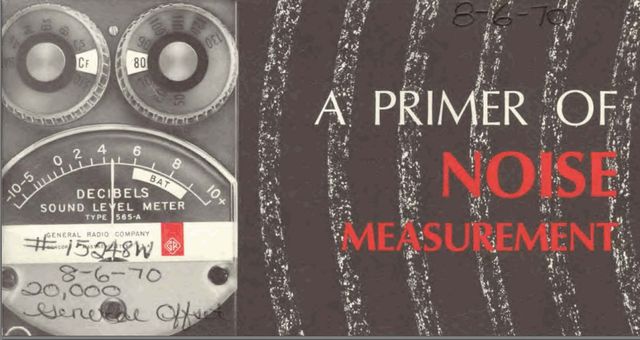 IETlabs continues to make and calibrate derivatives of GenRad products, and performs a tremendous service by maintaining old GenRad publications online. Maintaining old records of old technology is an even more important form of calibration in an era of Github memoryholing. Clearly they were using the original booklet from GenRad files, not one of the 20,000 printed copies that were ordered by the original form. Calibration at all levels! Thanks, IETlabs.
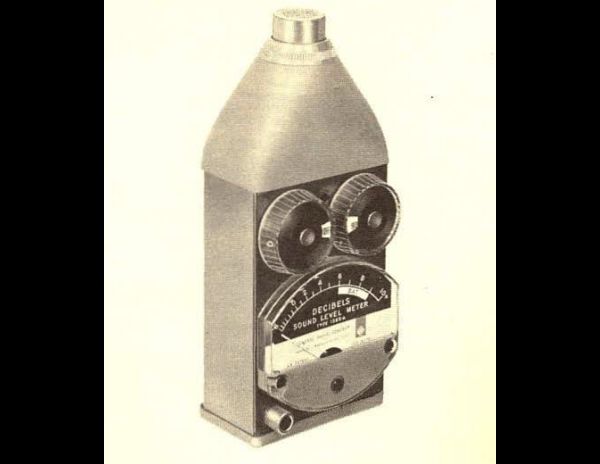
The book was aimed at industrial tech types who were suddenly required to deal with noise measurements by new OSHA regs in 1970. GenRad's simple sound level meter at that time (the 1565A) looked like this:
IETlabs continues to make and calibrate derivatives of GenRad products, and performs a tremendous service by maintaining old GenRad publications online. Maintaining old records of old technology is an even more important form of calibration in an era of Github memoryholing. Clearly they were using the original booklet from GenRad files, not one of the 20,000 printed copies that were ordered by the original form. Calibration at all levels! Thanks, IETlabs.
The book was aimed at industrial tech types who were suddenly required to deal with noise measurements by new OSHA regs in 1970. GenRad's simple sound level meter at that time (the 1565A) looked like this:
 The artist took full advantage of the meter's face, turning it into a character.
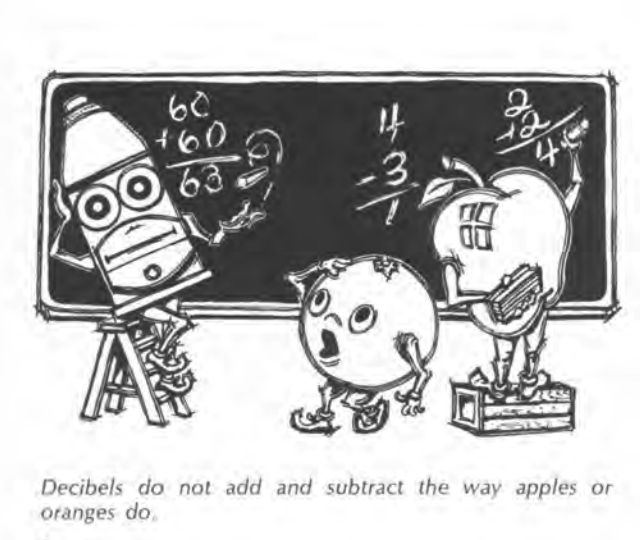 Decibels don't add like apples and oranges.
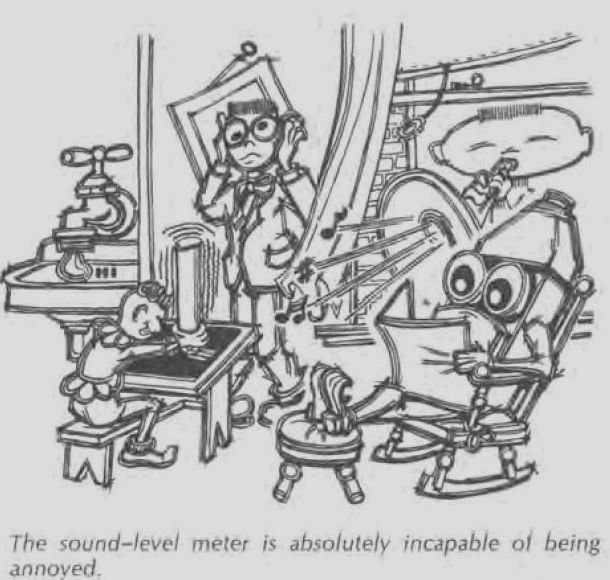 Meters and humans don't work the same way. Human hearing is totally oriented toward filtering OUT stuff that doesn't matter, and bringing IN new information in the strict sense. If a sound is meaningful and new, we focus on it, starting with the remarkable tip-link mechanism in the cochlea, and continuing all the way into the higher language centers.
The meter has no idea which sounds are meaningful. It just picks up waves of air pressure and filters them by frequency.
Here's how the GenRad book balances out the human and meter perceptions:
Meters and humans don't work the same way. Human hearing is totally oriented toward filtering OUT stuff that doesn't matter, and bringing IN new information in the strict sense. If a sound is meaningful and new, we focus on it, starting with the remarkable tip-link mechanism in the cochlea, and continuing all the way into the higher language centers.
The meter has no idea which sounds are meaningful. It just picks up waves of air pressure and filters them by frequency.
Here's how the GenRad book balances out the human and meter perceptions:
You have been told, correctly, that measurement is the first step in the solution of a noise problem, and you have made your measurements. The noise, meanwhile, continues, apparently unintimidated by your bulging data book. But your day is near; you have the facts you need to act intelligently. An effective noise-reduction program requires careful planning. The man who finds a noise level too high and immediately says, "We'll just slap some acoustical tile here and there; that ought to take care of it," will probably be disappointed at the results. Not that acoustical tile isn't a good way to reduce noise - it often is. But this approach is like shooting a person full of penicillin at the first sign of a cold.** The more prudent course is to analyze the noise (either roughly with the sound-level meter, as discussed on page 74, or in detail with a sound analyzer), decide from this analysis what to do about it, and check results by further analysis. This procedure ensures that you're reducing the noise at the frequencies you're most concerned with - usually, those frequencies that are about the same as speech frequencies.The meter can filter by freq, so you have to use those filters as a crude approximation of our PURPOSE filters. The A-weighting filter is closest to the spectrum of speech, so the A is the best setting to measure interference with meaningful communication. The B weighting tends to focus on the upper freq range that is likely to cause damage to the cochlea. C is broadest, covering the whole range of hearing while ignoring freqs that don't affect the ears at all. The handbook ends with a poem!
With so much sound-measuring equipment and counsel available, there is no longer any need to suffer the annoyance and hazards of excessive noise. Ry acquiring a sound-level meter, you will take the first step on that golden stairway to the promised land where ... Like beacons on a sea of silence Life's silver sounds invade the air: The wind plays tunes upon the trees, The stream sighs and from the mountain flees, The rain's beat, the phoebe's call - Ears were made for sounds like these.The author isn't credited, and I can't find the text online, so it might have been written at GenRad. Do any modern industries have poets on staff, or use poetry in their handbooks? Especially poetry that says ears were MADE? Not even worth asking. = = = = = These unannoyable meters need to be calibrated in an unemotional way. GenRad's own calibrator was electronic, designed to produce the usual audiometer frequencies in the glottal range. (125, 250, 500, 1k, 2k). Because it was electronic, it wasn't an absolute or definitional calibrator. It wasn't controlled by a crystal or tuning fork, so its output depended on the quality and aging of the transistors and speaker.
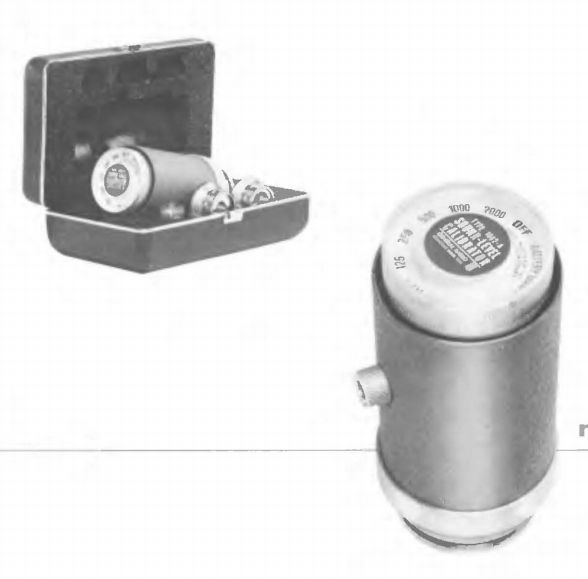 For absolute calibration, acoustics uses a pistonphone. The pistonphone is both absolute and definitional. It produces waves of air pressure with a permanent and unalterable amplitude, at a mostly consistent frequency.
 Here Polistra is using a Bruel & Kjaer pistonphone to calibrate her 1565A.
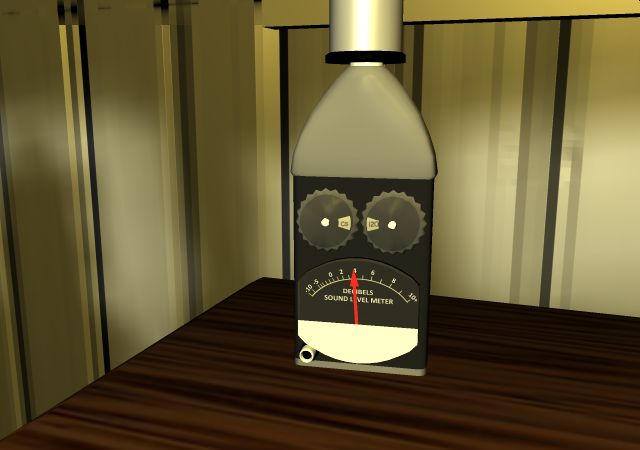 The BK pistonphone produces an absolute 124 dB at standard barometric pressure, and comes with a barometer to calibrate the calibration more precisely.
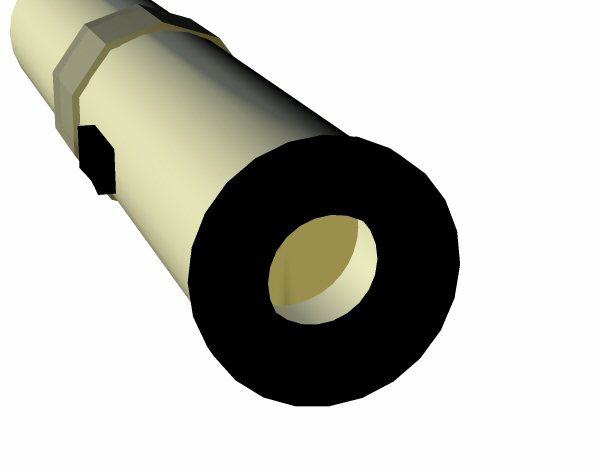 Here's the pistonphone as seen from the business end. The black plastic part fits over the standard microphone, forming a closed chamber between the pistons and the mic.
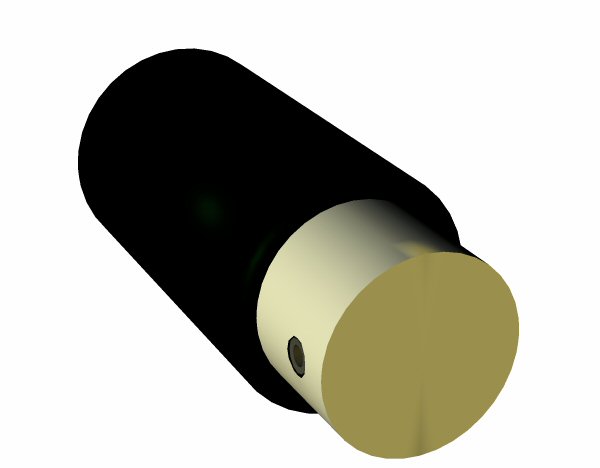 Here's the innards. When I worked in an acoustics lab at Penn State, I opened up a pistonphone to replace the batteries and saw this mysterious setup. I ass-u-me-d that the big silver thing was the piston, which seemed logical. It must push and pull directly in and out toward the mic.
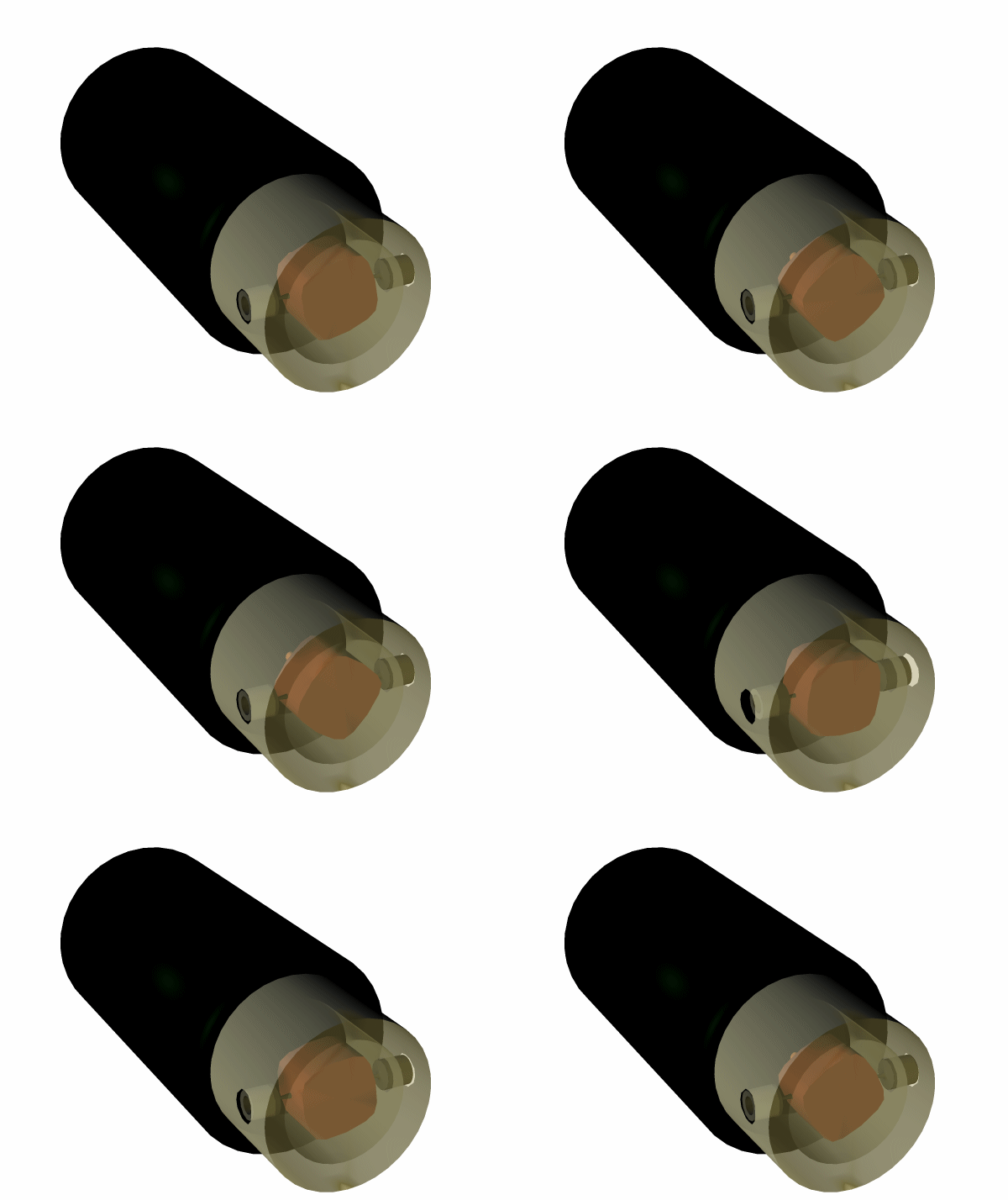 Logical but wrong. As I learned just now from the manual, the big silver thing is the 'engine block', and the little 'pins' in its sides are the actual pistons. The motor turns a cam, and the pistons ride in and out in a guaranteed sinusoid pattern with a guaranteed amplitude.
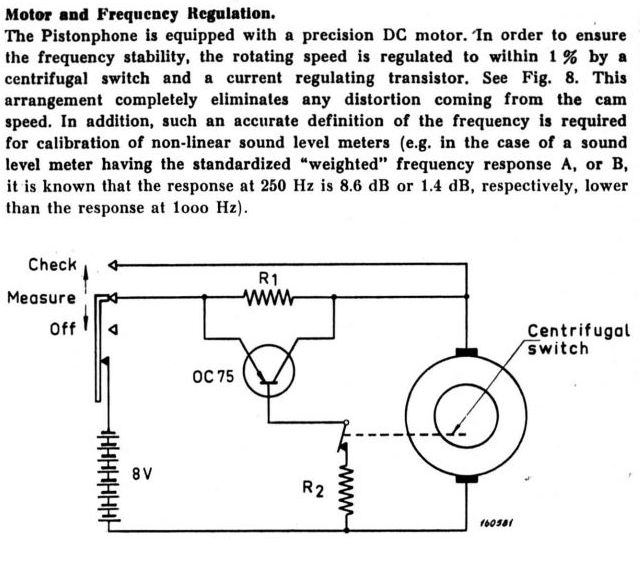 The frequency wasn't guaranteed, but BK had a clever bit of analog design to regulate it almost precisely. There was a centrifugal pusher on the same shaft with the cam, and it would break the circuit to the base of the transistor when the piston frequency went above 250 cps. This didn't turn off the motor because current still flowed around the transistor through R1; but the reduced current allowed the motor to slow down to 250 cps.
Just as the design of the human sensory system can't be reduced to software, this type of elegant analog feedback loop can't be reduced to software.
= = = = =
** Shoot everyone full of penicillin at the first sign of cold: Neanderthal primitive analogy. As we know now, the CORRECT SCIENTIFIC MEDICAL approach is to shoot everyone full of fear and panic and isolation and depression and starvation and darkness and unemployment and screeching hopeless desperation, and then strangle them to death, in order to PREVENT people who were already dying from catching colds in the middle of dying. This is SCIENCE. Back in those primitive Neanderthal times, the primitive Neanderthal knuckle-draggers called our modern progressive methods "human sacrifice" because they were completely uneducated and stupid.
The frequency wasn't guaranteed, but BK had a clever bit of analog design to regulate it almost precisely. There was a centrifugal pusher on the same shaft with the cam, and it would break the circuit to the base of the transistor when the piston frequency went above 250 cps. This didn't turn off the motor because current still flowed around the transistor through R1; but the reduced current allowed the motor to slow down to 250 cps.
Just as the design of the human sensory system can't be reduced to software, this type of elegant analog feedback loop can't be reduced to software.
= = = = =
** Shoot everyone full of penicillin at the first sign of cold: Neanderthal primitive analogy. As we know now, the CORRECT SCIENTIFIC MEDICAL approach is to shoot everyone full of fear and panic and isolation and depression and starvation and darkness and unemployment and screeching hopeless desperation, and then strangle them to death, in order to PREVENT people who were already dying from catching colds in the middle of dying. This is SCIENCE. Back in those primitive Neanderthal times, the primitive Neanderthal knuckle-draggers called our modern progressive methods "human sacrifice" because they were completely uneducated and stupid.Labels: Equipoise, metametrology, Metrology, storage
¶ 10:17 AM
Labels: Jail mode, metametrology, NOW I SEE
¶ 6:22 AM
Labels: Equipoise, metametrology
¶ 6:55 AM
But it fell to recently enacted and now compelling statutes regarding the salute of the American flag and teacher oaths of allegiance to make patriotism news during the last few weeks. Newspaper columns, both editorial and reportorial, brimmed over with stories and opinions upholding or denouncing actions or activities rising out of demands for teachers to take oaths, or students and teachers to salute the flag. Chicago commanded that all public school systems shall open with the singing of the national anthem and repeating by pupils of a pledge of allegiance to the flag. Pennsylvania Department of Public Instruction turned back to an opinion written 15 years ago to advise its school boards throughout the State they could require students to salute the flag. A Betsy Ross descendant, 14-year-old Charles Newcomb, was suspended from Boston's Weymouth High School for refusing to salute. He also is a Jehovah's Witness. Commenting on the stand of this group, an attorney appearing before Lynn, Mass., school committee explained the religious and conscientious objections. He said, "The history of the nations, including the United States, proves that Satan, the devil, is the invisible power which directs their acts. The flag of the Nation then is his flag and it would be a disobedient and dishonorable act for any true follower of Christ to salute it."Those Witnesses were right all along, but it wasn't PERFECTLY CLEAR until this year when all the fake 'oppositions' fell away revealing Satan directing the acts of all nations. Seriously, I'm going to take a closer look at the Witnesses. I've always politely taken their Watchtowers and later quietly tossed them. Maybe I was wrong. Needless to say, we do not allow conscientious objectors on ANY issue now, especially "scientific" issues like "global warming" and "variable gender" and "branded flu", where the ONLY POSSIBLE OPINION is not only Satanic but perfectly anti-logic, anti-fact, anti-science, and anti-life.
Labels: Alternate universe, metametrology
¶ 7:30 PM
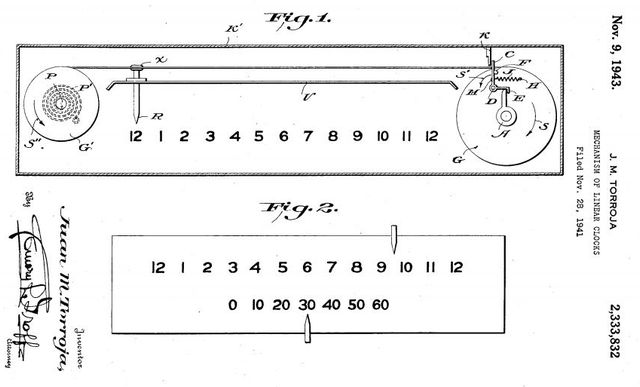
...Whereas here the hands travel, with uniform or variable movement, along a line that may be straight, curved, broken or of mixed nature, keeping or not throughout their course a direction parallel to their initial direction. At the end of the above-mentioned periods of time the hands return automatically to their starting point to travel again over the same stretch.Torroja basically inverts Gabry's mechanism. Gabry used a wrapped pulley or windlass to convert the linear consumption of fuel into rotary motion of the dial. Torroja intended his dial to be tacked onto an existing rotary clock movement, so he used a windlass to convert rotary to linear. It's strange that we haven't retried linear clocks since 1600. Other common indicators have been tried in both linear and rotary forms. Car speedometers, radio frequency dials, slide rules, traffic signals. There's no obvious correlation between the natural form of the measurement and our preferred form. With clocks, the measurement is circular and we prefer circular form. With speed, the measurement is linear and we prefer circular form. With radio freq, the measurement is linear and we prefer linear form. With slide rules, the log pattern is circular and we prefer linear form. With traffic signals, the green/yellow/red pattern is circular, and we prefer linear form... EXCEPT that circular clock-style traffic lights were common for a long time in ... Madrid.
Labels: Equipoise, metametrology, Metrology
¶ 5:45 AM
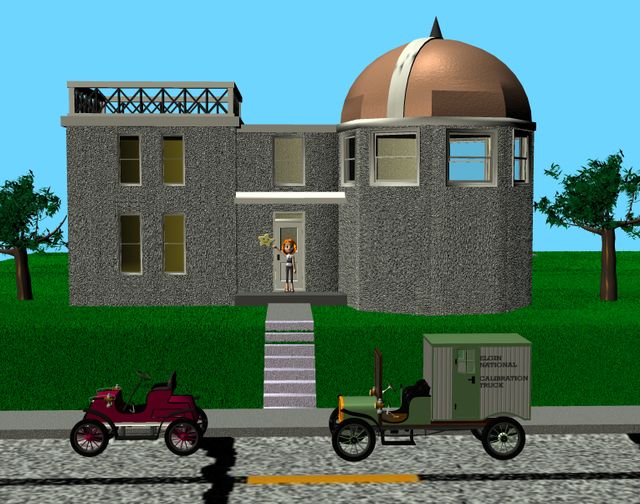 The architect was making a specific point in the alignment of the parts. He wanted the building to shout the company slogan: Elgin takes the time from the stars and puts it in your pocket.
You can't really hear the shout from this view, but it's clear from a floor plan:
The architect was making a specific point in the alignment of the parts. He wanted the building to shout the company slogan: Elgin takes the time from the stars and puts it in your pocket.
You can't really hear the shout from this view, but it's clear from a floor plan:
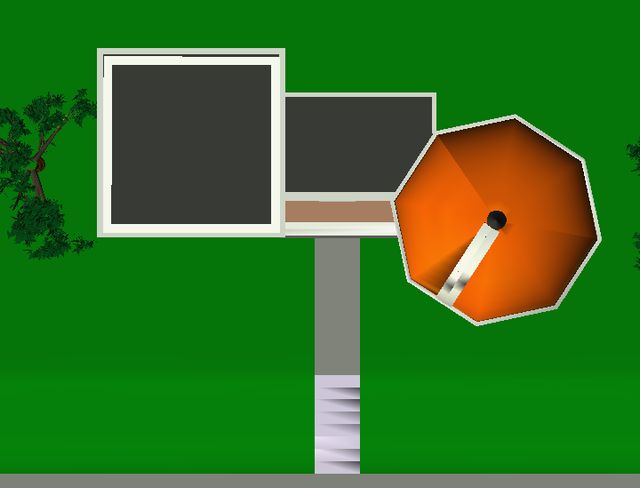 The octagon is out of sync. Octagons were common in 1910 buildings, and carpenters were accustomed to octagonal towers. If the architect had wanted maximum cost-cutting, he would have aligned the rest of the building to make 90s and 45s with the octagon. Or even simpler, a square building with the octagonal dome sitting on top.
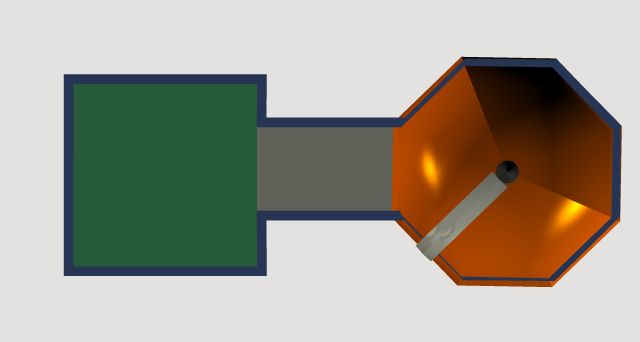 But he didn't want Economic Efficiency. He wanted to express the company's soul. He aligned the building with the streets, and aligned the dome to true north.
The dome doesn't rotate, and the telescope within doesn't rotate. Strictly speaking it's a transit, not a telescope, because its sole purpose is to calibrate the transit of a star across a set of vertical lines. It's firmly attached to the earth with a 60 foot deep concrete pier, slightly separated from the building structure to avoid vibration.
But he didn't want Economic Efficiency. He wanted to express the company's soul. He aligned the building with the streets, and aligned the dome to true north.
The dome doesn't rotate, and the telescope within doesn't rotate. Strictly speaking it's a transit, not a telescope, because its sole purpose is to calibrate the transit of a star across a set of vertical lines. It's firmly attached to the earth with a 60 foot deep concrete pier, slightly separated from the building structure to avoid vibration.
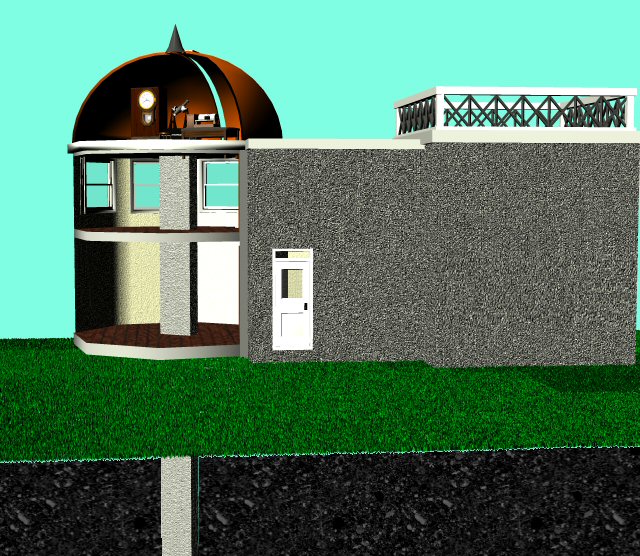 Elgin had a full-time astronomer, and a sleeping office for long nights:
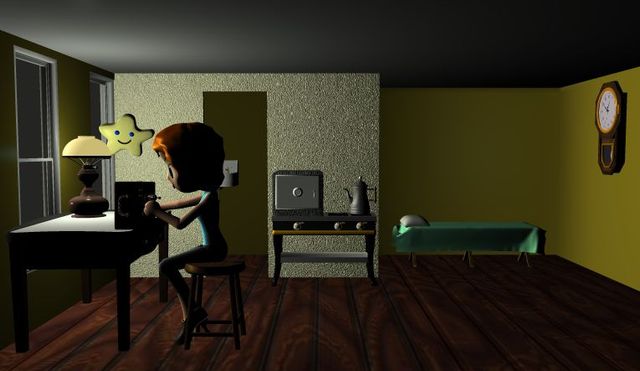 Checking time by the stars was an active subspecies of metrology, with its own peculiar techniques and instruments. All unfamiliar to modern eyes including mine, all gone now.
Astronomer Polistra is observing her favorite star:
Checking time by the stars was an active subspecies of metrology, with its own peculiar techniques and instruments. All unfamiliar to modern eyes including mine, all gone now.
Astronomer Polistra is observing her favorite star:
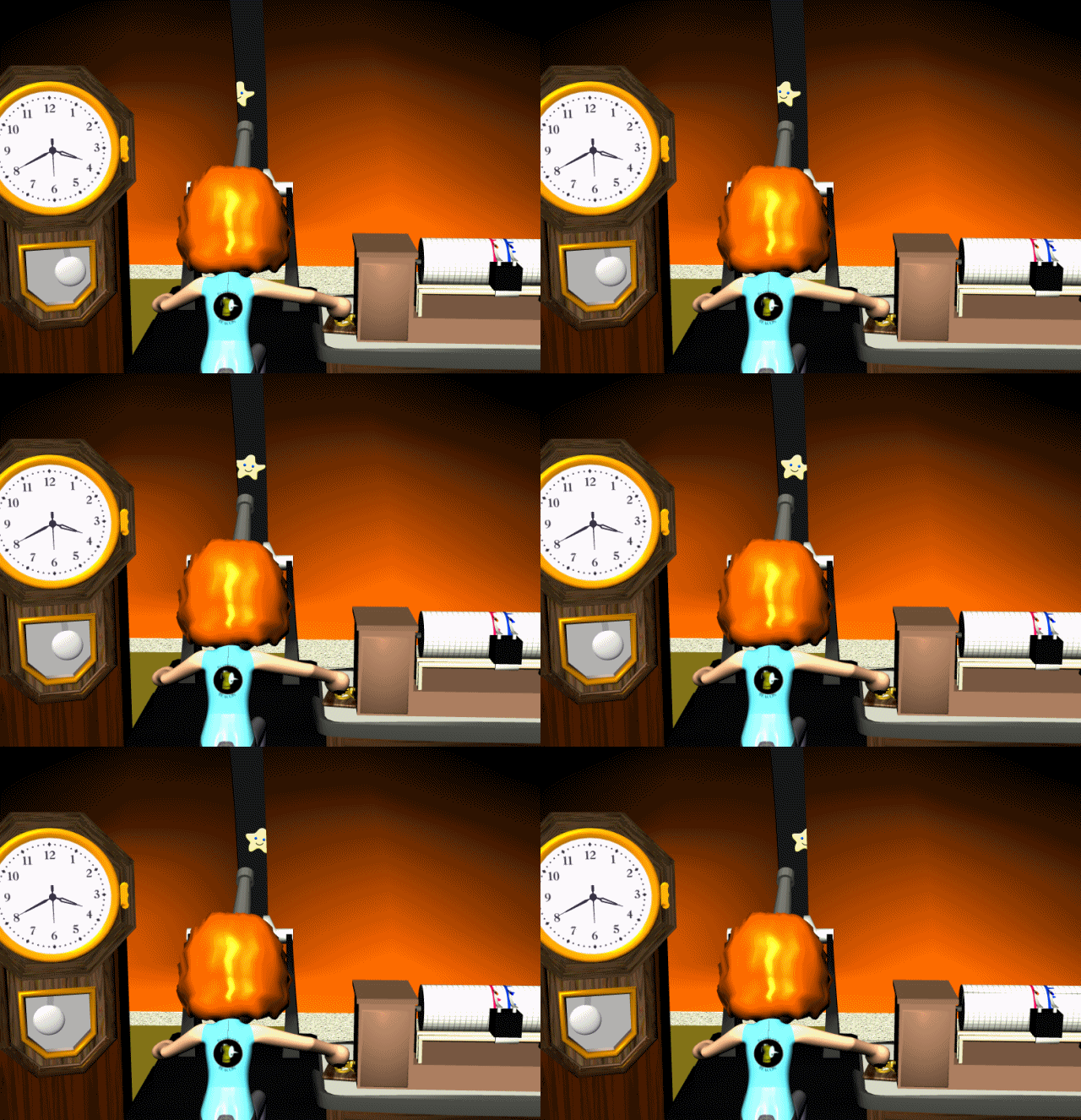 Note the telegraph key. She is clicking every time she sees the edge of the chosen star cross one of 11 vertical lines on the transit lens. These clicks make marks on the chronograph or plotter, which is also marked every second by the standard clock nearby. After this observation, the relative alignment of the star-transit marks is compared with the ticks from the clock. Standard almanacs and calculations yield the exact sidereal time when this star should transit this lens on this date, so the local clock can be adjusted each night to keep it in line with the stars.
The astronomer was also calibrated occasionally with a Personal Equation Machine. Wonderful name for a simple gadget.
Note the telegraph key. She is clicking every time she sees the edge of the chosen star cross one of 11 vertical lines on the transit lens. These clicks make marks on the chronograph or plotter, which is also marked every second by the standard clock nearby. After this observation, the relative alignment of the star-transit marks is compared with the ticks from the clock. Standard almanacs and calculations yield the exact sidereal time when this star should transit this lens on this date, so the local clock can be adjusted each night to keep it in line with the stars.
The astronomer was also calibrated occasionally with a Personal Equation Machine. Wonderful name for a simple gadget.
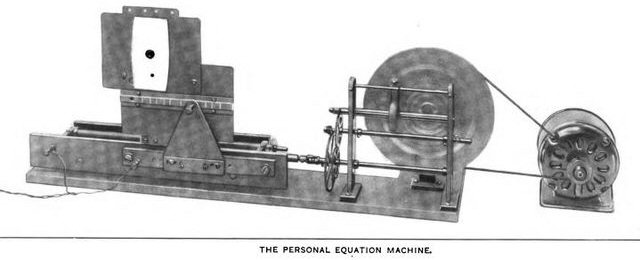 The Personal Equation Machine had a domesticated star that moved at a known rate across a small transit. The domesticated star clicked eleven contacts when it crossed the eleven lines on the transit, and the astronomer clicked "simultaneously". This yielded an average reaction delay, and the variability of reaction.
Equation of Time referred to any calibration curve between sun time and sidereal time, or a clock versus sidereal time, or Personal reaction time versus sidereal time. In the era when standard time was still competing with sun time, Equation Clocks and Equation Watches were fairly common.
How was the result of these Equations used? The same telegraphic clock that marked the chronograph also drove sounders in the adjustment workshops of the factory. Each watch was adjusted until its ticks exactly matched the telegraphic ticks.
For a while Elgin competed with the National Bureau of Standards, sending the telegraphic ticks to WDAP (later renamed WGN) in Chicago. Like WWV, the ticks skipped a beat at :59. WDAP broadcasted a couple minutes of the ticks several times each day.
= = = = =
Elgin followed the same Social Economics creed as Ford and Conoco and NCR and Weston. Watchmaking, even in mass production, requires special talent and training, so Elgin wanted to keep its employees loyal and contented. Elgin paid its workers well and provided recreation and medical care. Young single employees could stay on campus in a comfortable hotel.
Elgin protected and preserved accurate measurements, and protected and preserved the skills of its workers. Beautiful. Perfect opposition to all modern shit, perfect balance. Equipoise.
Continued and expanded here.
= = = = = END REPRINT.
The better subtopics:
Ohm, Newton, Carnot, Hopkins.
Summing up the Ancestral Clocks.
Equipoise and Experts.
Be your own beacon.
Calibrate your own beacon.
The Harding exception.
The Personal Equation Machine had a domesticated star that moved at a known rate across a small transit. The domesticated star clicked eleven contacts when it crossed the eleven lines on the transit, and the astronomer clicked "simultaneously". This yielded an average reaction delay, and the variability of reaction.
Equation of Time referred to any calibration curve between sun time and sidereal time, or a clock versus sidereal time, or Personal reaction time versus sidereal time. In the era when standard time was still competing with sun time, Equation Clocks and Equation Watches were fairly common.
How was the result of these Equations used? The same telegraphic clock that marked the chronograph also drove sounders in the adjustment workshops of the factory. Each watch was adjusted until its ticks exactly matched the telegraphic ticks.
For a while Elgin competed with the National Bureau of Standards, sending the telegraphic ticks to WDAP (later renamed WGN) in Chicago. Like WWV, the ticks skipped a beat at :59. WDAP broadcasted a couple minutes of the ticks several times each day.
= = = = =
Elgin followed the same Social Economics creed as Ford and Conoco and NCR and Weston. Watchmaking, even in mass production, requires special talent and training, so Elgin wanted to keep its employees loyal and contented. Elgin paid its workers well and provided recreation and medical care. Young single employees could stay on campus in a comfortable hotel.
Elgin protected and preserved accurate measurements, and protected and preserved the skills of its workers. Beautiful. Perfect opposition to all modern shit, perfect balance. Equipoise.
Continued and expanded here.
= = = = = END REPRINT.
The better subtopics:
Ohm, Newton, Carnot, Hopkins.
Summing up the Ancestral Clocks.
Equipoise and Experts.
Be your own beacon.
Calibrate your own beacon.
The Harding exception.
Labels: defensible spaces, defensible times, metametrology, Metrology
¶ 11:00 PM
Labels: Equipoise, metametrology, Metrology
¶ 5:57 AM
Labels: metametrology, Metrology
¶ 1:16 PM
 The Riefler was de rigueur in timekeeping observatories, and it was PURE METROLOGY. It wasn't meant for use as a clock, so the hands were hard to see and not precisely calibrated. If you wanted to know the current time, you could use your watch or a wall clock.
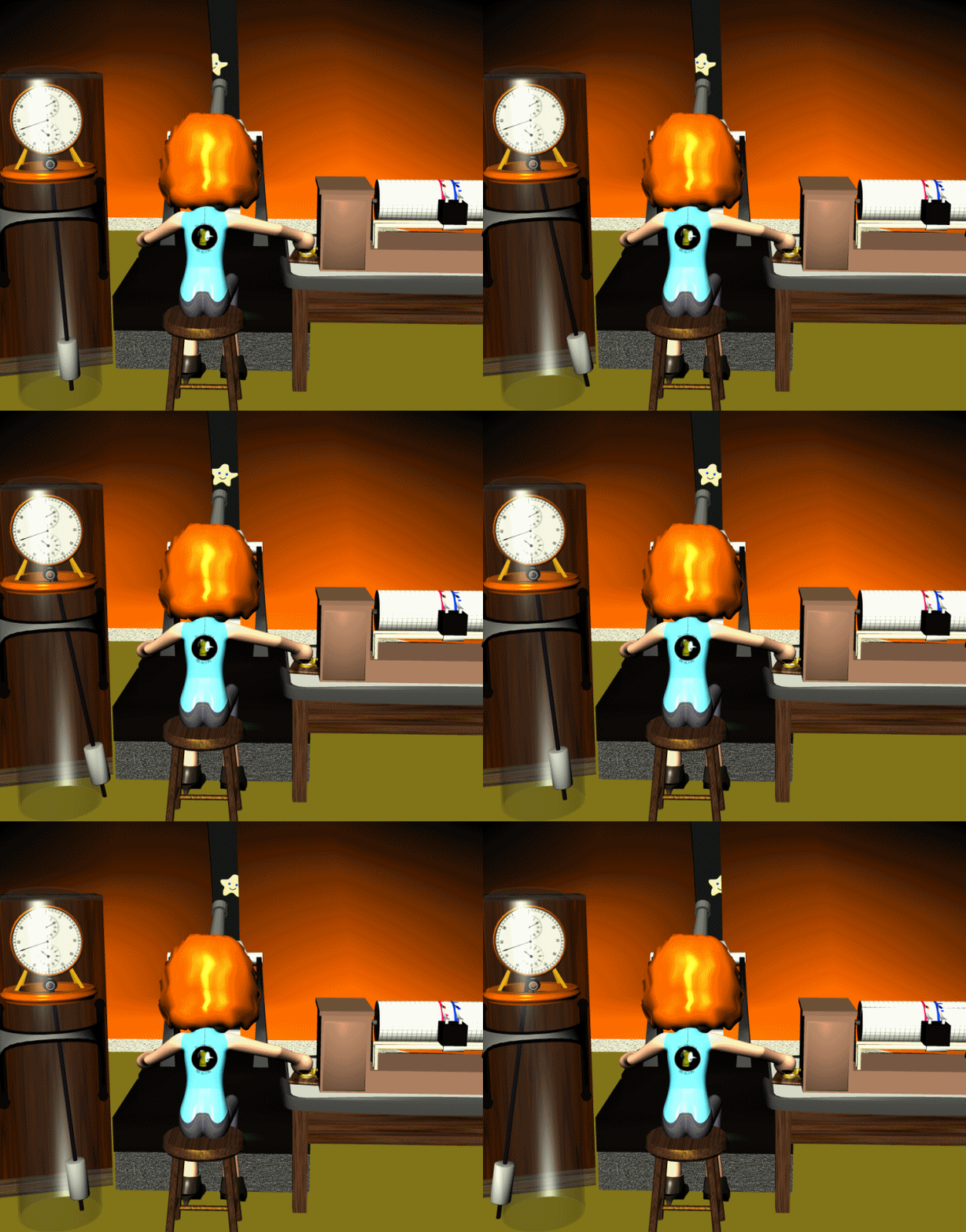
Every aspect of the Riefler was shaped and optimized as a FREQUENCY standard. It was all about the pendulum, which was mercury-filled and held in a partial vacuum. Polistra is pointing to the mini-transit, provided so you could mark the comings and goings of the pendulum in the same way you marked the movements of the stars.
According to various descriptions, the Riefler was sort of semi-electric, with a battery-powered winder that cinched up the mainspring "roughly every 35 seconds". This seems like an absurd violation of the absolute frequency standard, but apparently it worked somehow.
And here's the star animation again with the Riefler. It ticks the same as the railroad clock, but it's prettier. You can see the pendulum through the mini-transit.
The Riefler was de rigueur in timekeeping observatories, and it was PURE METROLOGY. It wasn't meant for use as a clock, so the hands were hard to see and not precisely calibrated. If you wanted to know the current time, you could use your watch or a wall clock.
Every aspect of the Riefler was shaped and optimized as a FREQUENCY standard. It was all about the pendulum, which was mercury-filled and held in a partial vacuum. Polistra is pointing to the mini-transit, provided so you could mark the comings and goings of the pendulum in the same way you marked the movements of the stars.
According to various descriptions, the Riefler was sort of semi-electric, with a battery-powered winder that cinched up the mainspring "roughly every 35 seconds". This seems like an absurd violation of the absolute frequency standard, but apparently it worked somehow.
And here's the star animation again with the Riefler. It ticks the same as the railroad clock, but it's prettier. You can see the pendulum through the mini-transit.
 Around 1920 Rieflers were replaced by the faster resonance of quartz crystals, again held in precise temperature and pressure conditions. Then in 1970 the crystals were replaced by even faster resonances of single atoms in precisely defined conditions.
= = = = =
Pulling the lesson back to center: Elgin didn't need to take all this trouble. Elgin didn't need to build its own custom-designed observatory and equip it with expensive custom-made transits and Rieflers and Personal Equation Machines, didn't need to hire its own astronomers.
In 1910 the National Bureau of Standards was sending out standard time ticks via Western Union. Elgin could have simply rented a telegraph connection.
But they didn't. Elgin wanted to be its own beacon in the most literal way, using a distant star for the lighthouse. The motion of the earth can't be corrupted by government, can't be hacked by competitors or distorted by media. And Elgin used its independent metrology in its advertising:
Around 1920 Rieflers were replaced by the faster resonance of quartz crystals, again held in precise temperature and pressure conditions. Then in 1970 the crystals were replaced by even faster resonances of single atoms in precisely defined conditions.
= = = = =
Pulling the lesson back to center: Elgin didn't need to take all this trouble. Elgin didn't need to build its own custom-designed observatory and equip it with expensive custom-made transits and Rieflers and Personal Equation Machines, didn't need to hire its own astronomers.
In 1910 the National Bureau of Standards was sending out standard time ticks via Western Union. Elgin could have simply rented a telegraph connection.
But they didn't. Elgin wanted to be its own beacon in the most literal way, using a distant star for the lighthouse. The motion of the earth can't be corrupted by government, can't be hacked by competitors or distorted by media. And Elgin used its independent metrology in its advertising:
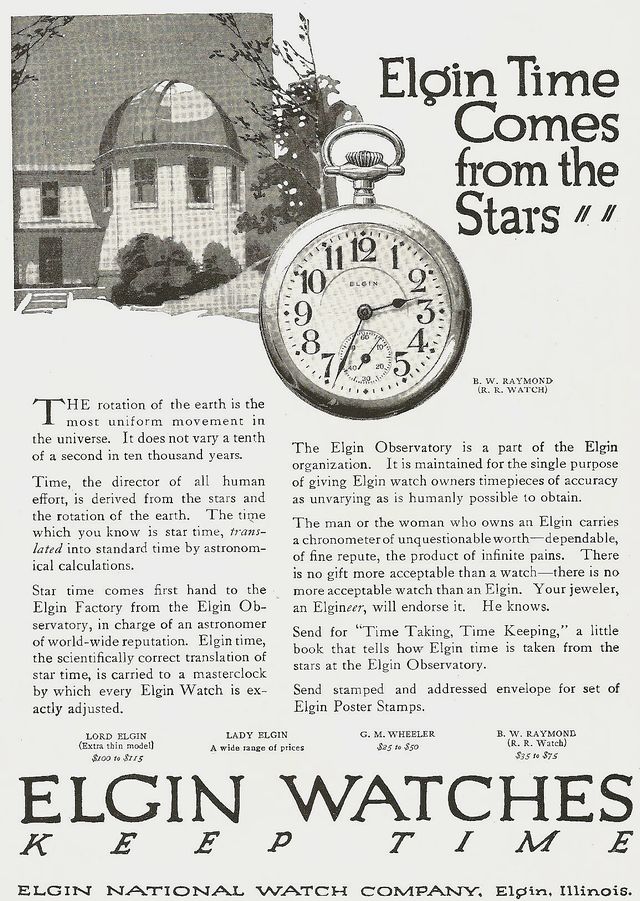 Would any company make the same appeal today? No. NYC shareholders would short it to zero. Modern corporations compete to be the most dependent on central standards, the most compliant to all regulations and lawsuits and Github updates, the most reliant on bank debt instead of stored capital, the most dependent on Big Data automation instead of human skill. Anti-metrology, anti-human, anti-Natural Law, anti-God.
Needless to say, Elgin went out of business in 1970. The tradename is blasphemously used by a company that makes shit in China.
= = = = =
Links for the Ancestral Clocks set so far:
The magnificent Ridhwan
Clock dance
Crude water clock
Observatories
The Elgin observatory
The Riefler
Would any company make the same appeal today? No. NYC shareholders would short it to zero. Modern corporations compete to be the most dependent on central standards, the most compliant to all regulations and lawsuits and Github updates, the most reliant on bank debt instead of stored capital, the most dependent on Big Data automation instead of human skill. Anti-metrology, anti-human, anti-Natural Law, anti-God.
Needless to say, Elgin went out of business in 1970. The tradename is blasphemously used by a company that makes shit in China.
= = = = =
Links for the Ancestral Clocks set so far:
The magnificent Ridhwan
Clock dance
Crude water clock
Observatories
The Elgin observatory
The Riefler
Labels: Equipoise, metametrology, Metrology
¶ 2:57 PM
Labels: metametrology
¶ 7:06 AM
Researchers analyzed the genomes of 20 butterfly species and found evidence that many butterflies -- including distantly related species -- have a surprisingly high amount of gene flow between them. The findings challenge conventional views about species, and indicate that hybridization may be a key process in the emergence of biological diversity.The definition of species we "learned" in high school was simple, and made sense for most familiar species of mammals. Two species are distinct when they can't mate with each other. They might try, but no offspring result from the attempt. There were a couple of exceptions like horse + donkey = mule, but mules can't reproduce, so this wasn't a strong exception. After geneticists removed their theory goggles, they started to see LOTS of exceptions. The actual rule is more like: Two species are distinct when they don't usually mate with each other. They could, but they recognize the difference and would rather mate with their own kind. Hmm. That sounds more like races or ethnic groups, doesn't it? And "science" has been INSTRUCTING US with whips and chains that races and ethnic groups are purely imaginary. "Science" screeches that there are no boundaries or distinctions between races or ethnic groups. Now we know why the old poor definition of species has been so furiously defended. Scientists are definitionists. The most important definition is that ALL HUMANS ARE IDENTICAL PASSIVE INANIMATE GRAINS OF SAND. Scientists HATE all definitions that allow individual or group differences among humans, and refuse to allow their high-caste definitions to mate with low-caste definitions. Semantic miscegenation is verboten. In other words, ethnicity is a valid concept for human types, and for butterfly types, and for definition types.
Labels: Language update, metametrology
¶ 7:34 AM
Labels: metametrology
¶ 6:38 AM
 Incidentally, McAfee has managed a neat trick. If we can believe his story, he has taken refuge in sane Russia, but without exactly mentioning it. He's also not mentioning how the refuge happened.
The fact that Russia allowed him to settle is a valid measurement of his intentions. Unlike the metric system, Russia is a trustworthy calibration standard for trustworthiness. If Russia allows you to take refuge, you're unquestionably NOT Deepstate.
Incidentally, McAfee has managed a neat trick. If we can believe his story, he has taken refuge in sane Russia, but without exactly mentioning it. He's also not mentioning how the refuge happened.
The fact that Russia allowed him to settle is a valid measurement of his intentions. Unlike the metric system, Russia is a trustworthy calibration standard for trustworthiness. If Russia allows you to take refuge, you're unquestionably NOT Deepstate.Labels: metametrology, Metrology
¶ 8:28 AM
The main findings of the research were: 1. Psychiatric diagnoses all use different decision-making rules 2. There is a huge amount of overlap in symptoms between diagnoses 3. Almost all diagnoses mask the role of trauma and adverse events 4. Diagnoses tell us little about the individual patient and what treatment they need. The authors conclude that diagnostic labelling represents 'a disingenuous categorical system'.A good replacement:
Professor John Read, University of East London, said: "Perhaps it is time we stopped pretending that medical-sounding labels contribute anything to our understanding of the complex causes of human distress or of what kind of help we need when distressed."The causes of human distress, and the kind of help we need when distressed. Concise and accurate. This article doesn't mention the change from useless to MONSTROUS in the last 20 years. Now the DSM primarily serves as a tool for detecting and drugging and destroying dissidents. Unfashionable beliefs are OFFICIAL DISEASES. This is lethally important because Freudian psychiatry has OFFICIAL STANDING. When courts want to determine the "sanity" of a criminal or a dissident, Freudians make the OFFICIAL decision. There is only one validly diagnosable psychiatric disorder: Psychiatry.
Labels: metametrology, Metrology
¶ 3:46 PM
Since apartheid ended in 1994, South Africa’s universities have struggled to transform themselves, leading to escalating student protests over the last three years — including the toppling of a prominent statue of Cecil Rhodes, an infamous colonizer who donated the land on which the University of Cape Town now stands. And as students and academics accelerate the process of decolonization across South African universities, the spotlight has fallen onto mathematics. Exactly what decolonizing math would entail isn’t entirely clear: Curriculum revisions that promote non-Western contributions to the field, new teaching methods rooted in indigenous cultures, and greater openness to ideas outside the academic mainstream are all under discussion. Some want to go further, challenging the philosophical foundations** of mathematics itself.Sounds like the usual SJW crap. But the actual leader of the movement is onto something entirely different and hugely more important.
In his evening classes, meanwhile, Chinyoka hopes to broaden students’ understanding of what they can do with the mathematics they are presented with in lectures — from engineering to academia to law. He believes that South African mathematics should be reframed around the challenges faced by South Africa, as well as other developing countries.In fact Chinyoka is not going far enough in the correct direction. He's treating the real life problems as a supplement after the theory. This is somewhat better than the normal math class which PROHIBITS any mention of the real world. The CORRECT method is to train students in real job-related or household-related solving, and let math come in naturally as a supplement. You're starting to cook a meal for your family. You set out the pans and read the recipe. The recipe is for 4 people but your family is 6 people. Now we have a problem that needs to be solved, and math provides a way to solve it.
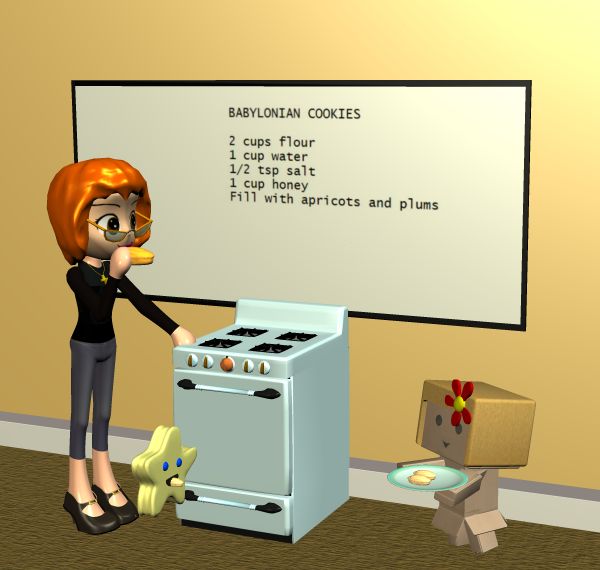 After you solve the problem, you can eat the solution.
Back to Chinyoka:
After you solve the problem, you can eat the solution.
Back to Chinyoka:
“We still have this more Westernized view: You sit in a mathematics class on topology or abstract algebra, with zero idea about which context it applies to,” he says. Pointing to the current water and energy crises in South Africa, he argues that math should be taught with concrete applications in mind, rather than purely theoretically, which is a luxury afforded only by the West.Not really a Westernized view, more precisely a Krautized view. Before we surrendered to the Krauts, US math and science teaching often had "concrete applications in mind". Around 1910 we went full Kraut. Theory in the morning, theory in the evening, theory at suppertime, concrete applications verboten all the time. Soviet math and science teaching recovered from Krautism, focusing PROPERLY on real-life problem solving. That's why they beat us with Sputnik. As always we learned backwards. Fucking idiots. Chinyoka is on the right track. His approach is better for ALL kids except autists and Krautists. Western math is SOLELY for autists and Krautists. The EXPLICITLY STATED PURPOSE of math class in elementary and secondary school is to FRUSTRATE AND REPEL non-autists, so only the most precise and bizarre and reality-free wackos will end up with PhDs. Unfortunately the movement toward USEFUL APPLICATIONS is confused and conflated with silly DieVersitarian nonsense. Many of the participants are more concerned with measuring Identity than measuring rice yield or baking temperatures or generator output. They are simply replacing one set of useless theories with another set of useless theories. = = = = = ** Footnote: there's no point in challenging the philosophical foundations of math because they don't exist. A real foundation goes in FIRST, and the rest of the building depends on the strength of the foundation. Math developed in all sorts of useful and interesting directions for 5000 years WITHOUT explicit foundations. Around 1880 the Kraut fetish for thoroughness demanded a "logical" foundation, and Krauts shoved in some logic stuff under the massive structure that obviously didn't need the logic stuff. Soon thereafter, a Kraut named Gödel detemined, using the rules of the Kraut logic stuff, that the logic stuff was internally contradictory and thus pointless. So: If you believe that math has philosophical foundations, you must also believe that math can't have philosophical foundations. If you find math to be a wonderfully useful tool for real life problems, you don't need to think about the foundation question. Just use math.
Labels: Carver, Experiential education, metametrology, Metrology, Real World Math
¶ 8:16 AM
Even pesky fruit flies have a hankering for alcohol, and because the molecular signals involved in forming flies' reward and avoidance memories are much the same as those in humans, they're a good model for study.Who hankers? Every animal that eats fruits and grains. Carnivores don't hanker for alcohol.** Among humans the correlation is the same but the causation is reversed. The ethnic groups that can't tolerate alcohol tend to be carnivores, and tend to be warrior tribes. Ethnic groups that can take alcohol in moderation tend to be farming tribes. Cultural choice is determined by physical tolerance. ** The Youtube clip of a dog refusing to drink beer is remarkable. The dog is saying two things. (1) Damn! This is bad shit! I'm not gonna drink it! and (2) Hey! I'm not in charge here, but you're my friend and I want you to live. Please don't drink this shit! It will kill you!
Labels: Answered better than asked, metametrology
¶ 3:12 PM
Labels: #DeplorableLivesMatter, metametrology
¶ 2:02 AM

