Tuesday, April 30, 2019
Oren Cass GETS IT.
This long interview with Oren Cass is remarkable. Cass is the only resident of the think-tank world who UNDERSTANDS REALITY COMPLETELY.
Especially salient considering where Cass came from. He worked at Bain Capital, then worked for the Vulture Romney campaign in 2012. Now he's abandoning the whole vulture line and adopting the Natural Law line, the Makeforce line.
I won't quote the good parts, because almost everything is AMAZINGLY GOOD and BEYOND CORRECT. I'll just mark the one small exception. In the question about automation, Cass misses the fact that offshoring is more important than automation as a source of job destruction. Offshoring is actually a counterforce to automation, a return to semi-slavery. When a factory moves to China or India, it uses LOWER tech than it used in USA, because labor is so much cheaper.


Labels: Natural law = Soviet law, Old Economy Steve, skill-estate
¶ 3:34 AM
Sunday, March 03, 2019
Pied? No.
In this item I reused a picture of Polistra with her printing press.
 Looking at related pictures, I noticed this one ...
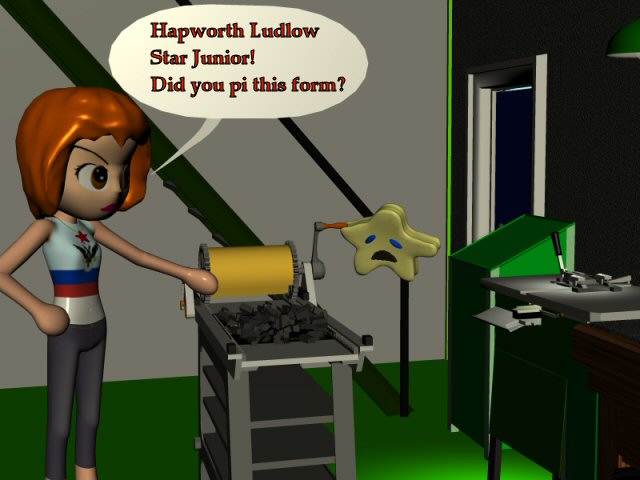 ... showing unfortunate Happystar with the results of a pied form.
Thinking back on my first job in a printshop, I ruefully "remembered" pieing forms.
NO. WAIT.
I never dropped a form, never made a typo.
I was a terrible employee in many ways. Unattractive, unfriendly, socially awkward, lazy.
But I never made a mistake in that job.
The pattern continued through the years. Always unfriendly and lazy, but always completing REQUIRED tasks correctly. In the years of bookkeeping and clerking, I never made a math error, never dipped in the till, always handled money responsibly.
After burnout in 1983, I figured out that status is innate and permanent. I stopped caring. Why bother to go the extra mile? Why try to be friendly? I'm not getting anything in return. No respect, no status, no wife, not enough money to buy respect or status or wife. Fuck it.
Even then, I still completed REQUIRED tasks correctly.
In the last 20 years my software always works as intended, and more recently the graphics are occasionally beautiful.
I only made ONE consequential mistake in actual performance. In 1976, working as a helper for a HVAC company, I was installing ductwork in an attic, missed a step on a joist, and put my foot through the drywall.
That was it. The only major mistake, the only pied form.
... showing unfortunate Happystar with the results of a pied form.
Thinking back on my first job in a printshop, I ruefully "remembered" pieing forms.
NO. WAIT.
I never dropped a form, never made a typo.
I was a terrible employee in many ways. Unattractive, unfriendly, socially awkward, lazy.
But I never made a mistake in that job.
The pattern continued through the years. Always unfriendly and lazy, but always completing REQUIRED tasks correctly. In the years of bookkeeping and clerking, I never made a math error, never dipped in the till, always handled money responsibly.
After burnout in 1983, I figured out that status is innate and permanent. I stopped caring. Why bother to go the extra mile? Why try to be friendly? I'm not getting anything in return. No respect, no status, no wife, not enough money to buy respect or status or wife. Fuck it.
Even then, I still completed REQUIRED tasks correctly.
In the last 20 years my software always works as intended, and more recently the graphics are occasionally beautiful.
I only made ONE consequential mistake in actual performance. In 1976, working as a helper for a HVAC company, I was installing ductwork in an attic, missed a step on a joist, and put my foot through the drywall.
That was it. The only major mistake, the only pied form.
Looking at related pictures, I noticed this one ...
... showing unfortunate Happystar with the results of a pied form.
Thinking back on my first job in a printshop, I ruefully "remembered" pieing forms.
NO. WAIT.
I never dropped a form, never made a typo.
I was a terrible employee in many ways. Unattractive, unfriendly, socially awkward, lazy.
But I never made a mistake in that job.
The pattern continued through the years. Always unfriendly and lazy, but always completing REQUIRED tasks correctly. In the years of bookkeeping and clerking, I never made a math error, never dipped in the till, always handled money responsibly.
After burnout in 1983, I figured out that status is innate and permanent. I stopped caring. Why bother to go the extra mile? Why try to be friendly? I'm not getting anything in return. No respect, no status, no wife, not enough money to buy respect or status or wife. Fuck it.
Even then, I still completed REQUIRED tasks correctly.
In the last 20 years my software always works as intended, and more recently the graphics are occasionally beautiful.
I only made ONE consequential mistake in actual performance. In 1976, working as a helper for a HVAC company, I was installing ductwork in an attic, missed a step on a joist, and put my foot through the drywall.
That was it. The only major mistake, the only pied form.Labels: Old Economy Steve, skill-estate, TMI
¶ 11:50 PM
Wednesday, January 04, 2017
CH Smith gets it
Still thinking about the 'gig economy' vs solid corporate jobs. Remembering families I knew in various places. Corporate jobs were definitely superior in Manhattan in the '50s. All the fathers had W2 jobs, all were able to support a family without working viciously hard. Work was 9 to 5 Mon through Sat. Fathers could drive kids to school and eat dinner at 6. I didn't know anyone who worked from home.
Later, in Enid and Ohio in the '60s and '70s, I knew several people who worked at home or informally. One lady had a giant folding and collating machine in her house and ran contract work for various printshops. Another lady sold tropical birds from her house. One father bought and sold antiques, especially guns. These entrepreneurs got along fine without constant intense slaving. They had time for kids and enjoyment.
Why do modern entrepreneurs have to work 27 hours a day to get by for a year or two until they collapse or go bankrupt? Why was at-home work relatively easy in Enid but not in Manhattan?
Why was at-home work easier 40 years ago? Simple answer. Less regulation, less litigation, less inflation in health care and other REQUIRED expenses.
Why was Enid a better place for at-home work than Manhattan? Subtle answer. Enid was cheap and isolated, a self-sufficient universe. You could establish a comparative monopoly for your skill. Manhattan was close to Topeka and KC, which made monopolies harder to create; and a college town is always more expensive.
Charles Hugh Smith states the modern problem completely and concisely:
If we seek a coherent context for the new year, we would do well to start with the foundations of widespread prosperity. While the economy is a vast, complex machine, the sources of widespread prosperity are not that complicated: abundant work and a low cost of living. When work is abundant, there are opportunities for many skill levels, and employers must bid for the most productive, reliable workers. This supports wages and widespread employment. When the cost of living is low, even low-wage households can not only get by but put a little aside if they are prudent and thrifty. This may seem obvious, but the conditions required for work to be abundant and the cost of living to be low are not so obvious. For work to be abundant, it must be easy to start a business, easy to operate the new business, easy to make a profit so the business can survive the first few years and easy to hire employees.Smith doesn't discuss the comparative monopoly factor. Globalism OBLITERATES local monopoly. Nearly all businesses can be undercut or undermined or outlawed by Amazon's infinite bully power, leaving only a few menial skills like cutting grass. For the moment. Until Amazon MowDrone comes out next month. Graybill.
Labels: Old Economy Steve, skill-estate
¶ 9:55 AM
Tuesday, June 07, 2016
Temporal borders
Saw the single word NIGHT at top of a website. Probably a typo. Fragment of a headline or something. Briefly imagined a Night edition of a website. Doesn't exist now, but would have made sense 50 years ago. BORDERS used to separate night from day in business, newspapers, radio. Night and day were separate editions, separate provinces.
Now everyone (who has work) is expected to work all hours when needed. No boundaries.
As a kid I appreciated the night side of radio, both AM and SW. Most AM stations signed off around sunset leaving a sparse but widespread crop of DX. When the ionosphere was right you could easily hear Edmonton and Caracas, Boston and San Francisco on BCB. "Mexican" stations were run by Americans taking advantage of looser laws, and often featured wild preaching or strange rants. (Thanks to Goat Gland Brinkley for inventing the setup!)
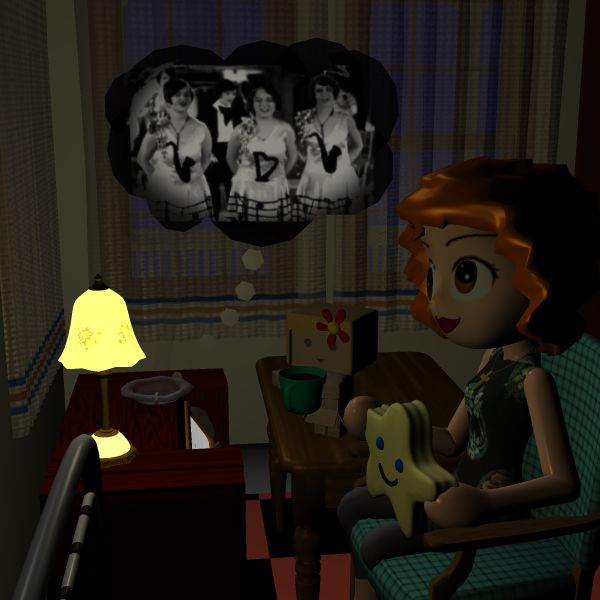 Closer to home there were two distinct approaches to night service among the few stations that stayed on.
KOMA in OKC had rock-n-roll for the youths. WIBW in Topeka had swing for the adults. Big bands were still going strong in the late '50s, and WIBW carried live broadcasts from the Avalon Ballroom in the evening. After midnight they switched to half-hour transcriptions of records plus DJ comments. Most of the records were solid swing, some were 'novelty numbers' that have disappeared now.
Full autopilot was illegal. The station had to have an engineer/announcer awake and ready to handle emergencies. Reassuring for the listeners, and a job for an engineer.
We have one limited remnant of the Night Province in Art Bell's show. That's about it. Everything else is intentionally timeless and borderless, a show without a temporal country. Time of day is never specified, even day of the week is never specified.
As an adult I switched to the reassuring side of the desk when I worked night auditor jobs in motels. The place was in my hands. I enjoyed the sense of being responsible for the safety of sleepers, and I carried out the responsibility. I belonged to the night and the night belonged to me.
Later on I moved into day jobs. Though more skilled and sometimes better paid, I was never given the same level of responsibility. Never carried the keys.
Perhaps I was accurately seen as a Migrant in the province of daylight.
Closer to home there were two distinct approaches to night service among the few stations that stayed on.
KOMA in OKC had rock-n-roll for the youths. WIBW in Topeka had swing for the adults. Big bands were still going strong in the late '50s, and WIBW carried live broadcasts from the Avalon Ballroom in the evening. After midnight they switched to half-hour transcriptions of records plus DJ comments. Most of the records were solid swing, some were 'novelty numbers' that have disappeared now.
Full autopilot was illegal. The station had to have an engineer/announcer awake and ready to handle emergencies. Reassuring for the listeners, and a job for an engineer.
We have one limited remnant of the Night Province in Art Bell's show. That's about it. Everything else is intentionally timeless and borderless, a show without a temporal country. Time of day is never specified, even day of the week is never specified.
As an adult I switched to the reassuring side of the desk when I worked night auditor jobs in motels. The place was in my hands. I enjoyed the sense of being responsible for the safety of sleepers, and I carried out the responsibility. I belonged to the night and the night belonged to me.
Later on I moved into day jobs. Though more skilled and sometimes better paid, I was never given the same level of responsibility. Never carried the keys.
Perhaps I was accurately seen as a Migrant in the province of daylight.
Closer to home there were two distinct approaches to night service among the few stations that stayed on.
KOMA in OKC had rock-n-roll for the youths. WIBW in Topeka had swing for the adults. Big bands were still going strong in the late '50s, and WIBW carried live broadcasts from the Avalon Ballroom in the evening. After midnight they switched to half-hour transcriptions of records plus DJ comments. Most of the records were solid swing, some were 'novelty numbers' that have disappeared now.
Full autopilot was illegal. The station had to have an engineer/announcer awake and ready to handle emergencies. Reassuring for the listeners, and a job for an engineer.
We have one limited remnant of the Night Province in Art Bell's show. That's about it. Everything else is intentionally timeless and borderless, a show without a temporal country. Time of day is never specified, even day of the week is never specified.
As an adult I switched to the reassuring side of the desk when I worked night auditor jobs in motels. The place was in my hands. I enjoyed the sense of being responsible for the safety of sleepers, and I carried out the responsibility. I belonged to the night and the night belonged to me.
Later on I moved into day jobs. Though more skilled and sometimes better paid, I was never given the same level of responsibility. Never carried the keys.
Perhaps I was accurately seen as a Migrant in the province of daylight.
Labels: defensible times, Old Economy Steve, skill-estate
¶ 12:57 AM
Tuesday, March 08, 2016
Good diagnosis, missed prescription
Lewis Andrews makes an important diagnosis but writes a misplaced prescription.
Diagnosis: Based on surveys, Americans are withdrawing from BOTH the commercial and cultural spheres, for similar reasons. Total employment and business starts have been decreasing steadily for a long time, and adherence to churches and cultural groups is decreasing. (Benedict Option and variants.)
Participation in BOTH the economy AND the culture is now more pain than gain.
Prescription:
If there is any wisdom to be gleaned from the unprecedented reluctance of both entrepreneurs and the devout to play their traditional roles in the life of the nation, it is the need for the leadership of both parties to step back from their expansive agendas and once again consider personal liberty as the ultimate guarantor of lasting progress. It is long past time for the unencumbered individual to retake the lead in building a better America.I'll go along with "must step back", though I don't see how it can happen. I won't go along with "personal liberty". Two reasons: (1) The cultural tyranny is based above all on "personal liberty" for the aristocracy. When a Trans Thing feels its liberty has been infringed by the mere existence of non-Trans humans, the non-Trans humans must surrender. This is identical to medieval caste laws, except that the medieval version was logical. You knew who was a Baron and who was a Commoner. A Dolezal can declare its aristocracy at any time, without any visible symbols. It's a caste based on mind-reading, violating all previous norms of logic and laws. So any attempt to undo the tyranny using "personal liberty" will be hopelessly confused and conflated by the tyrants. (2) What we've lost ISN'T on the personal level anyway. Most people are NOT SUPPOSED TO BE entrepreneurs or hermetic saints. Only criminals and psychopaths are primarily motivated by Individual Liberty. When our civilization was functional, it relied on mid-sized businesses where ordinary men could use their varied talents. Those businesses are disappearing, but NOT because startups are decreasing. On one end those mid-sized businesses are being LBO'd by Romney and his buddies, replacing jobs and factories with pure numbers; on the other end labor is being split up into 1099 gigs nominally representing "personal liberty" but actually offering zero security and near-zero pay. When our civilization existed, it also relied on mid-sized Fraternal Benefit Associations that served financial and medical needs. Die-Versity laws broke those associations. We also had mid-sized businesses called "banks" where the ordinary man could store his earnings toward future goals, keeping up with inflation. And we also had mid-sized churches where ordinary people could feel secure and spiritually useful. Those churches have been merged into TV megachurches on one end, or turned into private clubs for Trans Things on the other end. Ordinary families are either drowned in anonymity or bulldozed by Antichrist Francine. = = = = = These mid-sized organizations can't be rebuilt by Individual Entrepreneurs. They require cooperative action, which will get you killed. So we're fucked.
Labels: defensible spaces, Make or break, Old Economy Steve
¶ 12:43 PM
Monday, March 07, 2016
Personal ramblings
Hmph. Every now and then I succumb to internal stupidity. There aren't a lot of role models for introverts. Everything you hear from books and media, EVEN the older pre-switchover media, glorifies the Top Alpha. Every conversation is Top Alphas congratulating each other on Alphaness. [This is pretty much automatic given the nature and demands of media, but it still leaves most of humanity unrepresented.]
When this mood comes up I have to remind myself that I TRIED moving toward Top Alpha for 15 years. Worked hard, got into positions requiring managing and dealing with people, did volunteer shit.
The experiment has been performed and the data has been recorded. The experiment failed. Though I succeeded objectively at teaching, it was unnatural and exhausting. I could only sustain it by drinking. When I stopped drinking the facade fell off and I had to find work more suitable for a natural introvert. I did. Now I'm more or less retired but always ready to pick up my tools and work. I did just that a few days ago; another Poser graphics artist asked me to rig a control script for his latest item, and I ran it up in 30 minutes.
The leftist lie that everyone is identical. Everyone can be Alpha if you work hard enough. The universal American Myth.
When external inputs push the Myth, my internal 'experimental record' isn't always strong enough to resist the theoretical What Ifs, even with recent evidence that the choice was appropriate. Fortunately an external input came along to help. An episode of the 1947 FBI radio show that I hadn't heard before, centered on a nearly identical role model. An old arsonist had made enough money to retire. He was talked into doing a quick job by a nephew with better social-strategy talents. Did the job perfectly and smoothly. Of course he was caught because the drama required it.
The writers couldn't depict a good character as an introvert, but that's irrelevant. The writers had enough empathy to show the arsonist's intrinsic satisfaction and professional pride.
= = = = =
Later thought: This contradicts an item I wrote three years ago. At that time I didn't need to have my life "validated" by external inputs. Now I do, at least occasionally. I think the double disasters in 2014 and 2015 sapped my gumption, leaving me more susceptible to outside influence in both directions.
All together now:
My gumption was sapped by the windstorm,
my gumption was lost in the breeze,
my gumption was sapped by the windstorm,
oh bring back my gumption to meeeeeez.
Bring back,
bring back,
oh bring back my gumption to meeeeez, etc, etc.
Think I'll do a new electronics project. Make something physical. See if that helps.
Labels: Old Economy Steve, TMI
¶ 1:58 AM
Sunday, November 01, 2015
Was there a protocol?
Discussion of DST on Spokane News. Someone mentioned a stupid belief by criminal types: You can get away with anything during the switchback hour, because the cops won't be able to record it.
Obviously won't work. You can be sure the cops have a way of recording everything.
Got me thinking: Back in the '70s I was working night shift in motels. I distinctly remember walking around the building and changing all the clocks forward and back, but I don't remember a protocol for recording checkins that happened during this peculiar hour. Checkins were relatively rare after midnight, so I probably didn't have to handle any during this once-a-year hour. Still, seems like there should have been a procedure.... but I don't think there was one.
Come to think of it, the conflict simply wouldn't matter in a normal day-pay motel. Even if two checkins happened at exactly the same numerical time (1:28 DST, then an hour later at 1:28 standard) the conflict wouldn't have any consequences. Those checkins would be different tenants. Nothing unusual about two tenants checking in at the same written time; both would still have to pay the same at checkout. The conflict would only be meaningful in an hourly Ho-tel.
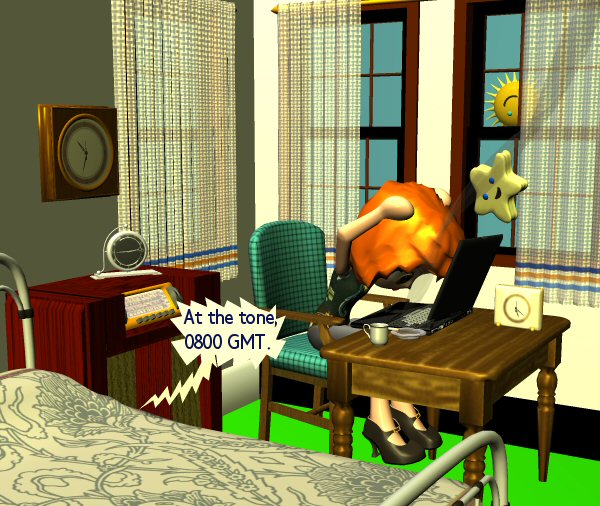 For cops, 2 AM (bar closing) on Saturday night is an especially dense arrest time. You can be sure they have a way to handle it.
For cops, 2 AM (bar closing) on Saturday night is an especially dense arrest time. You can be sure they have a way to handle it.Labels: Metrology, Old Economy Steve
¶ 2:17 AM
Saturday, October 03, 2015
QRMitochondria?
Always trying to highlight GOOD science....
Article in Atlantic covers an interesting comparison. Young Americans in the '70s and '80s stayed slimmer than modern youngsters, EVEN WITH the same diet and exercise.
 Some support for this idea: It's not just humans. Lab rats, whose diet and exercise are strictly controlled and recorded, are also getting fatter. Same for other mammals in urban areas, though we don't have strict data for them. This set of facts fits the RF/mitochondria idea and doesn't fit the gut biome idea. The mix of gut bacteria is wildly variable among individuals, let alone species. Mitochondria are pretty much the same in all cells.
= = = = =
**Footnote on dubious advocates: Most seem to be focusing on powerlines. Wrong culprit three ways. (1) 60 cycles is way too slow to resonate with atoms, molecules or tissue. It simply passes through. (2) Powerlines are quickly going underground. We have far less overhead wires now than before. (3) The highest-voltage lines are changing to DC now that hefty solid-state inverters are practical. DC uses the cross-section of a wire more efficiently. Edison wins after all.
Some support for this idea: It's not just humans. Lab rats, whose diet and exercise are strictly controlled and recorded, are also getting fatter. Same for other mammals in urban areas, though we don't have strict data for them. This set of facts fits the RF/mitochondria idea and doesn't fit the gut biome idea. The mix of gut bacteria is wildly variable among individuals, let alone species. Mitochondria are pretty much the same in all cells.
= = = = =
**Footnote on dubious advocates: Most seem to be focusing on powerlines. Wrong culprit three ways. (1) 60 cycles is way too slow to resonate with atoms, molecules or tissue. It simply passes through. (2) Powerlines are quickly going underground. We have far less overhead wires now than before. (3) The highest-voltage lines are changing to DC now that hefty solid-state inverters are practical. DC uses the cross-section of a wire more efficiently. Edison wins after all.
There’s a meme aimed at Millennial catharsis called “Old Economy Steve.” It’s a series of pictures of a late-70s teenager, who presumably is now a middle-aged man, that mocks some of the messages Millennials say they hear from older generations—and shows why they’re deeply janky. Old Economy Steve graduates and gets a job right away. Old Economy Steve “worked his way through college” because tuition was $400. And so forth. We can now add another one to that list: Old Economy Steve ate at McDonald’s almost every day, and he still somehow had a 32-inch waist. A study published recently in the journal Obesity Research & Clinical Practice found that it’s harder for adults today to maintain the same weight as those 20 to 30 years ago did, even at the same levels of food intake and exercise.OES isn't just Millennial catharsis. It's flatout true. The jobs, the cheap college, the 32-inch waist. I was there. I did all of those things. Before the era of bankster dictators, Mexican "Dreamers" and all-consuming share value, American employers provided actual useful work for actual American humans, and exchanged mysterious objects called "money" for the work. It really happened. The author suggests one highly plausible hypothesis for the weight difference: Gut biome has changed. A less plausible hypothesis comes to my mind, based on a very recent and wildly interesting new discovery. New discovery: Mitochondria constantly communicate via ELECTRICAL SIGNALS. What's the relevant variable? Vastly more intense radio field now, thanks to cellphones, computers and digital TVs. This subject has some dubious** advocates, but there's no doubt that the ambient RF field, in the freqs that penetrate tissue, is considerably denser now than in 1970. This technical article describes the change. If mitochondria are being 'jammed', cells will handle energy differently.
Some support for this idea: It's not just humans. Lab rats, whose diet and exercise are strictly controlled and recorded, are also getting fatter. Same for other mammals in urban areas, though we don't have strict data for them. This set of facts fits the RF/mitochondria idea and doesn't fit the gut biome idea. The mix of gut bacteria is wildly variable among individuals, let alone species. Mitochondria are pretty much the same in all cells.
= = = = =
**Footnote on dubious advocates: Most seem to be focusing on powerlines. Wrong culprit three ways. (1) 60 cycles is way too slow to resonate with atoms, molecules or tissue. It simply passes through. (2) Powerlines are quickly going underground. We have far less overhead wires now than before. (3) The highest-voltage lines are changing to DC now that hefty solid-state inverters are practical. DC uses the cross-section of a wire more efficiently. Edison wins after all.Labels: Grand Blueprint, Old Economy Steve
¶ 2:50 AM
Wednesday, September 30, 2015
Why didn't I turn greaser 2
Woke up from an interestingly reversed dream.
When I was young and idiotic, I HATED college but felt that college was expected for the expected jobs. All through the 70s I was working full time and trying to finish college either full or part time. Some semesters were successful, others crashed. Finally pulled together a ragged set of credits in 1979 and got the job that needed the credential. Never used even ONE fact or skill from any of the classes, but the credential itself helped for a while.
My dream-generator has remained stuck in the 70s, using characters and locations and feelings from those years. This morning the generator finally turned off 70s mode, solidly and explicitly.
In this dream I was in college again (as usual in dreams) and in the process of pulling away and dropping out (as usual). I made one last effort to create a big project necessary for a class that I hated.
Suddenly the dream generator cut in with a voice-over. "Now hold on. I'm 65 years old. I'm done with working. I don't need any credentials, so I don't need to plan this stupid project. Stop this."
And it stopped. I walked away "cleanly" without any of the miserable old dropout feelings.
Labels: Old Economy Steve, TMI
¶ 2:44 AM
Sunday, April 05, 2015
Bubble, squash
While I was waiting for the bus yesterday, a '66 Sedan de Ville floated by. Cars and trucks of that vintage are fairly common in low-rust Spokane, but a Caddy is a rarity. What made it salient was its silence and stability. It wasn't forcing its attention on every sense; it was creating a bubble of calm and stillness.
Here's a similar Caddy along with the cheapest GM car of '66, a Chevy II stripper.
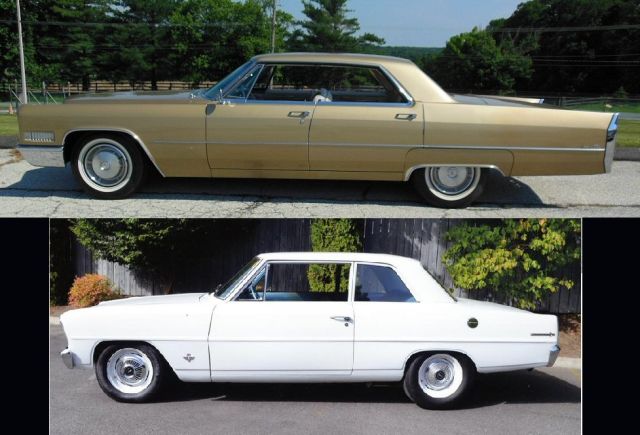 List prices: Caddy 5500, Chevy II 2028.
The Caddy cost 2.7 times as much as the Chevy II.
= = = = =
Now here's the 2015 equivalent, I think. Escalade vs Chevy Sonic. (I'm not familiar with new cars, so the low end choice could be wrong.)
List prices: Caddy 5500, Chevy II 2028.
The Caddy cost 2.7 times as much as the Chevy II.
= = = = =
Now here's the 2015 equivalent, I think. Escalade vs Chevy Sonic. (I'm not familiar with new cars, so the low end choice could be wrong.)
 Note the HEIGHT and the hyperaggressive alien mutant faces. These are pedestrian-squashers.
List prices: Escalade 73k, Sonic 14k.
Caddy costs 5.2 times as much as the Chevy.
The modern ratio of rich to poor among GM products is nearly twice the 1966 ratio.
Gilded Age 2. Nuff said.
Note the HEIGHT and the hyperaggressive alien mutant faces. These are pedestrian-squashers.
List prices: Escalade 73k, Sonic 14k.
Caddy costs 5.2 times as much as the Chevy.
The modern ratio of rich to poor among GM products is nearly twice the 1966 ratio.
Gilded Age 2. Nuff said.
List prices: Caddy 5500, Chevy II 2028.
The Caddy cost 2.7 times as much as the Chevy II.
= = = = =
Now here's the 2015 equivalent, I think. Escalade vs Chevy Sonic. (I'm not familiar with new cars, so the low end choice could be wrong.)
Note the HEIGHT and the hyperaggressive alien mutant faces. These are pedestrian-squashers.
List prices: Escalade 73k, Sonic 14k.
Caddy costs 5.2 times as much as the Chevy.
The modern ratio of rich to poor among GM products is nearly twice the 1966 ratio.
Gilded Age 2. Nuff said.
Labels: Old Economy Steve, STRONG!
¶ 5:22 AM
Saturday, February 21, 2015
Should I own a car?
Thinking about my stupid error in acquiring 100 pounds of printer paper.
First impulse: If I owned a car, this type of problem wouldn't have occurred. I could just drive down to the Office Supply Store and get the right combination of high-quality Office Supply Stuff.
That's how it actually worked back in the '70s when I drove a car daily. In Enid I would have gone to Vaters Office Supplies, and Judy would have located the right paper and file folders and other stuff. (Of course I wouldn't have been looking for CDs in 1975; maybe mimeograph spirits.) The transaction would have been pleasant (especially Judy), and I would have driven the stuff back home and used it.
Unfortunately the example doesn't apply to modern times. Spokane doesn't have an equivalent of Vaters. I doubt that any city does now.
I could theoretically buy all of those things at WalMart, which is within my usual walking distance. So now the need for a car goes away.
But I know from experience that WalMart never has all of those things at once, and often has none of them. Finding any specific item in WalMart is a gamble with poor odds. So now the need for a car returns, but this version of the errand might well take all day.
Online buying has the same certainty and quickness as Vaters. When I look in LDProducts, I know they will have everything I need, the items will be good, and the shipping will be fast.
But online buying doesn't have Judy. It doesn't have a clerk who can say "Are you sure that's what you really want, hon?"
Summing up: If Vaters and Judy still existed, a car would be worth owning, at least for these twice-a-year episodes. Vaters and Judy do not exist, so it's a moot point.
[For clarity: I hope the actual Judy is still alive, but Judy-as-icon-of-store-clerks is definitely gone.]
= = = = =
Later and better thought. This isn't about cars at all. This is about Old Economy vs New Economy, Ford Economy vs Goldman Economy. I already covered the point much more effectively in this tribute to the C.R. Anthony department store. Anthony's was a place where a working-class family could count on finding decent AMERICAN-MADE stuff at an affordable price. The price was somewhat higher than WalMart's price, because the working-class family HAD MORE FUCKING MONEY in the '70s. And they HAD MORE FUCKING MONEY because America MADE THINGS.
This connection should have triggered immediately in my mind because C.R. Anthony was RIGHT FUCKING NEXT DOOR to Vaters Office Supply. They were in the SAME FUCKING BUILDING on the downtown Square.
I'm retarded and cranky this week from bad sleep. For no apparent reason I've dropped into a pattern of broken sleep: 4 hours at night, 2 in morning, 2 in afternoon. It adds up properly, but it leaves me semi-functional all the time. (My optimum is 6 at night, 1.5 in afternoon.)
Labels: Natural law = Sharia law, Old Economy Steve, TMI
¶ 12:50 AM
Saturday, April 12, 2014
Bad old
Obama is yet again pushing those tired and fraudulent numbers about female wage inequality. Says "Let's not return to the bad old workplace policies of the Mad Men era."
Okay. Here's a graph of overall income inequality, taken from Stockman's incomparable blog. I've marked 1966 for the Mad Men era.
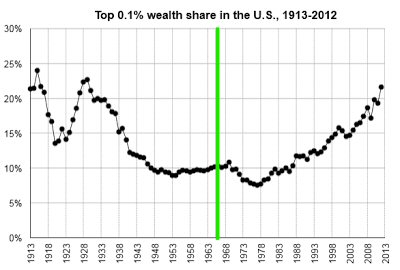 Hmm. Bad old policies? Looks to me like those bad old policies were VASTLY BETTER for ordinary Americans, including ordinary female Americans. Ordinary Americans have been losing ground since then, both absolutely and by comparison to the Goldman class.
Well Barry, it's nice to see yet again that you are Massa Goldman's best and most loyal houseboy.
Hmm. Bad old policies? Looks to me like those bad old policies were VASTLY BETTER for ordinary Americans, including ordinary female Americans. Ordinary Americans have been losing ground since then, both absolutely and by comparison to the Goldman class.
Well Barry, it's nice to see yet again that you are Massa Goldman's best and most loyal houseboy.
Hmm. Bad old policies? Looks to me like those bad old policies were VASTLY BETTER for ordinary Americans, including ordinary female Americans. Ordinary Americans have been losing ground since then, both absolutely and by comparison to the Goldman class.
Well Barry, it's nice to see yet again that you are Massa Goldman's best and most loyal houseboy.Labels: Old Economy Steve
¶ 7:15 AM
Saturday, March 22, 2014
Always training, never trained
Been working against a deadline on courseware. Not enough spare neurons to write much here. Made the deadline, so now I can relax a bit.
A local newspaper columnist was reminiscing about old newsroom behavior. Apparently pica poles made good fake swords for a fake swordfight.
This stimulated a line of thought...
My first real job was typesetting in a hot-lead shop. I used pica poles all the time, but never knew what they were called.
 Pica poles might have been good for a fake fight, but this typesetting tool would have been more useful in a real fight. This little stainless steel scraper-thing was primarily used for lining up type in a tray.
 It was also handy for scraping off the mold flash that sometimes remained on a Ludlow slug.
I didn't know the name of this scraper-thing, and still can't find it via Google or Ebay, though Ebay does offer some tempting Ludlow-related stuff.
[UPDATE Aug 2016: Finally found the name by accident, HERE. It's a composing rule.]
I kept the scraper-thing in my pocket for many years after quitting the print trade. It was just right for stripping wires or cleaning a surface, and the curved top was a fair screwdriver.
Why didn't I learn these names? Because I was never properly trained. I learned on the job, from occasional hints by the older guys. They were inarticulate and one of them was deaf, so there wasn't much talking in the shop.
In the '70s you couldn't find many resources for training. Now you can find anything on Youtube, including this short film on typesetting. If I'd had a chance to watch a film like that, I might have done the job more efficiently!
Next thought: I was never trained for any of my jobs. I spent many years in part-time college courses while working, but the college courses never gave me any useful skills. Everything I used on the job was learned on the job, or from unpaid practice and 'hobby' activity.
Why then am I so passionate about vocational training? Might seem contradictory, given that I survived 45 years of work without it. Partly genetic: my ancestors were all artisans and teachers. Partly the knowledge that I could have done some of those jobs better with proper training.
It was also handy for scraping off the mold flash that sometimes remained on a Ludlow slug.
I didn't know the name of this scraper-thing, and still can't find it via Google or Ebay, though Ebay does offer some tempting Ludlow-related stuff.
[UPDATE Aug 2016: Finally found the name by accident, HERE. It's a composing rule.]
I kept the scraper-thing in my pocket for many years after quitting the print trade. It was just right for stripping wires or cleaning a surface, and the curved top was a fair screwdriver.
Why didn't I learn these names? Because I was never properly trained. I learned on the job, from occasional hints by the older guys. They were inarticulate and one of them was deaf, so there wasn't much talking in the shop.
In the '70s you couldn't find many resources for training. Now you can find anything on Youtube, including this short film on typesetting. If I'd had a chance to watch a film like that, I might have done the job more efficiently!
Next thought: I was never trained for any of my jobs. I spent many years in part-time college courses while working, but the college courses never gave me any useful skills. Everything I used on the job was learned on the job, or from unpaid practice and 'hobby' activity.
Why then am I so passionate about vocational training? Might seem contradictory, given that I survived 45 years of work without it. Partly genetic: my ancestors were all artisans and teachers. Partly the knowledge that I could have done some of those jobs better with proper training.
Pica poles might have been good for a fake fight, but this typesetting tool would have been more useful in a real fight. This little stainless steel scraper-thing was primarily used for lining up type in a tray.
It was also handy for scraping off the mold flash that sometimes remained on a Ludlow slug.
I didn't know the name of this scraper-thing, and still can't find it via Google or Ebay, though Ebay does offer some tempting Ludlow-related stuff.
[UPDATE Aug 2016: Finally found the name by accident, HERE. It's a composing rule.]
I kept the scraper-thing in my pocket for many years after quitting the print trade. It was just right for stripping wires or cleaning a surface, and the curved top was a fair screwdriver.
Why didn't I learn these names? Because I was never properly trained. I learned on the job, from occasional hints by the older guys. They were inarticulate and one of them was deaf, so there wasn't much talking in the shop.
In the '70s you couldn't find many resources for training. Now you can find anything on Youtube, including this short film on typesetting. If I'd had a chance to watch a film like that, I might have done the job more efficiently!
Next thought: I was never trained for any of my jobs. I spent many years in part-time college courses while working, but the college courses never gave me any useful skills. Everything I used on the job was learned on the job, or from unpaid practice and 'hobby' activity.
Why then am I so passionate about vocational training? Might seem contradictory, given that I survived 45 years of work without it. Partly genetic: my ancestors were all artisans and teachers. Partly the knowledge that I could have done some of those jobs better with proper training.Labels: Danbo, Experiential education, Old Economy Steve
¶ 4:08 AM

